KINSHASHA. Patients infected with deadly Ebola virus in the Democratic Republic of Congo (DRC) are recovering and returning to their communities, the World Health Organization (WHO) has said.
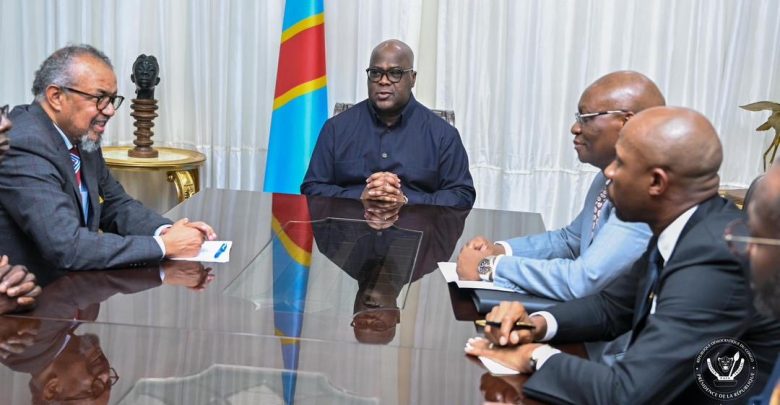
WHO Director-General Tedros Adhanom Ghebreyesus made the announcement after meeting DRC President Félix Tshisekedi on efforts to contain the disease, stressing that early treatment is vital to stopping the epidemic.
“Encouragingly, patients have already recovered and returned home, proof that early treatment works and a reminder of why we must reach every person who needs care,” he said.
His remarks followed a visit to Bunia, one of the hardest-hit areas in eastern DRC. WHO has scaled up diagnostics and treatment in the region and built an Ebola treatment centre that has since been handed over to national health authorities.
Ghebreyesus said stopping the Ebola outbreak depends heavily on communities themselves. “That means mobilizing local leaders and networks, ensuring safe and dignified burials, strengthening infection prevention, and helping people with symptoms seek care early, when it can save lives,” he noted.
The number of Ebola cases in the DRC has significantly dropped, indicating major progress in the fight against the disease. The decline also reflects improved data, as laboratories have been able to rule out many patients with fever who were instead suffering from other conditions such as malaria.
However, contact tracing remains one of the biggest challenges. Only about 45% of people who have been in direct contact with an Ebola patient are currently being followed up, partly because the epicentre of the outbreak is in an area affected by conflict.
Another obstacle is local resistance to scientifically supervised burials of suspected Ebola deaths. In one incident, an Ebola burial team was attacked in South Kivu province, forcing responders to abandon a coffin and raising fears of further transmission. Many communities prefer traditional burial practices, which often involve washing and touching the body, and funerals that draw large crowds – all high risk for a virus spread through contact with infected bodily fluids.
Health experts say allowing trained Ebola burial teams to carry out safe and dignified burials of suspected cases is critical to bringing the outbreak under control.