By Sulaiman Kauki
KAMPALA — Equity Bank Uganda has extended Shs37.6 billion in green financing to support environmentally sustainable projects, including clean energy and climate-friendly businesses, as financial institutions come under growing pressure to fund Uganda’s transition to a low-carbon economy.
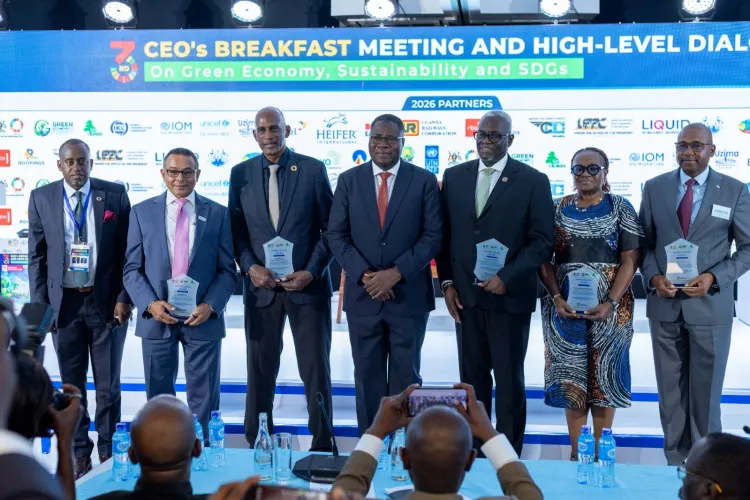
The bank’s Managing Director, Gift Shoko, disclosed the figures on Wednesday, October 14, 2026, during the third CEOs’ Breakfast Meeting and High-Level Dialogue on the Green Economy, Sustainable Development Goals and Sustainability held at the UNICEF Conference Centre in Mbuya, Kampala.
The meeting, held under the theme “Accelerating Uganda’s Green Economy Transition Through Digital Transformation”, brought together government officials, private sector executives, development partners and civil society organisations to explore ways of mobilising investment for sustainable development.
Shoko said banks and other financial institutions had a responsibility to direct capital towards businesses and projects that protect the environment, strengthen livelihoods and create employment.
He cited Equity Bank’s support for clean energy, including the sale of 157,035 clean-energy products and partnerships with 18 organisations implementing clean-energy initiatives. The bank has also channelled Shs4.75 billion into green financing through the Uganda Energy Credit Capitalisation Company (UECCC).
As part of its environmental initiatives, Equity Bank has supported the planting of 96,638 trees over the past three years.
Shoko also announced that Equity Group had entered into a $200 million financing agreement targeting smallholder farmers and micro, small and medium-sized enterprises through climate-smart agriculture and related interventions. Uganda is expected to receive approximately $50 million, representing a quarter of the total funding.
The bank is also investing in environmental education through its Equity Green Schools Programme, which seeks to involve learners in conservation while increasing tree cover across the country.
Under the programme, the bank aims to plant 200,000 trees by 2027. Its immediate target is to establish 50,000 trees in 25 schools across 10 districts by the end of 2026, alongside the creation of school orchards.
Previous planting campaigns have included approximately 3,500 trees at Nakanyonyi Secondary School in Mukono District, 1,500 at Kyasanku Hill College in Mpigi and 1,000 at St Julian Secondary School in Wakiso. More than 43,000 indigenous trees have also been planted on the slopes of Busoga College Mwiri.
Shoko said scaling up such interventions would require coordinated action by government, the private sector, development agencies and financial institutions to make sustainable investments more accessible and commercially viable.
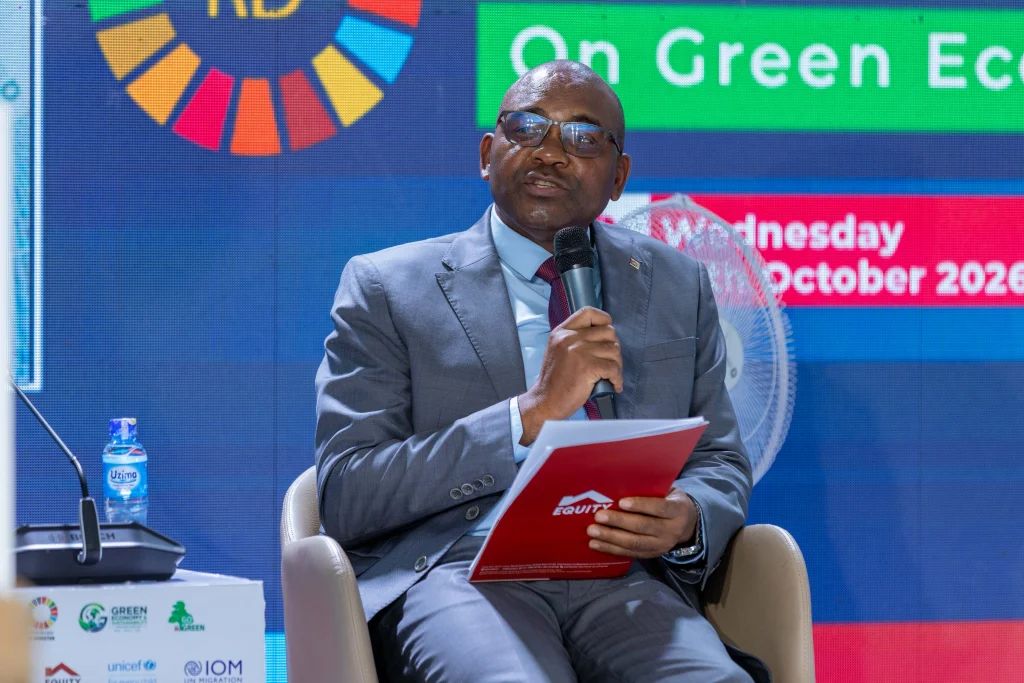
Equity Bank Uganda MD Gift Shoko gives his remarks during the panel session at the 3rd CEOs’ Breakfast Meeting
“The question is no longer whether Uganda can afford to invest in sustainability. The question is whether we can afford not to,” he said.
Participants at the meeting examined investment opportunities in renewable energy, climate-smart farming, clean cooking technologies, water and sanitation, and businesses that minimise environmental damage.
They also discussed the growing economic risks associated with rising temperatures and irregular rainfall, particularly for farmers and communities whose livelihoods depend on predictable weather patterns.
Speakers called for increased financing for renewable energy, wetland conservation and the rehabilitation of degraded land, alongside greater use of digital technologies to improve energy efficiency and help farmers respond to climate-related challenges.
The discussions further highlighted the need to create an investment climate that encourages private capital to flow into green projects while expanding opportunities for women and young people.
Equity Bank said it was supporting women and youth through financial literacy programmes, tailored financing and skills development. Under the Young Africa Works framework, the bank reported having trained more than 100,000 young people.
Parliament Speaker Jackson Oboth was the keynote speaker and guest of honour at the meeting. Representatives from UNICEF, the World Bank, Heifer International, the Office of the Prime Minister, the Uganda Communications Commission and the International Organization for Migration also attended, alongside other public and private sector stakeholders.
Shoko said Uganda’s green transition would depend on effective government policies, innovative business models, development partnerships and the availability of financing at scale.
He reaffirmed Equity Bank Uganda’s commitment to backing investments that combine environmental conservation with economic growth, employment creation and improved livelihoods.