By Jazeerah Mirembe
The National Identification and Registration Authority (NIRA) has start issuing identification cards to foreigners living in Uganda.
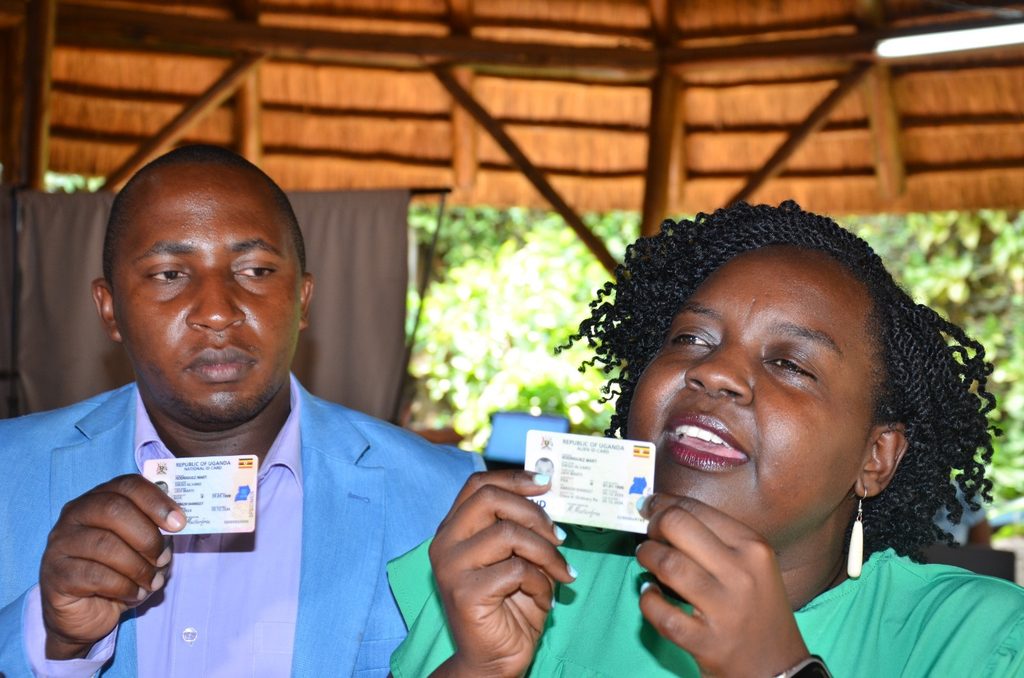
The exercise started on Thursday at the NIRA offices along Lumumba Avenue in Kampala where some of the 1,875 foreigners who have so far registered, recieved their identification documents.
NIRA spokesperson Osborn Mushabe said the initiative is intended to provide legally resident foreigners with a single identification document that can be used to access a range of services, while strengthening the government’s ability to account for people living and working in Uganda.
” As NIRA, We also have a mandate to register aliens who are legally resident in Uganda.We kickstarted registration for aliens on 10th June this year, and today we are glad to inform the general public that we are going to be issuing out our first Alien ID,” Mushabe said.
“Aliens can access all the services. Like Ugandans, they can register SIM cards with the telecoms. They can register and get bank accounts. They can even start up businesses and so on, but they are not allowed to vote.”
He said the alien card will enable foreigners to access services such as SIM card registration, bank accounts and business registration, but stressed that the card does not confer voting rights.
NIRA Registrar Claire Ollama explained that the alien card has a different colour and security features. While the Ugandan national ID is pinkish-purple, the alien card has a greenish-blue appearance.
“For the foreigner, their ghost image in the ID is inside the global icon down here. But as citizens, our image falls in the Ugandan map. The citizen has NIN which refers to national identification number while the foreigners have alien identification number,” Ollama said.
She noted that unlike the citizen card, which does not have an expiry date, an alien card is tied to the period for which the holder has permission to remain in Uganda.
“A foreigner whose work permit or other legal status is extended by DCIC will have their alien card renewed accordingly. The card also contains a QR code and barcode as additional security features.”
Ollama said foreigners can register at NIRA offices and through registration exercises conducted at companies and organisations employing foreign nationals.
“Without this card, ladies and gentlemen, if you’re a foreigner, very soon the service ecosystem will lock you out.All the other workaround documents will be eventually retired, and the card will be the single identification document for use to access services in Uganda.”
NIRA also said registration is available at its offices on Lumumba Avenue and Kololo, as well as through designated registration points, including a desk at the Indian Association and DCIC offices upcountry.
According to Ollama, NIRA had enrolled 1,875 foreigners by Thursday morning, with about 1,500 cards already ready for collection.
She however said, not every foreigner in Uganda is required to obtain the new card, with diplomats, their dependants and refugees exempted.
The card costs $100 payable through Uganda Revenue Authority (URA).
Speaking after receiving his card, Lukas Hack Chul, a German national welcomed the development.
“As a foreigner here in Uganda, my security is one step higher than very secret security, and then I can work in my places with clear consciousness,” Chul, who works with Bethesda Medical Centre Uganda said.
He applauded NIRA for the initiative that he said ensures his safety in Uganda.