
By Johannah Nantongo
KAMPALA — Government has announced plans to extend electric fencing around communities located within or near national parks as part of efforts to reduce the growing cases of human-wildlife conflict.
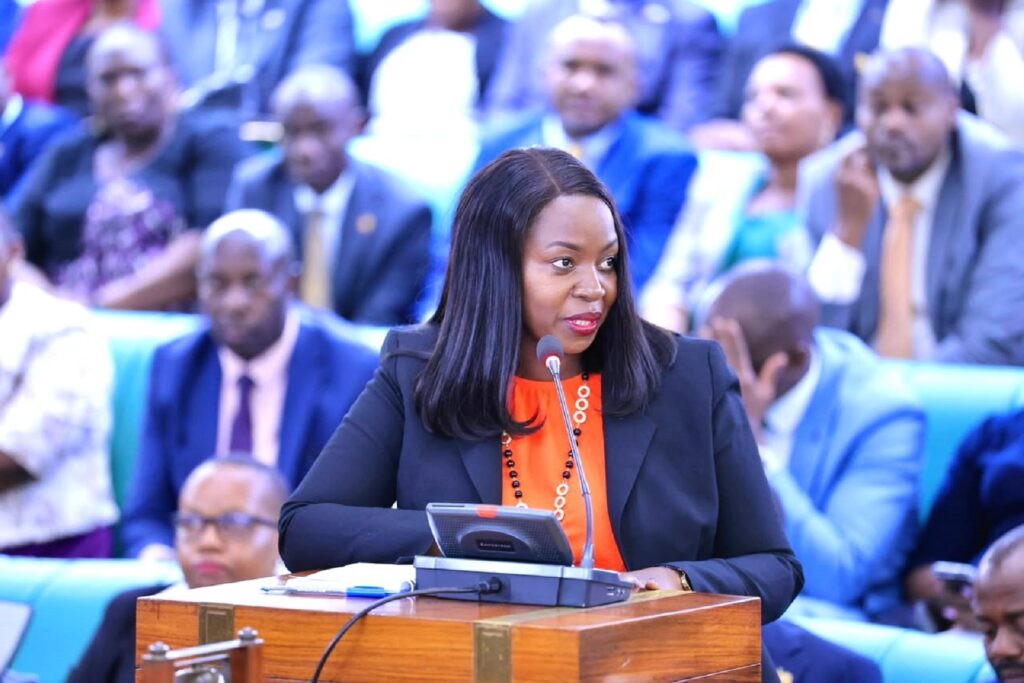
The State Minister for Tourism, Wildlife and Antiquities, Susan Nakawuki, informed Parliament on Tuesday, 4 August 2026, that fencing works have already begun around Queen Elizabeth National Park, covering sections of Rukungiri and Mitooma districts.
Nakawuki was responding to concerns raised by Wilson Kajwengye, the MP for Nyabushozi County, who reported that residents living near Lake Mburo National Park continue to suffer repeated attacks by wild animals.
Kajwengye said elephants and other wildlife have destroyed crops, damaged water facilities and caused loss of life in several sub-counties in Kiruhura District, leaving many households struggling to feed themselves.
“These communities have traditionally been food secure, but repeated invasions by wildlife have pushed many families into hardship,” he told the House, urging government to provide emergency food supplies and planting materials.
The legislator also appealed to the Ministry of Tourism, Wildlife and Antiquities to fast-track the fencing of Lake Mburo National Park and ensure that affected residents receive adequate compensation.
He suggested that where electric fencing cannot be installed immediately, trenching should be undertaken as a temporary measure to prevent animals from straying into farmland.
Kajwengye further argued that compensation provided under the Uganda Wildlife Act has often been too low to cover the losses suffered by communities. He said some destructive wildlife species are excluded from compensation guidelines despite causing significant crop damage and competing with domestic livestock for pasture.
In addition, he called for an increase in revenue sharing with host communities from the current 20 percent to 40 percent, as well as the rehabilitation and construction of communal water sources.
Responding to the concerns, Nakawuki acknowledged that electric fencing around national parks is costly and will be implemented gradually depending on available funding.
She confirmed that materials for the Queen Elizabeth National Park fencing project are already on site and construction commenced last week. However, she noted that fencing of Lake Mburo National Park has not yet started because the Uganda Wildlife Authority is still awaiting government funding.
Nakawuki also told Parliament that compensation for victims of human-wildlife conflict is currently governed by the Uganda Wildlife Compensation Regulations of 2022, which are under review.
Deputy Speaker Thomas Tayebwa directed the Committee on Tourism, Wildlife and Antiquities to investigate the concerns raised, work with the ministry and submit a comprehensive report to Parliament within 45 days.
Tayebwa said the matter affects many constituencies bordering protected areas and that Parliament would examine both the compensation regulations and proposals to increase benefits to affected communities.