BY: Joseph Mary Buwule.
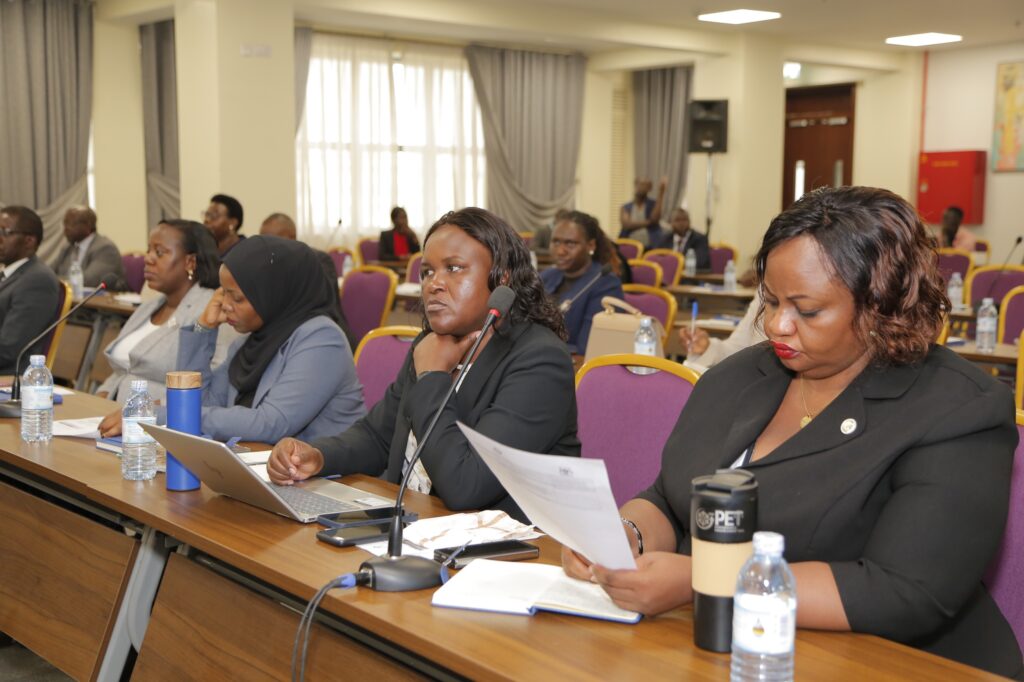
KAMPALA, Uganda – Judicial officers from Central Region Cluster III, comprising judges, registrars, and magistrates, have commenced a two-day training on the Human Rights-Based Approach (HRBA) to adjudication aimed at strengthening the integration of human rights principles into judicial decision-making and the administration of justice.
The training, organized by the Judicial Training Institute, is taking place at the Court of Appeal Building Conference Hall and seeks to enhance the capacity of judicial officers to apply human rights standards in case management, adjudication, and service delivery.
Officially opening the training, Justice Moses Kawumi Kazibwe emphasized the central role of human rights within Uganda’s constitutional and judicial framework. He noted that every matter brought before the courts—whether criminal, civil, family, land, labour, or administrative—carries human rights implications that require careful consideration by judicial officers.
Justice Kazibwe said Uganda’s Constitution, particularly Chapter Four, alongside regional and international human rights instruments, provides a strong foundation for adopting a Human Rights-Based Approach to adjudication. He stressed that courts have a responsibility not only to interpret and apply the law but also to ensure that rights are respected, protected, and enforced.
“Judicial decisions must not only meet legal standards but also uphold human dignity,” he said.
He further urged judicial officers to pay special attention to the needs of vulnerable groups, including children, persons with disabilities, the elderly, pregnant women, and survivors of sexual and gender-based violence. According to Justice Kazibwe, the administration of justice itself is a human rights issue and must be handled with fairness and sensitivity.
He encouraged participants to use the training as an opportunity to strengthen public confidence in the Judiciary and contribute to the advancement of constitutional governance in Uganda.

Speaking at the event, Justice Prof. Andrew Khaukha, Executive Director of the Judicial Training Institute, said the Human Rights-Based Approach is often perceived as complex, yet its practical application begins with simple but essential aspects of judicial service delivery.
He observed that judicial officers fail to apply a rights-based approach when they do not keep time, delay delivering decisions, or fail to treat court users with courtesy and respect.
Justice Prof. Khaukha noted that human rights principles are deeply rooted in African cultural values, comparable to the concept of Ubuntu, and should guide judicial officers in their daily interactions with litigants. He also highlighted the expertise of the facilitators assembled for the training, describing them as highly experienced professionals capable of providing practical guidance on integrating human rights principles into adjudication and case management.
The Executive Director also conveyed remarks from Justice Mike Chibita, Chairperson of the JTI Governing Council, who underscored the importance of placing national and international human rights standards at the centre of judicial decision-making.
Justice Chibita noted that the Human Rights-Based Approach shifts the focus beyond merely resolving disputes between parties to recognizing individuals as rights holders and the State as a duty bearer responsible for protecting and fulfilling those rights.
He further observed that human rights are grounded not only in legal principles but also in moral and spiritual values anchored in human dignity. He called upon judicial officers to ensure that human rights principles inform their work across criminal, civil, family, and administrative matters, while commending the Judicial Training Institute for its commitment to continuous professional development within the Judiciary.
Earlier, Agnes Alum highlighted the practical significance of the Human Rights-Based Approach in judicial work, describing it as the operational expression of Article 126(2) of the Constitution.
The training forms part of ongoing efforts by the Judiciary to strengthen rights-based justice delivery and ensure that judicial officers are equipped to uphold constitutional values and promote access to justice for all Ugandans.