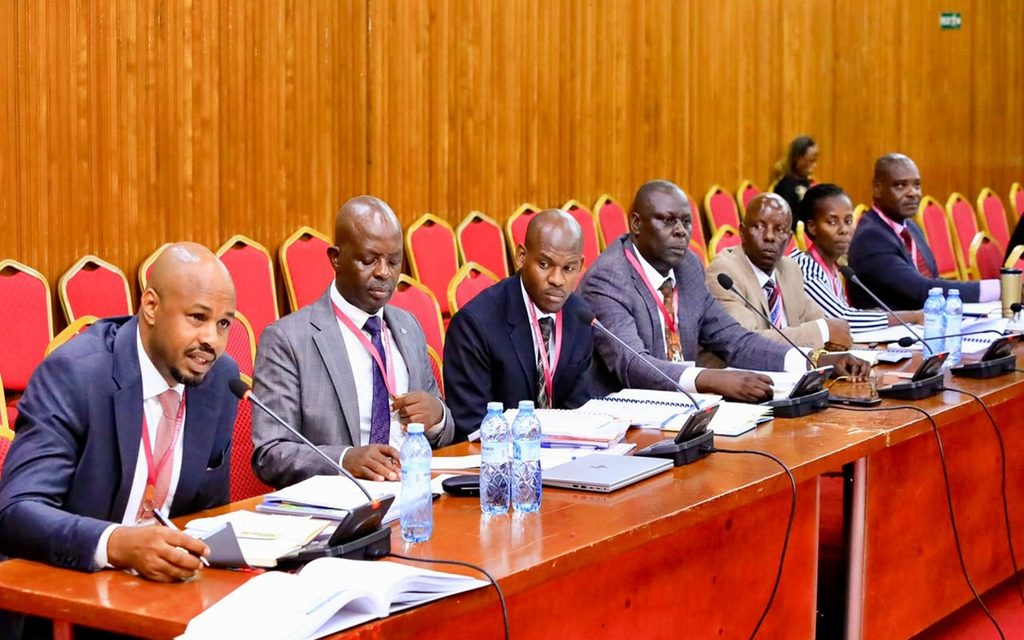
Officials from the Mbarara university of Science and Technology appearing before PAC
By Joseph Kiggundu
KAMPALA — Mbarara University of Science and Technology (MUST) says it has addressed key regulatory shortcomings that led the Pharmaceutical Society of Uganda (PSU) to withdraw recognition of its Bachelor of Pharmacy programme.
Appearing before Parliament’s Public Accounts Committee (Central) on Monday, November 9, 2026, MUST Secretary Vincent Kansiime Kwatampora told MPs that the university had appointed Jonan Asimire as caretaker Head of the Department of Pharmacy to address concerns over the leadership of the department.
The appointment replaces an interim arrangement in which a nurse who was not a qualified pharmacist had been assigned to head the department, triggering concerns from the professional regulator.
The dispute began on September 10, 2026, when the PSU issued MUST a 30-day show-cause notice outlining serious academic and regulatory shortcomings affecting the pharmacy programme.
According to the PSU, the university had failed to advertise the position of Head of the Department of Pharmacy following the resignation of the former head, Professor Patrick Ogwang. The regulator also raised concerns over a shortage of qualified pharmacy lecturers.
After MUST reportedly failed to address the concerns within the stipulated period, the PSU Council withdrew recognition of the programme.
The decision halted the issuance of pharmacy student numbers, disrupted internship placements and barred affected MUST graduates from sitting mandatory pre-internship and pre-registration qualifying examinations.
However, Kwatampora told MPs that the university was taking steps to resolve the staffing gaps and comply with the regulator’s requirements.
“The issue of staffing started with the resignation of the former department head, Prof. Ogwang, and we are working on his replacement. Two pharmacists have been recruited, and there are other calls for recruitment,” he said.
He added that MUST was expected to meet the PSU in an effort to resolve the outstanding concerns and secure the restoration of the programme’s recognition.
Despite the assurances, PAC Chairperson Patrick Oshabe questioned the university’s handling of the matter, warning that failure to comply with professional regulatory requirements could jeopardise the academic and professional future of students enrolled in the programme.
MPs also raised concerns about the university’s wider staffing challenges, particularly the reported low number of senior academic staff available to supervise postgraduate research.
The committee was informed that MUST had only 10 professors and 17 associate professors, prompting lawmakers to question whether the numbers were sufficient to support postgraduate training and maintain academic standards.
MP Nsamba challenged the university to benchmark its academic staffing levels against other institutions and ensure that graduates meet the required academic and professional standards.
“If you compare yourself with other universities, where do you lie? You need to reaffirm that when we get PhDs from MUST, they are really good,” Nsamba said.
The concerns are reflected in the Auditor General’s report for the period ending December 2025, which indicated that MUST had an overall staffing level of only 30 per cent.
The Auditor General recommended increased wage funding to enable the university to recruit staff and fill critical vacancies, particularly given its specialised role in medical and science education.
The developments place renewed focus on MUST’s capacity to meet professional regulatory standards, strengthen academic staffing and safeguard the quality of training offered to future health professionals.