By Johannah Nantongo
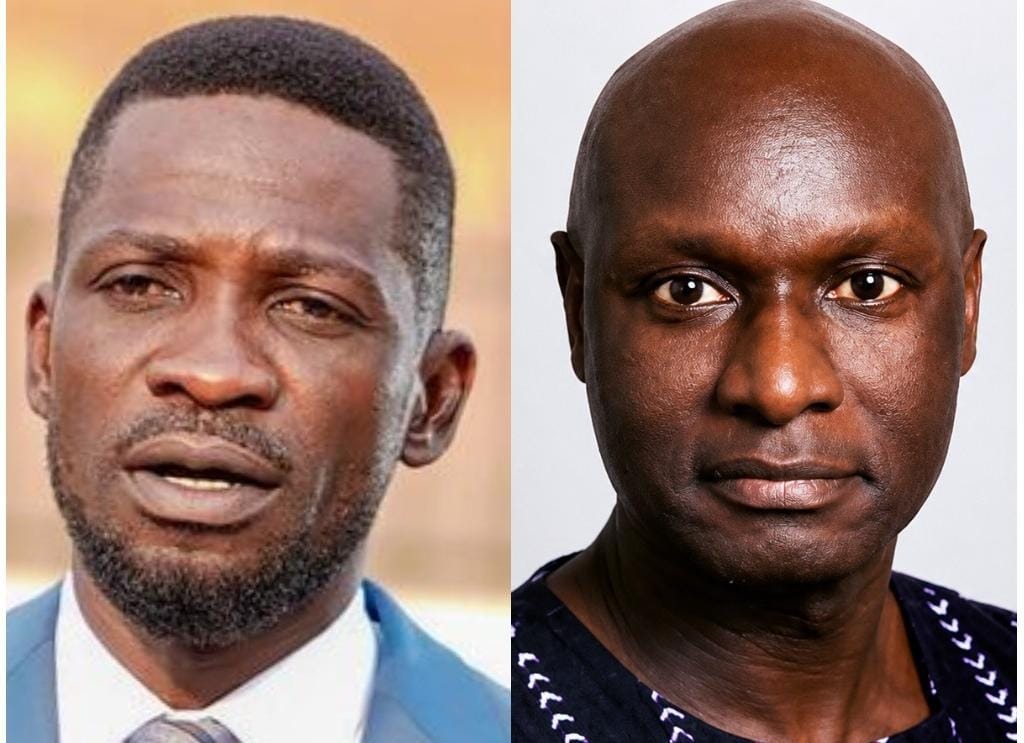
Opposition National Unity Platform (NUP) president Robert Kyagulanyi, popularly known as Bobi Wine, has backed Ugandan diplomat Olara Otunnu’s bid to become the next United Nations Secretary-General.
In a statement on Thursday, Kyagulanyi praised Otunnu’s long career in international diplomacy and his record of service at the United Nations, saying his candidacy was a source of pride for Uganda.
“As a Ugandan, it fills me with pride to see an illustrious son of our nation carry a lifetime of global service, a fierce commitment to the vulnerable, and a deep passion for justice to the world stage,” Kyagulanyi said.
Otunnu, 75, who contested for Ugandan president and lost to president Museveni is among eight candidates seeking to succeed António Guterres, whose term as UN Secretary-General ends at the close of 2026.
Uganda formally nominated Otunnu for the position on July 24, with President Yoweri Museveni backing his candidacy despite their political differences in the past.
Kyagulanyi said Otunnu’s record, particularly his work on human rights and children affected by armed conflict, made him deserving of the opportunity.
“For years, many of us have followed with great respect, Ambassador Olara Otunnu’s incredible track record at the United Nations,” he said.
“His work championing human rights and protecting children in armed conflict is exactly the kind of leadership the global community desperately needs right now. True leadership is measured by integrity, vision, and an unwavering dedication to peace and justice,” he added.
Otunnu served as UN Under-Secretary-General and Special Representative for Children and Armed Conflict from 1997 to 2005, during the tenure of former Secretary-General Kofi Annan.
He also served as Uganda’s ambassador to the UN. In 1981, aged 31, he became president of the UN Security Council and played a role in breaking a deadlock over the selection of Javier Pérez de Cuéllar as Secretary-General.
The voting approach associated with that episode became known as the “Otunnu Formula”. The reference has gained renewed attention during his current campaign because informal Security Council straw polls are being used to gauge support for candidates seeking the top UN position.
Otunnu has made UN reform one of the central themes of his campaign, alongside efforts to address armed conflicts, climate change and challenges posed by artificial intelligence.
He gained ground in the second informal Security Council straw poll, increasing his “encourage” votes from two in the first poll to five.
The Secretary-General is formally appointed by the 193-member UN General Assembly after the Security Council recommends a candidate. A candidate must secure at least nine votes in the 15-member Security Council and avoid a veto from any of its five permanent members.
Kyagulanyi also criticised the government’s previous refusal to support Otunnu for the UN position, describing it as a historical injustice.
“We cannot forget the historical injustice when the Museveni regime vindictively denied him an endorsement for this very position years ago. They blocked him for simply refusing to stay silent about the atrocities they were committing against our people,” he said.
“Perhaps if he had risen to that position at the time, the world would be fairer, more just, and more peaceful.”
Museveni’s decision to back Otunnu this time has nevertheless raised questions among some Ugandans, particularly opposition supporters.
Kyagulanyi acknowledged the concerns, saying: “I hear some citizens who are raising tough questions about why the regime has suddenly changed its mind to endorse him now. Your scepticism is understandable, given what the bloodthirsty regime is doing to our people.”
Despite the political differences, Kyagulanyi said he believed Otunnu would remain committed to his principles if elected.
“We can all bank on his long-term, proven integrity and hope that when he rises to become the world’s top diplomat, he will never turn a blind eye to the ongoing struggle for freedom in his own motherland,” he said.
Kyagulanyi said Otunnu’s international agenda should be considered separately from Uganda’s domestic political disagreements.
“Central to his vision is a profound passion for genuine multilateral reform, where international institutions must evolve beyond mere arenas of superpower politics to become true instruments of equity, accountability, and shared prosperity for all nations,” he said.
He also expressed solidarity with Otunnu as he continues seeking support from UN member states.
“Ambassador Otunnu has my full solidarity and prayers as he carries our collective aspirations for a fairer world to the global stage,” Kyagulanyi said.