By Jazeerah Mirembe
East African member states are on high alert after one of its key members Kenya confirmed four new Ebola cases, bringing the total number to eight .
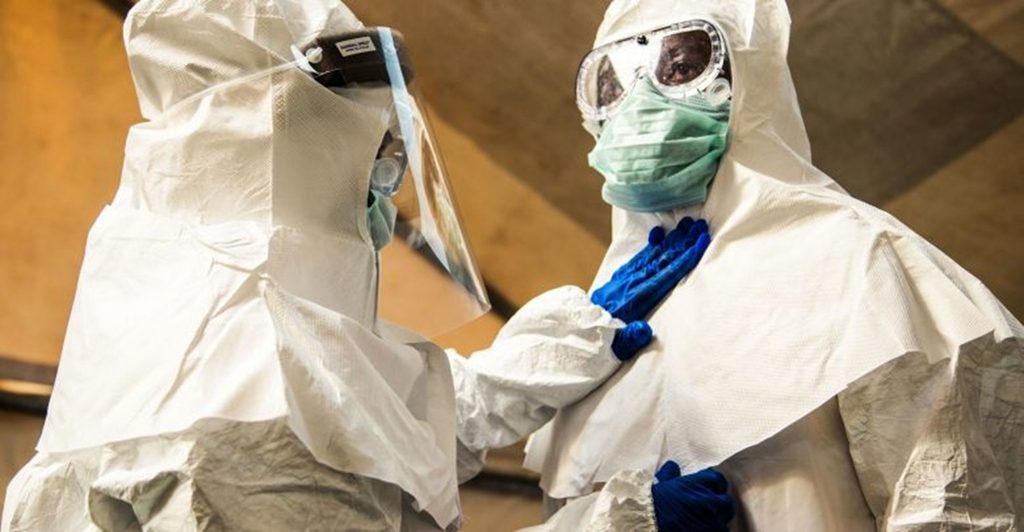
The victims include three health workers who treated the country’s first patient, bringing the total number of confirmed infections to eight , with one death.
In a statement dated October 17, Director-General for Health Dr Patrick Amoth said the new infections were detected at two quarantine sites. The fourth patient is a close male relative of the first patient, who died.
All four developed fever while under observation and were immediately isolated. Samples tested positive for Bundibugyo virus at both the National Virology Reference Laboratory and the Kenya Medical Research Institute laboratory.
“Since all the four new cases have been in quarantine, they were diagnosed early limiting risk of further spread of the disease, to their families and the general community,” Amoth said.
The infected health workers – two men and one woman aged 29, 35 and 32 – cared for the first patient on October 3 and 4.
They had been in quarantine since October 9, while the male relative had been quarantined since October 6.
The four are receiving supportive care at a designated treatment facility.
The ministry said the second and third patients remained stable and were responding well to treatment.
The infections among medical personnel bring the outbreak’s risks to frontline health workers into focus, particularly during the treatment of patients before an Ebola diagnosis is confirmed.
However, the ministry said there was no evidence of transmission in the wider community.
“The Ministry wishes to reassure Kenyans that the risk to the general public remains low as there is no evidence of community transmission of the disease,” Amoth said.
Of 130 identified contacts, 128—representing 98.5 per cent—had been traced and quarantined. Efforts were continuing to locate the remaining two.
Authorities cautioned that further infections could emerge among contacts before their 21-day monitoring period ends.
Quarantine allows health teams to identify symptoms quickly and transfer affected people into isolation.
Kenya’s first patient had travelled from the Democratic Republic of Congo through Uganda before reaching Nairobi, where he died on October 5.
Amoth said four family members of the deceased patient and health workers who cared for him remained under close observation. People in quarantine were also receiving mental health and psychosocial support.
Despite the additional infections, Kenya has maintained normal travel and commercial activity.
“The country remains open for business, with no restrictions on travel, trade or public gatherings,” the statement said.
The ministry urged the public to remain calm and vigilant, saying Ebola spreads through direct contact with the blood or body fluids of an infected or deceased person, rather than through the air.
It advised anyone experiencing fever, unusual tiredness, muscle or joint pain, sore throat, vomiting, diarrhoea or unexplained bleeding to report immediately to the nearest health facility.
Kenyans can seek information through the ministry’s toll-free line, 719.