By Buwule Joseph Mary
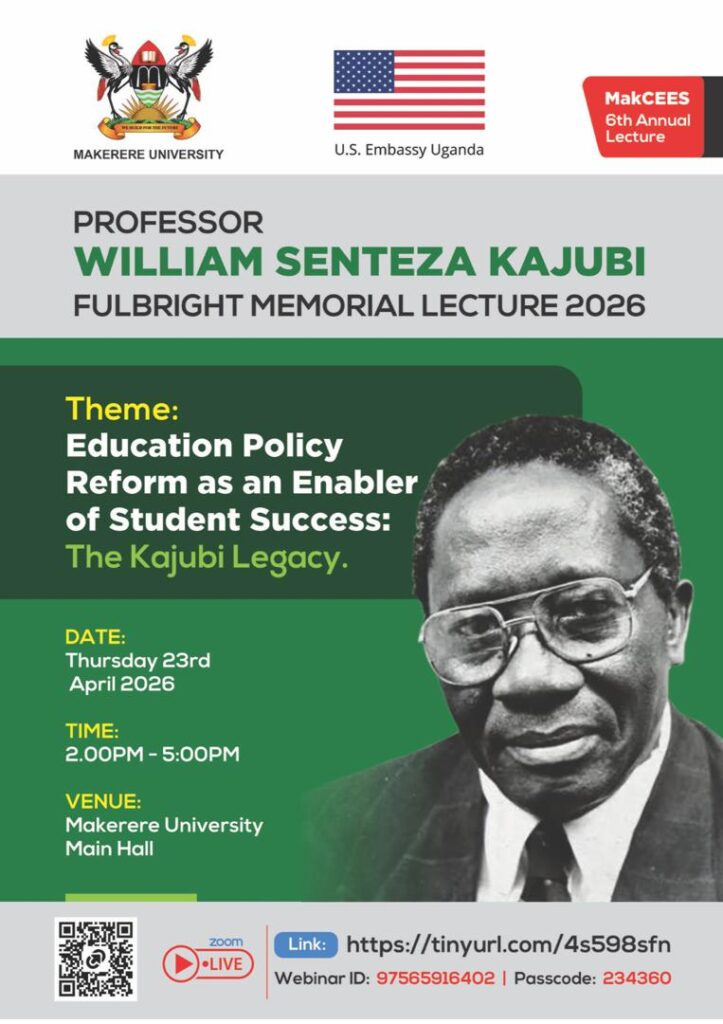
KAMPALA — Makerere University has hosted a powerful and reflective edition of the Prof. William Senteza Kajubi Fulbright Memorial Lecture, bringing together scholars, policymakers, students, and international partners to celebrate the enduring legacy of one of Uganda’s most influential educationists, William Senteza Kajubi.
Held at the historic institution, the lecture reaffirmed the central role of education in shaping societies and strengthening global partnerships, while honoring Kajubi’s lifelong contribution to education reform, academic excellence, and international exchange.
Celebrating a Legacy of Excellence
Speaking at the event, the Principal of the Makerere University College of Education and External Studies, Anthony Mugagga, paid tribute to Kajubi as a “beacon of academic excellence” whose work fundamentally shaped Uganda’s education system and inspired generations of learners.
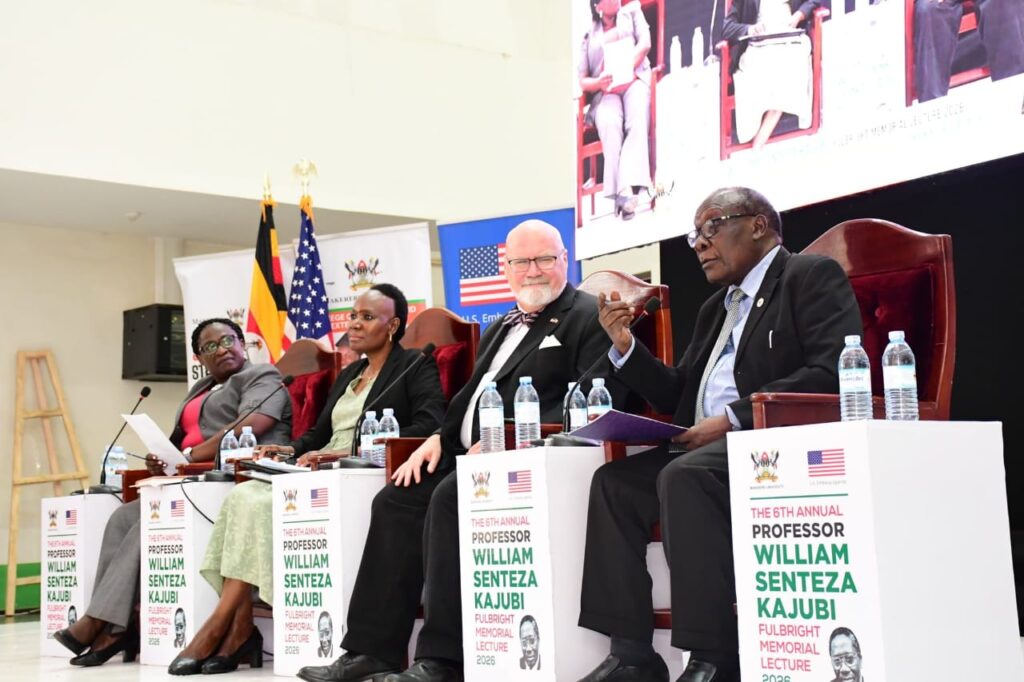
Prof. Mugagga expressed gratitude to the United States Embassy in Uganda for its continued support, pledging that the Kajubi-Fulbright Memorial Lecture series will be sustained as a platform for intellectual engagement and policy dialogue. He emphasized that Kajubi’s contributions remain invaluable, particularly in advancing education policy and promoting student success across Uganda.
The Vice Chancellor of Makerere University, Barnabas Nawangwe, described Kajubi as a pioneer and one of the first Fulbright scholars from Africa, who represented the continent with “intellect, integrity, and purpose.”
Prof. Nawangwe highlighted Kajubi’s role as the principal author of the landmark 1989 Education Policy Review Commission Report, describing it as one of the most comprehensive analyses of Uganda’s education system to date.
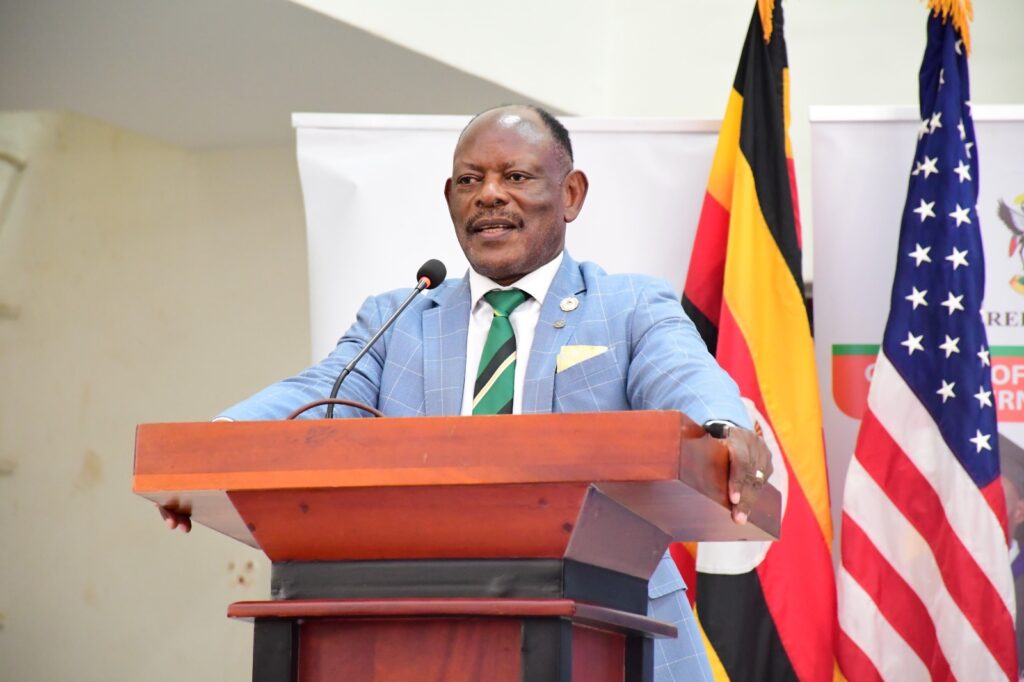
“Many committees have been formed since then, yet none has matched the depth and clarity of that report,” he noted, adding that several reforms being implemented today echo Kajubi’s forward-looking recommendations.
Drawing from personal experience, Prof. Nawangwe recounted traveling with Kajubi for two weeks—an encounter he described as transformative. He praised Kajubi’s intellectual depth, clarity of thought, and generosity in sharing knowledge, noting his strong belief in intellectual freedom and deep passion for education and culture.
The United States Ambassador to Uganda, William W. Popp, described the lecture as a celebration of two enduring legacies: that of Kajubi and J. William Fulbright, whose vision established the Fulbright Program.
Ambassador Popp reflected on Kajubi’s historic achievement as one of the first Africans to receive a Fulbright scholarship in 1952, noting that he “didn’t just cross an ocean—he bridged worlds.”
He underscored that education is not merely about transferring knowledge but about unlocking human potential, promoting social mobility, and driving national development.
“Education is the most powerful tool for social mobility that humanity has ever created,” he said, emphasizing the need for systems that equip learners with both technical skills and critical thinking abilities.
Keynote Calls for Action on Education Reform
Delivering the keynote address, Mary Goretti Nakabugo of Uwezo Uganda highlighted Kajubi’s 1989 policy report as a foundational framework for inclusive education and citizenship development.
She emphasized that the success of any education policy lies in its implementation. “A policy is as good as its implementation,” Dr. Nakabugo stated, calling for renewed commitment to strengthening teacher training, prioritizing foundational learning, and promoting inclusive curricula that address the needs of disadvantaged groups.
She noted that the 1989 Commission advocated for the democratization of education, guided by principles of universal access and the development of responsible citizens—priorities that remain highly relevant today.
A panel discussion featuring Prof. Eriabu Lugujjo, Dr. Nakabugo, and Richard Scott Nokes, moderated by Leah N. Sikoyo, further explored education policy reform as a driver of student success.
Dr. Sikoyo emphasized that achieving transformative education requires a collective effort from all stakeholders, including government, educators, parents, learners, and the wider community. “It is an ecosystem,” she noted, underscoring the need for coordinated action.
Honoring a Visionary and Inspiring the Future
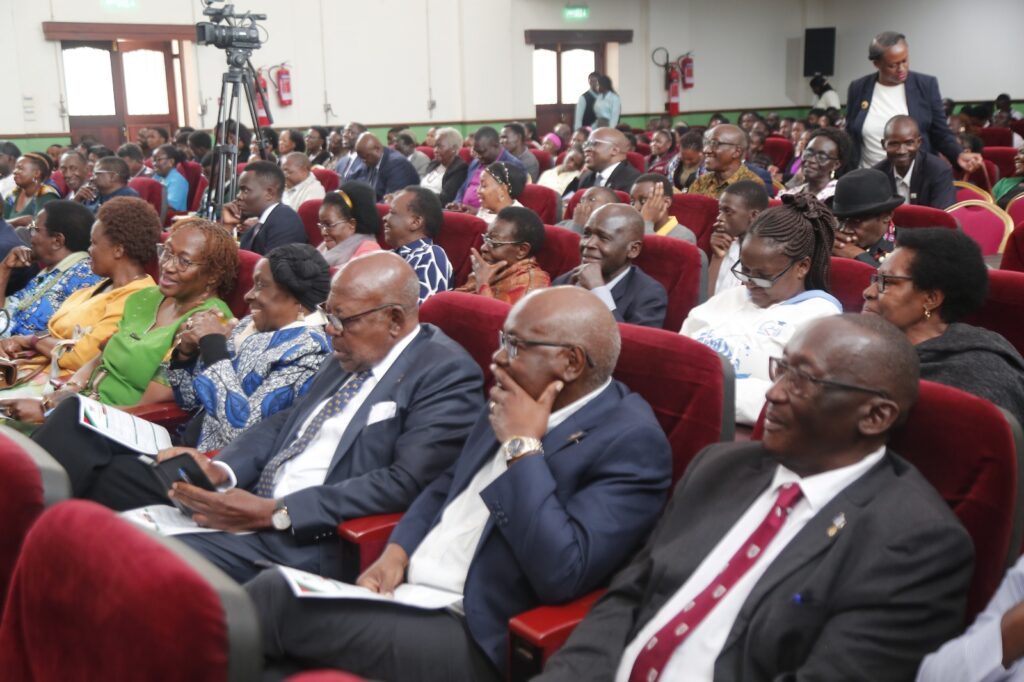
The lecture was also attended by members of the Kajubi family, students—including participants from Manhattan College—and distinguished guests, reflecting the broad impact of Kajubi’s legacy.
Speakers consistently highlighted his role as a pioneer of academic and cultural exchange between Africa and the United States, and as a visionary leader whose work continues to shape Uganda’s education landscape.
As the event concluded, participants were reminded of the enduring relevance of Kajubi’s vision and the importance of sustained dialogue on education reform. The Kajubi Fulbright Memorial Lecture once again affirmed Makerere University’s position as a hub of intellectual discourse and a champion of transformative education—ensuring that Kajubi’s legacy continues to inspire future generations.