By Joseph Mary Buwule
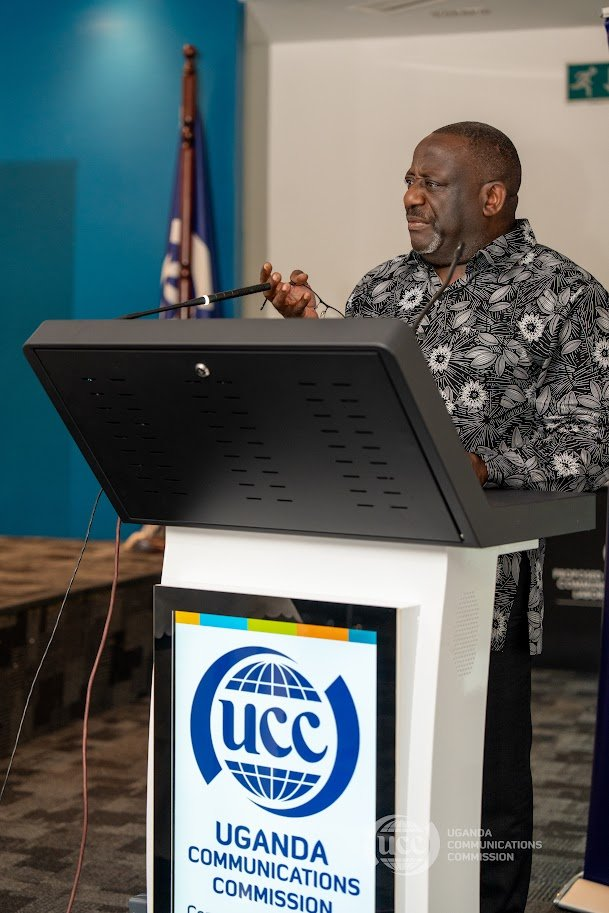
The Executive Director of the Uganda Communications Commission (UCC) George [Nyombi Thembo has underscored the importance of strengthening collaboration between academia and industry players in order to drive Uganda’s digital transformation agenda and address emerging societal challenges through practical research.
Speaking during the announcement of successful projects selected for research funding, Nyombi Thembo noted that universities and academic institutions remain the true custodians of knowledge and innovation, making them key partners in shaping Uganda’s evolving digital landscape.
He emphasized that research should go beyond academic theory and instead deliver tangible solutions capable of solving real-world problems affecting communities, industries, and the country at large.
“Strategic collaboration with academia is essential for navigating Uganda’s dynamic digital landscape. Research should not merely remain an academic exercise, but must create real-world impact by serving as a practical tool to address societal challenges,” he said.
The vision was reflected in a highly competitive nationwide selection process that attracted 212 applications from researchers and innovators across the country.

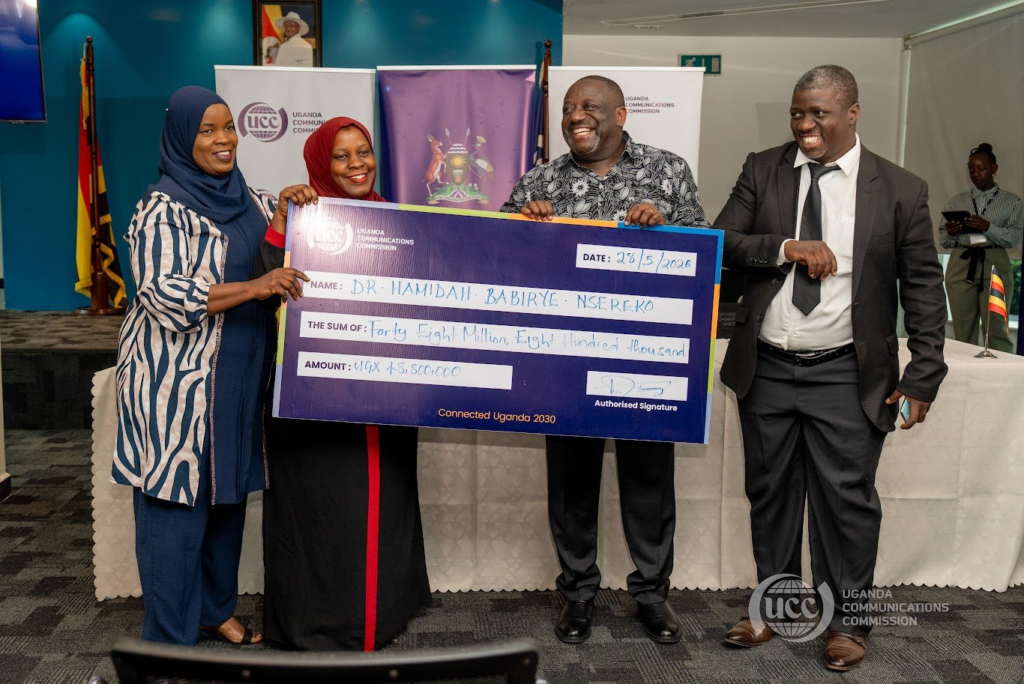
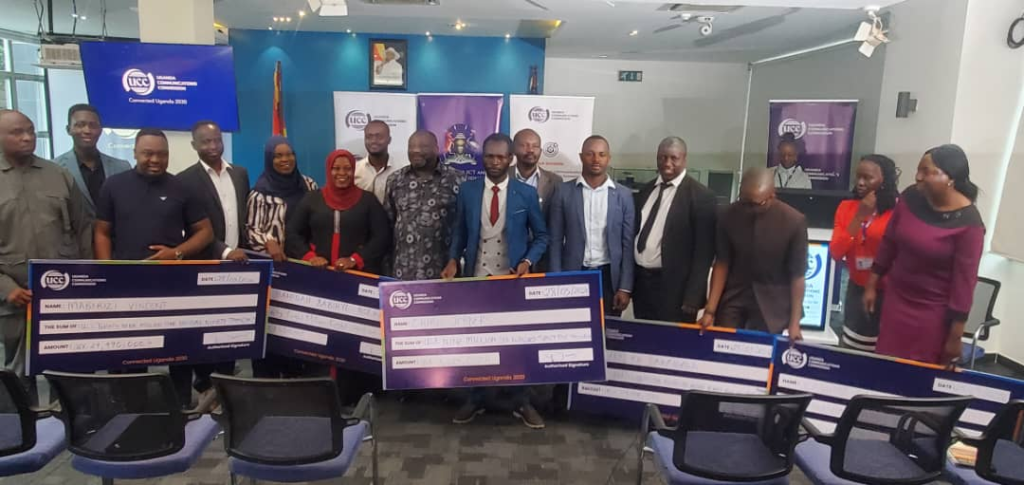
Out of the submissions, only nine outstanding projects were selected to benefit from a combined funding package worth UGX 182,630,228.
According to UCC, the selected projects demonstrated exceptional innovation, relevance, and potential to contribute towards Uganda’s digital transformation and socio-economic development goals under the ConnectedUg2030 and Digital Uganda initiatives.
Among the funded projects is an innovative electricity access solution developed by Kawuma Latiif and Balinda Roland Mujungu from Soroti University. Their research project, titled “Development of a Credit-based Electricity Access Scheme for Smart Energy Consumers,” seeks to address the challenge of sudden electricity disconnections affecting many households and small businesses due to irregular incomes.
The researchers are developing an intelligent AI-powered system that will allow consumers to “borrow electricity and pay later” through digital payment platforms. By analyzing users’ payment histories and electricity consumption patterns, the system is expected to help homes and businesses remain connected during temporary financial hardships.
UCC said the project demonstrates how local research can support financial inclusion, economic growth, and Uganda’s broader digital transformation agenda.
Another project selected for funding focuses on strengthening cybersecurity systems in Uganda’s growing digital economy.
Okiria Jobbers from Kampala International University presented a proposal titled “AI-Based Real-Time Anomaly Detection in Large-Scale Data Streams,” which aims to tackle rising cyber threats through artificial intelligence.
The research team is developing an intelligent monitoring system capable of learning normal network behavior and instantly detecting suspicious activities such as unusual agent banking withdrawals or simultaneous ATM transactions in different locations. The system is expected to process up to one million transactions daily.
UCC noted that the project aligns with the UCC Research Support and Collaboration Framework 2022–2025 and is expected to strengthen cybersecurity resilience, protect financial and Internet of Things (IoT) networks, and enhance public trust in digital systems.
In another groundbreaking innovation, Ignatius Balayo from Busitema University presented a research proposal titled “Privacy Preservation in Mobile Networks Using Machine Learning.”
The project seeks to protect sensitive user data generated by Uganda’s more than 41 million mobile subscriptions by introducing a decentralized privacy framework. The innovation uses Federated Learning and Differential Privacy technologies to enable AI systems to learn directly from devices without transferring raw data to centralized or offshore servers.
According to UCC, the initiative directly supports Uganda’s Data Protection and Privacy Act of 2019 and lays the cybersecurity foundation necessary for the country’s transition to secure 5G and 6G technologies.
Meanwhile, Rugasira Bakainaga Athanasius from Kampala International University secured funding for his postgraduate research project titled “Utilizing Support Vector Machine Models to Examine the Influence of Household Demographics on Agricultural Productivity and Food Security in Uganda.”
The study uses advanced machine learning techniques to analyze how household demographics influence crop yields, livestock productivity, and food security among Uganda’s predominantly small-scale farming communities.
Researchers say the project will use decades of agricultural data and regional field insights to develop predictive tools capable of supporting policymakers, improving food safety, and boosting agricultural productivity in line with Uganda’s Vision 2040 development agenda.
The funding initiative highlights UCC’s continued commitment to supporting innovation, research, and knowledge development as Uganda advances toward a digitally inclusive future.
The programme is being implemented in partnership with stakeholders including UgCERT, ConsumerUCC, and other digital ecosystem partners committed to advancing Uganda’s ICT and innovation sector.