By Joseph Kiggundu
Members of Parliament have raised concerns about alleged fees charged to citizens seeking canine services from the police, even as the Uganda Police Force reports a notable decline in crime across the country.
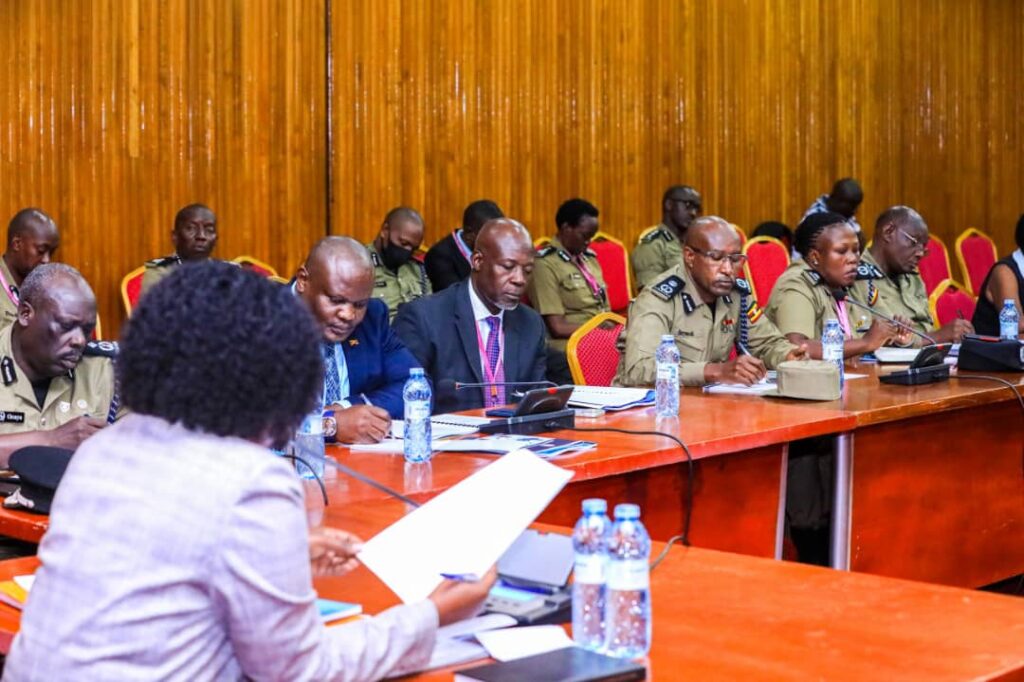
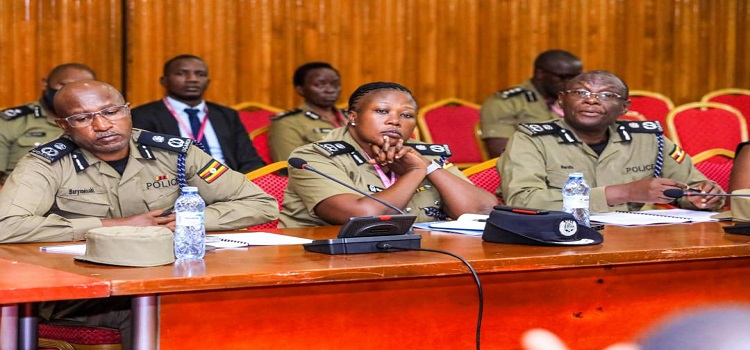
Appearing before the Public Accounts Committee on Tuesday, 10 March 2026, the Deputy Inspector General of Police, James Ochaya, told lawmakers that preliminary police statistics show a significant reduction in crime during 2025.
Ochaya said that although the official annual crime report has not yet been released, early figures indicate that reported cases dropped from 218,725 in 2024 to 196,155 in 2025. This represents a decrease of 22,560 cases, equivalent to a 10.3 percent decline.
He further explained that the national crime rate stood at 427 cases per 100,000 people in 2025, down from 476 in 2024, based on an estimated national population of about 45 million people.
According to the police leadership, the reduction in crime is largely due to strengthened policing structures, improved cooperation with communities and closer coordination with other security agencies.
“We have strengthened sub-county policing, enhanced collaboration with other security agencies and increased community engagement,” Ochaya said.
He also reported that police operations conducted in the first two months of 2026 had already led to thousands of arrests. Between January and February, police apprehended 7,159 suspects, of whom 3,724 were formally presented before courts of law.
The Kampala Metropolitan Area recorded a significant share of these arrests, with 3,512 suspects detained during the same period. Of these, 1,935 were subsequently arraigned in court.
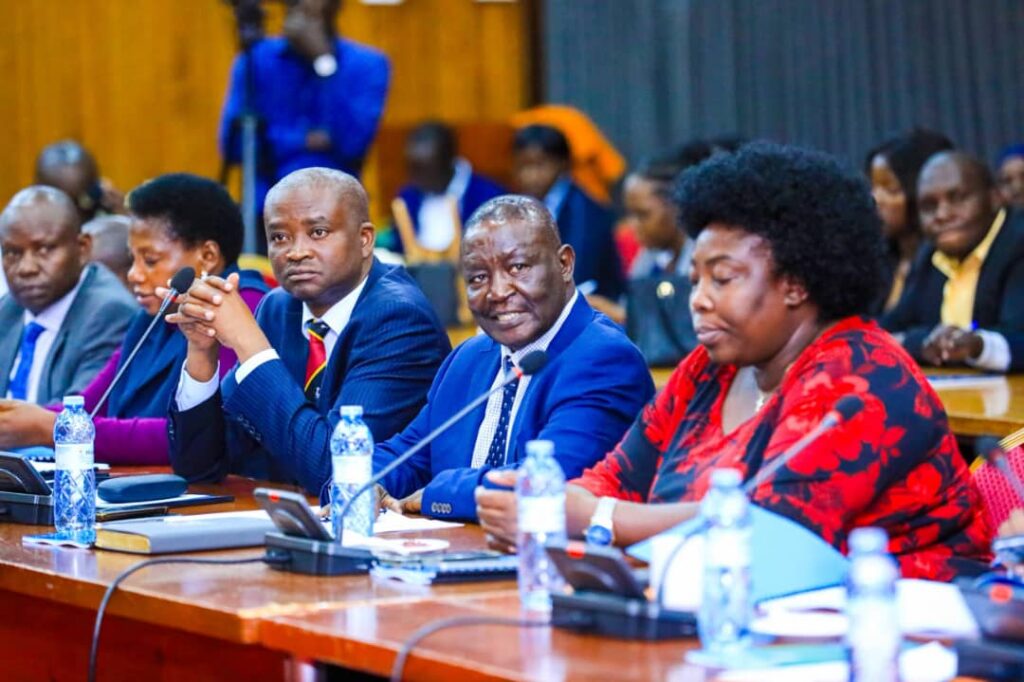
However, the committee session became tense after legislators questioned the police leadership about reports that communities are sometimes required to pay up to Shs200,000 to access canine units during criminal investigations.
The committee chairperson, Gorreth Namugga, said the committee had received complaints that sniffer dog services were being charged at high rates, despite claims by police that the service is meant to be free.
“We are receiving information that the dogs are paid for very expensively, yet we are surprised that the IGP seems unaware of these payments,” Namugga said.
In response, Ochaya acknowledged the concerns raised by the legislators and assured the committee that the matter would be investigated.
“We shall investigate and find out where the problem is and rectify it,” he said.
Several legislators also shared experiences from their constituencies regarding the alleged payments.
Silas Aogon said complaints about payments for canine services appear to be common in many parts of the country.
Similarly, Susan Amero recounted an incident in which she paid for a sniffer dog to investigate theft on her farm in Kakiri.
“I had a farm in Kakiri and I requested a dog from Kakiri Police Station. I paid money for the dog to reach my farm to investigate theft, but nothing was detected,” she said.

Amero added that if such payments are legitimate, the police should formalize the charges and issue official receipts so the funds can be properly accounted for as government revenue.
Meanwhile, Joseph Ssewungu questioned whether the police have adequate resources to transport canine units to crime scenes.
He cited an example from Kalungu where a dog unit was only deployed after local leaders constructed a facility to accommodate it.
Police officials acknowledged that transportation and logistical challenges have at times affected the deployment of canine units but said efforts are underway to acquire specialized equipment to improve their operations, particularly in rural areas.