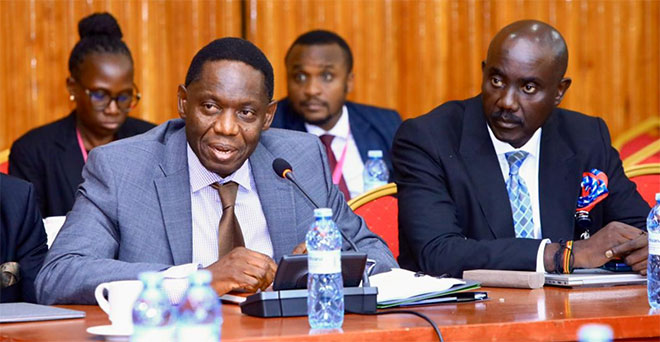
KAMPALA.The Governor of the Bank of Uganda, Michael Atingi-Ego, has warmed that Uganda risks depleting its foreign exchange reserves if the proposed Protection of Sovereignty Bill, 2026 is enacted into law.
He furthered warned that the proposed law could also destabilise Uganda’s external position, weaken the shilling and trigger inflation.
Appearing before a joint parliamentary committee on defence and legal affairs on Tuesday Atingi-Ego said the Bill threatens the foreign inflows that underpin Uganda’s balance of payments and foreign exchange reserves.
“Chairman, a country without reserves is not sovereign,” he told lawmakers. “The potential of this Bill to destabilize Uganda’s balance of payments is our primary concern as a central bank.”
$1.5 billion buffer at risk
The governor pointed to Uganda’s recent external performance, noting that the country recorded a balance of payments surplus of about $1.5 billion in the last financial year — a development that enabled the central bank to build up reserves.
“That’s how we were able to increase our reserve coverage by $1.5 billion. Today… our reserves are close to $6 billion,” he said.
“The moment you tamper with these inflows… we risk running down our reserves, and that is an economic disaster for a country.”
Uganda’s reserves, built on steady inflows from development partners, remittances and investment, are a key buffer for currency stability and import cover.
Currency depreciation
Atingi-Ego warned that disrupting these inflows could trigger a depreciation of the Ugandan shilling, with immediate consequences for inflation.
“The mandate of BoU is to promote price stability… What is the impact of this Bill on price stability if it is passed the way it is?” he asked.
“Because of the depreciation of the currency that is likely to occur… imported items into domestic prices [will] raise prices significantly.”
Uganda has in recent months enjoyed relatively low inflation — around 3 percent — below the central bank’s medium-term target of 5 percent. But the governor cautioned that this stability could quickly unravel.
“This inflation of 3% we have been enjoying is likely to be compromised through currency depreciation,” he said.
The governor said the central bank would face difficult trade-offs if the Bill triggers currency pressures, including tightening monetary policy through higher interest rates or allowing inflation to overshoot target.
“That means we will need to either tighten monetary policy further… or allow inflation to go beyond the 5% target,” he said.
The central bank’s intervention adds to growing resistance to the Bill from both legal and international actors.
The World Bank Group has already warned Parliament that the law could criminalise core development activities and disrupt funding flows, while Kampala-based lawyers have criticised it as vague and overly broad.
Attorney General Kiryowa Kiwanuka has defended the legislation as necessary to regulate foreign influence and safeguard national sovereignty.
Analysts say the Bank of Uganda’s warning shifts the debate from legal and political grounds to macroeconomic risk, raising concerns that the Bill could undermine investor confidence, external financing and currency stability.