ARUSHA .
The disputed January 15 Uganda presidential election has again been challenged, this time at the East African Court of Justice in Arusha, where the Uganda Law Society and the East African Law Society accuse state agencies of breaching democratic standards and violating citizens’ rights.
In a case filed on March 16 , the two legal bodies fault the Electoral Commission (EC) of Uganda and the Attorney General over what they describe as a flawed electoral process that contravened the East African Community Treaty.
They argue that during and after the election period, with results announced on January 17, state agents engaged in actions that undermined the credibility of the vote.
Alleged violations include the unilateral appointment of the EC , failure to reform electoral laws, and the disenfranchisement of eligible voters due to irregularities in the voters’ register.
Other complaints include last-minute amendments to electoral regulations without consultation, denial of accreditation to domestic and international observers, political discrimination against opposition actors, and violence targeting candidates and their agents.
“Security agencies knowingly and intentionally created an environment that was unsafe for the exercise of political rights,” part of the court filing reads.
The lawyers further contend that the alleged actions affected not only Ugandan citizens ,but also residents of other seven EAC partner states with economic and social interests in Uganda.
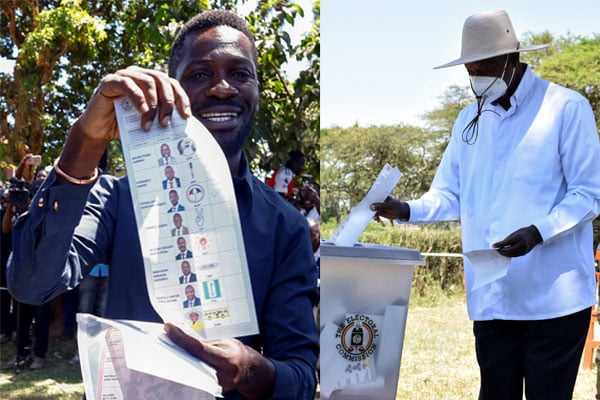
On January 17, Electoral Commission chairperson Simon Byabakama declared incumbent Yoweri Museveni the winner with 7.9 million votes, or 71.65 percent of valid ballots cast.
His closest challenger, Robert Kyagulanyi alias Bobi Wine, received 2.7 million votes (24.72 percent), while six other opposition candidates, including Nathan Nandala Mafabi of the Forum for Democratic Change (FDC) and former military chief Gregory Mugisha Muntu, shared the remainder.
Reliefs sought
The Uganda Law Society and the East African Law Society are seeking declarations that the January 15 election failed to comply with electoral laws and democratic principles, rendering the results invalid.
They also ask the court to find that the Attorney General failed in his duty to ensure Uganda’s adherence to the East African Community Treaty.
In addition, the petitioners are seeking a public apology to affected citizens and orders compelling the government to provide rehabilitation measures, including medical, psychological, legal and social support to victims of alleged election-related violations.
The Attorney General, Uganda’s chief legal adviser, is Kiryowa Kiwanuka. By press time Monday evening, neither Kiwanuka nor the Electoral Commission had immediately commented on the court case .
Museveni swearing-in
The regional case comes weeks after Uganda’s Supreme Court allowed the withdrawal of a presidential election petition filed by former candidate Robert Kasibante.
Kasibante, who finished sixth, had challenged the electoral process, citing widespread irregularities from voter registration to the tallying of results. He later withdrew the petition before it was heard, citing the high financial and technical demands of auditing nationwide election data.
Following the withdrawal, Chief Justice Flavian Zeija ruled that, in the absence of any pending legal challenge, Museveni’s re-election stood under the law.
“Following the withdrawal of Presidential Election Petition No. 01 of 2026, and there being no valid legal challenge to the results of the presidential election held on January 15, 2026, we hereby declare and confirm that Yoweri Kaguta Museveni Tibuhaburwa is the duly elected President of Uganda,” he said, citing Section 61(4) of the Presidential Elections Act.
Museveni 81, who has been in power since January 1986, is expected to be sworn in for another five-year term in May.