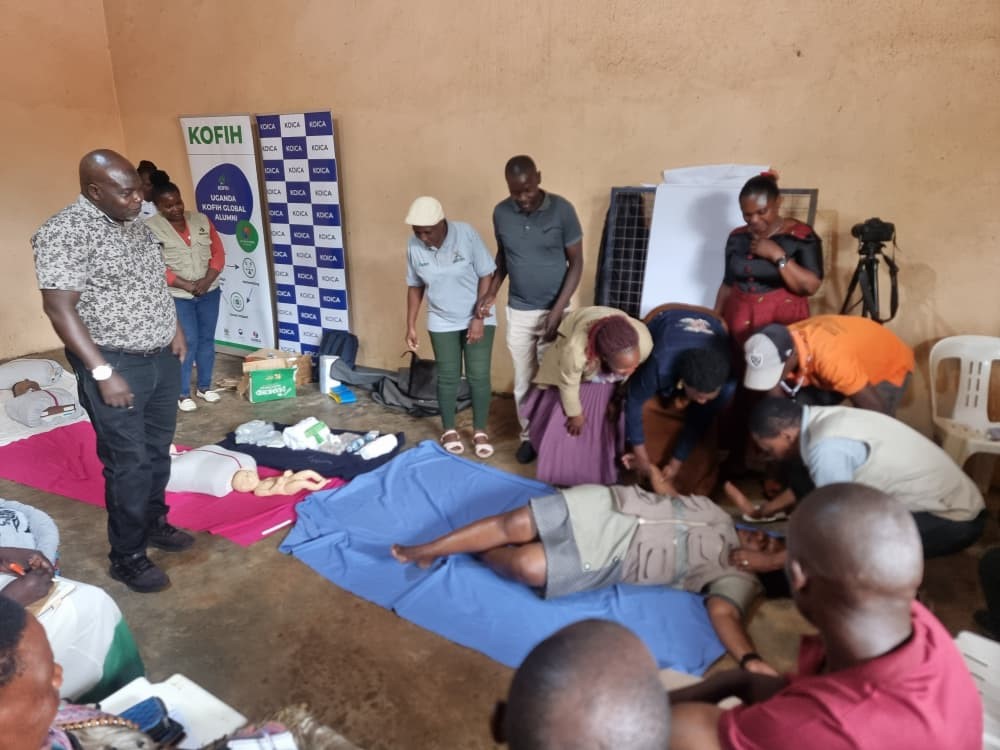
MASAKA.The KOICA Club of Uganda (KOCU) and the KOFIH Global Alumni (KGA), in close collaboration with the KOFIH Uganda Office and the KOICA Uganda Office have conducted a joint capacity-building programme for coffee farming communities in Kamuzinda Village, Kyanamukaka Sub-County, Masaka District
The programme brought together over 120 coffee farmers and community members for a structured, hands-on training covering quality coffee production, climate-smart agriculture, post-harvest handling, coffee value chain, Water, Hygiene and Sanitation (WASH), and Basic Emergency Care.
Designed as an integrated agriculture and health education initiative, the training program aimed to strengthen farmers’ technical capacities while simultaneously addressing critical community health needs related to sanitation, hygiene, and emergency response preparedness.
Masaka District lies within the Greater Masaka region, an area with a deep-rooted coffee-growing heritage and significant untapped potential to contribute to Uganda’s broader coffee export sector.
Despite this promise, smallholder farmers in the region continue to face compounding challenges, including volatile global coffee prices, the mounting effects of climate change, limited access to quality agricultural inputs, persistent crop pests and diseases, post-harvest losses, and infrastructure gaps.
The programme directly responds to these realities by equipping farmers with evidence-based knowledge and practical tools to improve productivity, post-harvest practices, and the overall quality and marketability of locally produced coffee.
“This initiative reflects the shared values and commitment of Korean government and their alumni networks in Uganda to contribute meaningfully to community development,” said Hajjat Zaina Nakidde, the Kyanamukaka town council mayor- elect who was present during the training.
“After this training, I will experiment with some of the practical skills I have learnt like proper soil preparation, mulching and timely weeding for a better yield from my small coffee garden” said Nanteza Fatuma, a coffee farmer from Mmanzi Village.
Training sessions covered sustainable and climate-adAaptive agricultural practices, strategies to improve coffee yields and quality, post-harvest management techniques, WASH promotion, and live demonstrations of Basic Emergency Care in common emergencies in local communities.
To support the practical application of skills acquired during the programme, participating farmers also received selected farm tools and WASH kits.
The collaboration between KOCU and KGA underscores the vital role that diaspora alumni networks play in bridging at the community level.
Through this initiative, the two associations seek to advance sustainable livelihoods, promote healthier community practices, and deepen people-to-people partnerships between Korean development actors, alumni networks and local communities across Uganda.