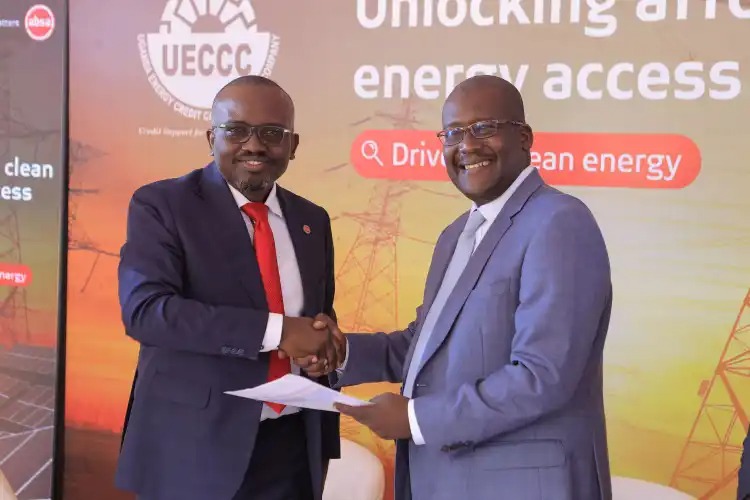
Absa Bank Uganda has entered a new partnership with the Uganda Energy Credit Capitalisation Company, unlocking a concessional credit facility worth Shs11.085 billion aimed at expanding access to affordable renewable energy solutions across the country.
The funding, arranged under the government’s Electricity Access Scale-Up Project, will allow Absa to extend financing to qualifying clean energy firms. The support is expected to drive the distribution of solar home systems, institutional solar installations, energy equipment for small businesses, and cleaner cooking technologies.
The initiative comes as Uganda continues to grapple with uneven electricity access despite growth in generation capacity, which now exceeds 2,000 megawatts, according to the Electricity Regulatory Authority. National electrification levels remain around 60%, with a significant divide between urban and rural areas. High connection costs, infrastructure gaps, and limited off-grid financing options have slowed wider adoption, particularly among households and small enterprises.
Reliance on traditional fuels also remains high, with the majority of households still depending on firewood and charcoal for cooking—highlighting both the demand for cleaner alternatives and the environmental pressures tied to current energy use.
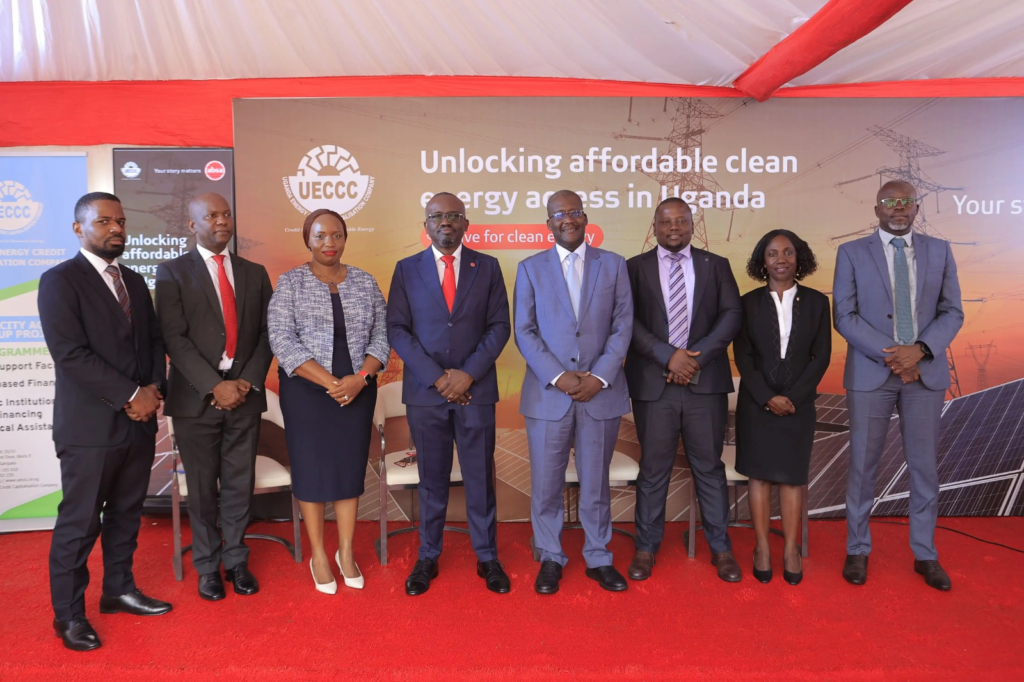
Under the agreement, UECCC will channel concessional funding to Absa through a financial intermediation model. The bank will then lend to approved energy service providers, including companies such as Greenlight Planet Uganda Limited. This structure is designed to ease access to working capital and inventory financing, challenges that have long constrained growth in the renewable energy sector.
The three-year programme will release funds in stages tied to performance targets. By reducing the cost of capital and capping lending rates at 15% annually, the facility is expected to make clean energy products more affordable while ensuring financial sustainability.
Absa says the partnership strengthens its ability to support clients transitioning to cleaner energy through structured and accessible financing. It also aligns with the bank’s broader environmental, social, and governance agenda, as it increases investment in sustainable finance initiatives.
Through this collaboration, the bank aims to contribute to Uganda’s shift toward modern energy solutions, reduce dependence on biomass, and support more productive energy use across households and businesses.