KAMPALA.The Buganda Kingdom has petitioned government, raising concerns over the Draft Protection of Sovereignty Bill, 2026.
The most populous kingdom warns that the Bill’s current provisions could undermine constitutional freedoms, disrupt development programmes, and strain Uganda’s investment climate.
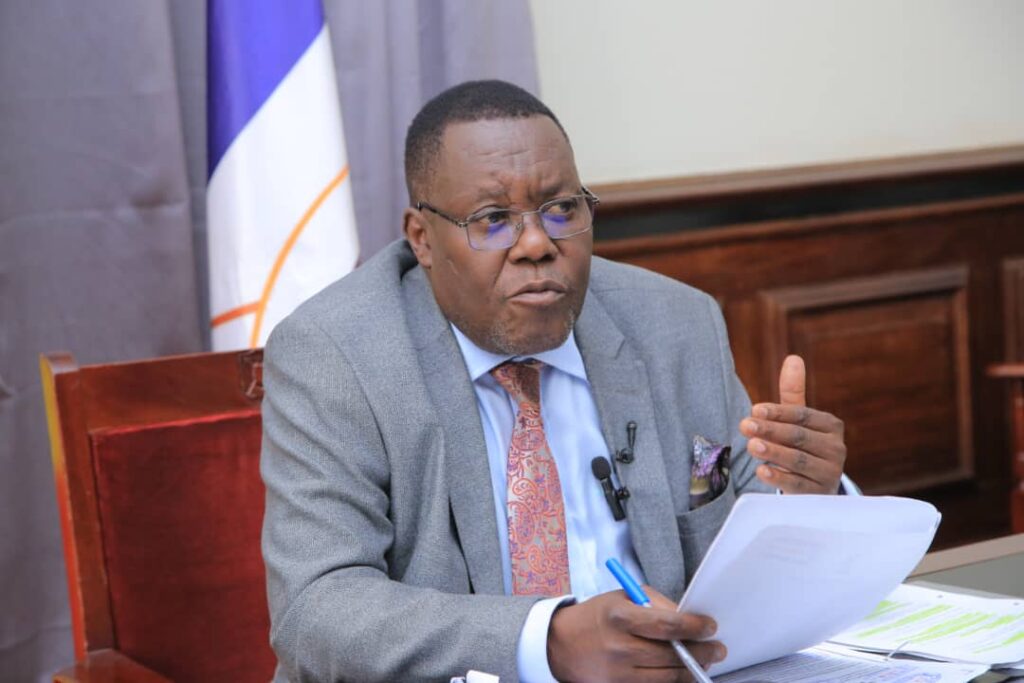
In a detailed submission dated April 13 addressed to the Attorney General , Buganda’s Attorney General, Mr Christopher Bwanika, said the Kingdom supports efforts to safeguard national sovereignty but cautioned against provisions that may inadvertently harm the constitutional mandate of traditional institutions and the broader national interest.
“Our wish is to assist Government and Parliament in refining this legislation so that it truly serves its stated object… without harming the welfare of Ugandans,” Bwanika wrote.
Mr Bwanika emphasised that as a Kingdom, its position is not political opposition but a contribution rooted in partnership with the government. “These submissions are not partisan in nature… Buganda regards itself as a partner of the Government in national development,” the letter states.
Mr Bwanika questioned the Bill’s broad definition of a foreigner and agent of a foreigner, arguing that it risks misclassifying Ugandans in the diaspora and cultural institutions.
“A Ugandan residing abroad does not lose citizenship. When it comes to diaspora contributions to initiatives like the Kabaka Birthday Run and Oluwalo Lwaffe, could it be unfairly treated as foreign interference?” he questioned.
The Kingdom also cautioned that donor-funded programmes supported by organisations such as UNAIDS, UNESCO, and USAID could wrongly label Buganda as an agent of foreigners.
“To designate family members as agents of foreigners is a profound injustice,” the submission reads.
The kingdom further warned that clauses in the Bill could criminalise legitimate public engagement on policy matters.
“Any engagement on land rights, health, or education could be interpreted as influencing government policy,” Mr Bwanika said, urging Parliament to distinguish between harmful foreign interference and lawful civic advocacy clearly.
Mr Bwaniika singled out Clause 13 on economic sabotage as overly vague and punitive, noting it could penalise individuals for expressing critical economic opinions.
“A Kingdom official raising concerns about a government project could be prosecuted, that penalties of up to Shs2 billion or 20 years in prison are excessive and inconsistent with constitutional guarantees on freedom of expression”, he said
On financial provisions, Buganda described the Shs400 million threshold for foreign funding approvals as unrealistic, arguing it could cripple its multi-sector development programmes in health, education, and agriculture.
Mr Bwanika added that the Bill’s requirement for public disclosure of funding sources was also criticised as a violation of privacy.
“Many diaspora contributors give out of cultural obligation… public disclosure may deter this support,” the Kingdom noted, proposing confidential reporting instead.
Additionally, Buganda warned that mandatory registration requirements for entities deemed “agents of foreigners” could “cripple operations” of institutions such as the Kabaka Foundation and Nnaabagereka Development Foundation.
Buganda argued the Bill could reverse Uganda’s gains in attracting foreign investment.
“This appears to be a policy reversal… and will scare away potential investors,” Mr Bwanika stated, cautioning that capital could shift to other East African countries with less restrictive regulations.
“The damage caused may outstrip the intended benefits,” he added.
ABOUT THE BILL
The Protection of Sovereignty Bill, 2026 (Bill No. 13 of 2026) (the “Bill”) was gazetted on 13th April 2026 and tabled in Parliament for the first time on 15th April 2026.
It has been referred to the Parliamentary Committee on Defence and Internal Affairs and the Legal and Parliamentary Affairs Committee for scrutiny before it proceeds to Second Reading.
If enacted in its current form, the Bill imposes criminal liability, mandatory registration, and sweeping restrictions on foreign funding on a vast range of organisations and individuals operating in Uganda across the NGO, private sector, media, academic, diplomatic, and faith-based sectors. The penalties include imprisonment of up to 20 years and fines of up to UGX 4billion.
The Bill is promoted by the Ministry of Internal Affairs and seeks to protect Uganda’s sovereignty from foreign interference.
It introduces: (a) a mandatory registration regime for any person acting as an “agent of a foreigner”; (b) criminal prohibitions on a wide range of activities associated with foreign funding and influence; (c) a requirement for prior Ministerial approval before receiving foreign financial support above UGX 400 million per year; (d)stringent public reporting and disclosure obligations; and (e) broad inspection and enforcement powers vested in the Ministry of Internal Affairs.