By Joseph Mary Buwule
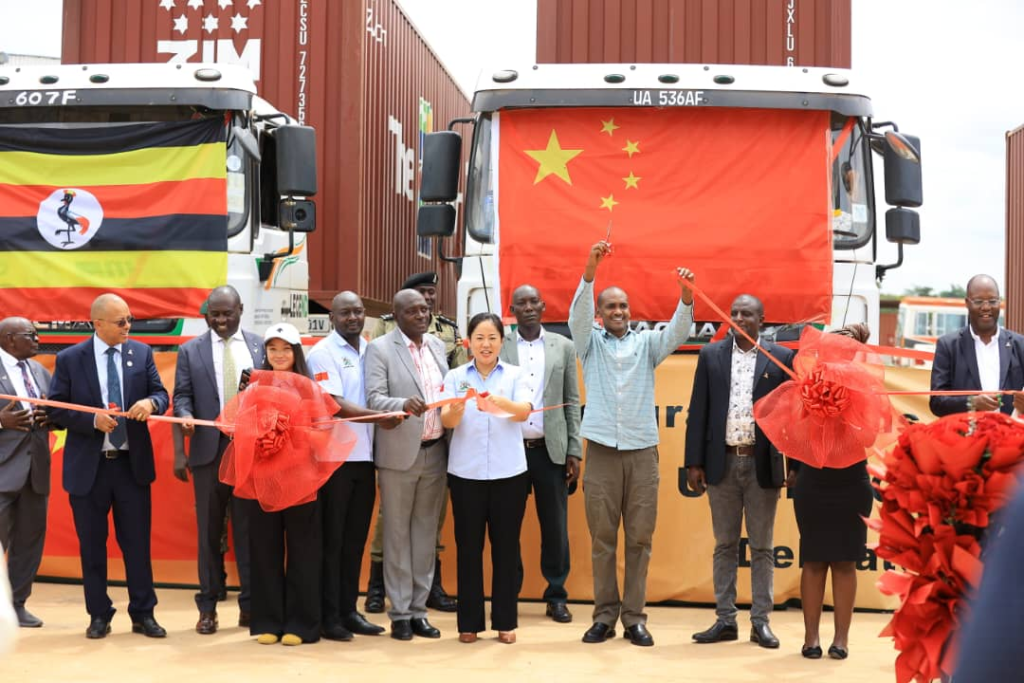
Uganda has officially flagged off its first-ever consignment of canned pineapples for export to China, marking a major milestone in the country’s agro-industrialisation drive and opening a new chapter for value-added agricultural exports.
The historic shipment, flagged off on Thursday at the China-Uganda Agriculture Cooperation Industrial Park in Luwero District, consists of 104 metric tonnes of canned pineapples processed by Deshiburg Fruits International Co. Ltd.
The ceremony was attended by Uganda’s Minister of Agriculture, Animal Industry and Fisheries, Frank Tumwebaze, the United Nations Resident Coordinator in Uganda Leonard Zulu, and the FAO Country Representative in Uganda Ezana Kassa.
The export is being hailed as a breakthrough for Uganda’s agricultural transformation agenda, with leaders describing it as a shift from exporting raw produce to exporting processed, high-value products to global markets.
Speaking at the launch, Tumwebaze said the development sends a strong signal that Uganda’s agro-industrialisation strategy is taking shape and creating real opportunities for farmers.
“I dashed to Luwero to flag off the inaugural export of 104 metric tonnes of canned pineapples to China by DESHIBURG company, one of the investors in the Uganda-China Agriculture Cooperation Industrial Park,” Tumwebaze said.
He noted that Deshiburg is the first investor to establish a dedicated canned pineapple factory in Uganda, with the capacity to process up to 500 tonnes of pineapples per day.
According to the minister, the factory will significantly increase demand for pineapples and help address the long-standing challenge of limited markets for perishable agricultural produce.
“This huge proliferation of agro-industries speaks to farmers only one message; produce, produce and produce more. The excuses of no markets for agricultural produce is no more with this revolution of agro-industrialisation,” he said.
Tumwebaze urged local leaders and agricultural extension workers to mobilise farmers to engage in intentional farming aimed at meeting existing market demand sustainably while observing international quality standards.
Deshiburg Fruits International Managing Director, Fei Yin, described the day as historic for both Uganda and the company.
“Today is a day to remember and a day of great significance,” he said. “The first batch of containers is about to set sail, carrying hope and dreams.”
Fei explained that the company is a partnership involving four international firms with expertise in canned food production, international trade, and agro-industrial development. He said Uganda was selected because of its abundant agricultural resources, stable investment environment, and development potential.
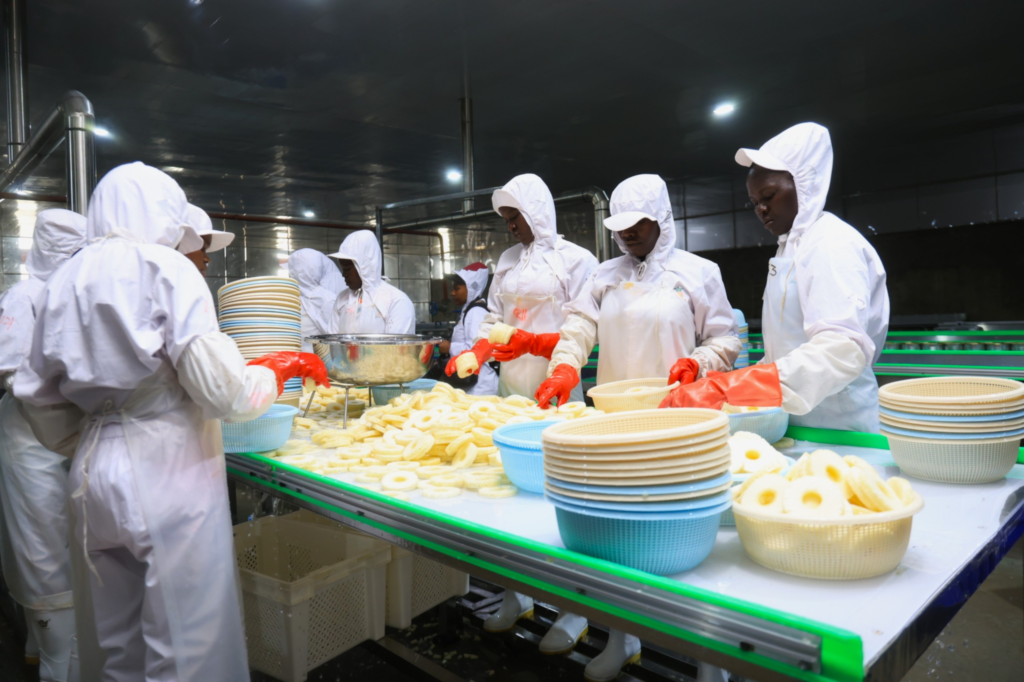
Deshiburg, established in August 2025 with an investment of US$11 million, has already created hundreds of jobs and is supporting thousands of pineapple farmers through stable market access.
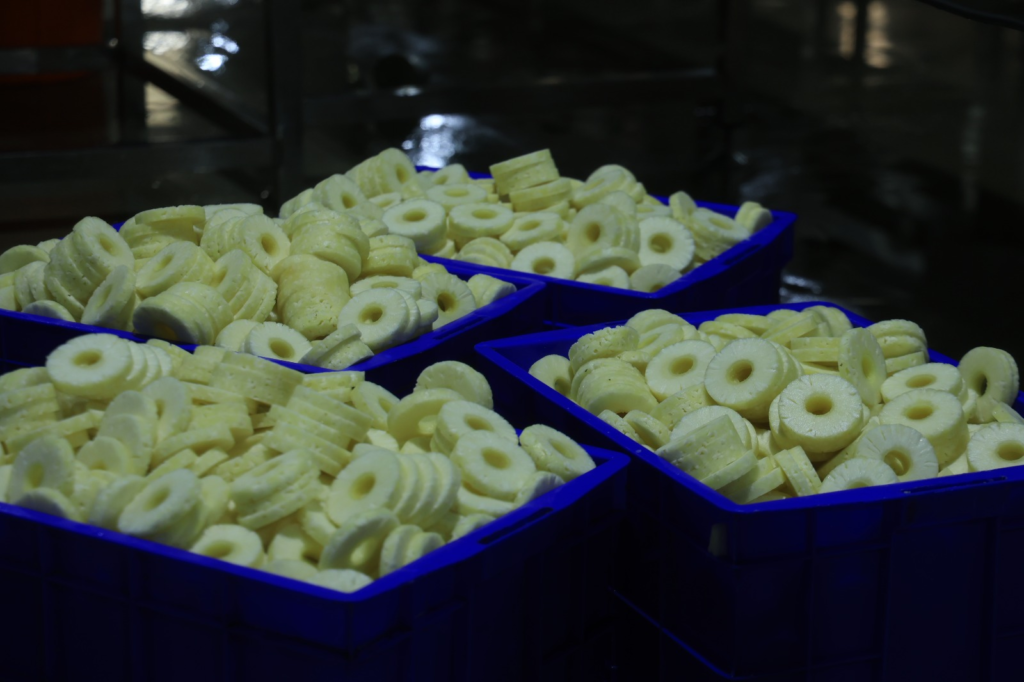
The company processes the Smooth Cayenne pineapple variety without artificial preservatives and plans to expand into products such as pineapple juice, frozen pineapple, avocado oil, canned maize, dried jackfruit, bananas, and canned jackfruit.
Fei revealed that the company intends to develop a 1,500-acre modern agricultural science and technology industrial park integrating research, processing, logistics, and demonstration farming.
“We sincerely appeal to Ugandan farmers to join hands with us to plant more and better high-quality pineapple varieties such as Smooth Cayenne and especially MD-2,” he said.
The FAO Country Representative, Ezana Kassa, described the inaugural export as a major step in Uganda’s food systems transformation journey.
“It is a great honour to join you today at this important milestone — the flagging-off of Uganda’s inaugural export of processed pineapples to the People’s Republic of China,” he said.
Kassa said value addition remains central to transforming agrifood systems because it creates jobs, reduces post-harvest losses, improves competitiveness, and increases farmers’ incomes.
“This inaugural export signals that Uganda is not only producing but is increasingly ready to compete in demanding global markets,” he noted.
He said FAO had supported Uganda through South-South and Triangular Cooperation initiatives involving technology transfer, deployment of Chinese experts, agro-industrial park development, and farmer capacity building.
Kassa added that the Deshiburg investment demonstrates how Uganda-China cooperation can catalyse innovation, agro-processing, and international market integration.
On his part, Leonard Zulu, the United Nations Resident Coordinator in Uganda, said the shipment represented more than an export milestone.
“What we are witnessing today is more than an export milestone. It is a story of transformation, partnership, and above all, a story about people,” he said.
Zulu noted that thousands of farmers in districts such as Luwero, Nakasongola, Nakaseke, and Kayunga have struggled for years with post-harvest losses and unstable prices.
“Today, that story is changing,” he said.
He added that the project directly contributes to several Sustainable Development Goals, including poverty reduction, food security, decent work, industrialisation, and global partnerships.
“This is how we translate global commitments into real, measurable change — by connecting farmers to factories, and factories to global markets,” Zulu said.
The China-Uganda Agriculture Cooperation Industrial Park, established by Kehong Group in 2015, is implementing a broader agro-industrial investment programme worth about US$220 million under a memorandum of understanding with Uganda’s Ministry of Agriculture, Animal Industry and Fisheries.
The inaugural shipment validates the park’s out-grower model, under which more than 1,500 farmers from Luwero, Nakasongola, Nakaseke, and Kayunga supply pineapples for processing.
Officials said the export also demonstrates Uganda’s growing capacity to meet stringent international food safety and quality standards while positioning itself as a competitive exporter of value-added agricultural products.
As the first containers begin their journey to China, leaders expressed optimism that the development will inspire more investment in agro-processing, expand export opportunities, create jobs, and increase household incomes for Ugandan farmers.