By Joseph Kiggundu
KAMPALA — Parliament has raised concerns over the Uganda Human Rights Commission’s (UHRC) failure to meet key performance targets in investigating human rights complaints, inspecting detention facilities and resolving tribunal cases despite receiving increased government funding.
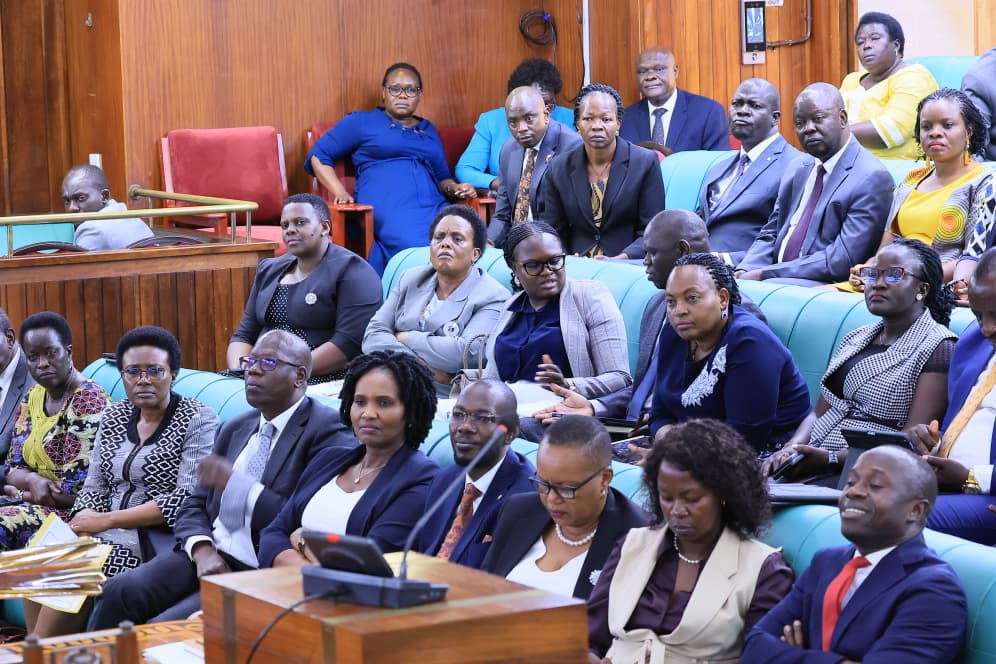
The concerns were outlined by the Public Accounts Committee on Commissions, Statutory Authorities and State Enterprises (COSASE) in a report presented by its chairperson, Muwada Nkunyingi, during a plenary sitting chaired by Speaker Jacob Markson Oboth on Thursday, October 15, 2026.
The report, which examined the Auditor General’s findings on UHRC’s financial statements for the year ended December 31, 2025, also identified weaknesses in financial management, procurement, asset management and implementation of the commission’s strategic plan.
UHRC received Shs28.95 billion in revenue during the 2024/2025 financial year, compared with Shs18.34 billion in the previous year. Of the latest allocation, Shs28.87 billion came from the Consolidated Fund, while Shs88 million was generated through non-tax revenue.
However, COSASE said the increase in funding had not translated into commensurate progress in delivering the commission’s constitutional mandate.
“The inability to conclude tribunal cases, undermined access to justice during the just concluded strategic plan period of FY 2020/21–FY 2024/25,” the committee report states.
An assessment of 22 targets under the commission’s strategic plan for the 2020/2021–2024/2025 period found that 13 had been fully achieved, while nine were only partially implemented.
The report showed that UHRC inspected 1,054 detention facilities against a target of 1,350, leaving 296 facilities unchecked. It also found that 19 per cent of registered complaints remained uninvestigated.
The commission concluded only 50 complaints through its tribunal against a target of 250, while 49 cases were resolved through mediation against a target of 400.
COSASE attributed the performance gaps partly to inadequate funding, delays in recruitment and poor allocation of available resources. It urged the commission to prioritise expenditure on activities directly connected to investigating complaints, monitoring detention facilities and delivering justice to victims of human rights violations.
The committee also called for compliance with the Treasury Instructions, 2017, which restrict employee compensation to 65 per cent of recurrent expenditure.
On procurement, MPs questioned the handling of Shs70.4 million allocated for partitioning works at the commission’s headquarters. The report indicated that the money was redirected towards office furniture after plans emerged to relocate the commission to JLOS House in Naguru.
However, the committee said supporting evidence for the reported purchases had not been provided. It recommended that accountability for the funds be established and that the Inspectorate of Government and the Directorate of Public Prosecutions take appropriate action.
The report further identified inconsistencies in asset records and raised concerns over 20 vehicles valued at Shs2.484 billion that had exceeded their five-year useful life. Underutilisation of land owned by the commission was also flagged.
Beyond financial and administrative shortcomings, COSASE cited persistent conflicts among commission members and staff as a factor affecting institutional performance. It recommended legal reforms and appropriate action against public officers involved in continuing disputes that undermine the commission’s work.
The committee’s findings place renewed focus on whether the human rights watchdog is adequately converting public resources into effective investigations, inspections and timely resolution of complaints.
Debate on the COSASE report was deferred to a subsequent sitting of Parliament.