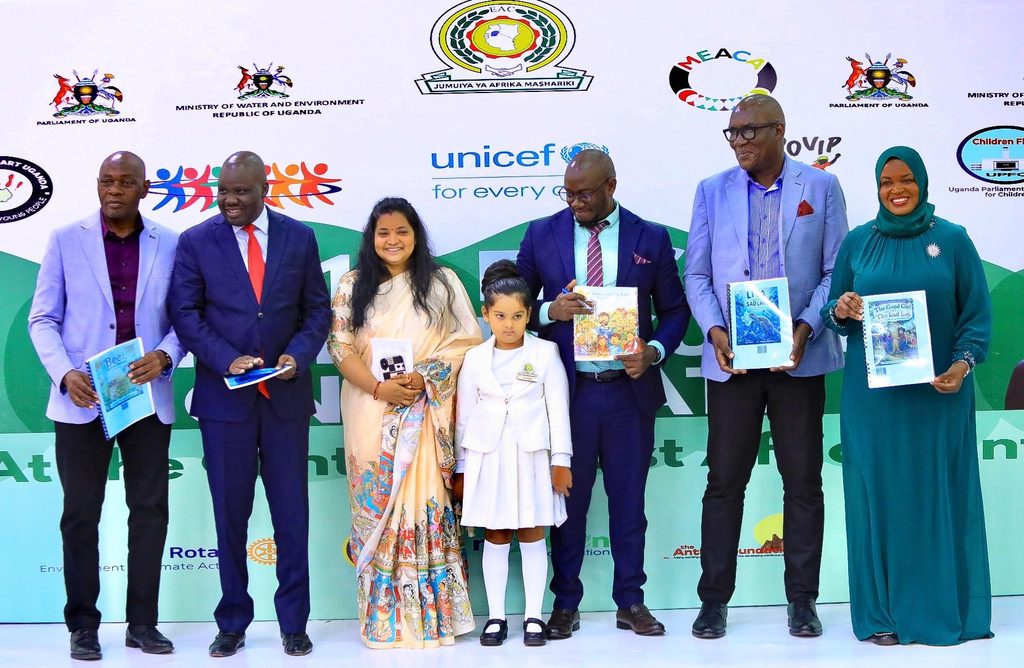
Members of the Uganda Parliamentary Youth Forum with selected participants of the 1st EAC Children Summit on Climate Change on Friday 16th October 2026.
By Maria Mariam Namala
KAMPALA — East African legislators have called on governments to involve children in developing climate change policies, warning that young people bear a disproportionate share of the consequences of environmental degradation despite contributing least to the crisis.
The call was made during the inaugural East African Community Children’s Summit on Climate Change held at Parliament on Friday, October 16, 2026. The meeting brought together Ugandan legislators, members of the East African Legislative Assembly, regional officials and development partners to discuss the links between climate action, peace and prosperity.
Susan Abeja, Chairperson of the Uganda Parliamentary Forum for Children and Otuke District Woman MP, said the summit was intended to push EAC partner states to give children a meaningful role in shaping policies and interventions to address climate change.
“Our position as the Forum is clear, children must not only be protected from the effects of climate change, they must be meaningfully involved in shaping the solutions,” Abeja said.
She noted that children were already experiencing the effects of floods, droughts, environmental degradation and other climate-related emergencies, even though they had contributed little to the causes of the crisis.
The summit was held under the theme, “Children Leading East African Integration: Climate, Peace and Prosperity.”
Nakasongola County MP Ivan Kyeyune challenged adults to reconsider development practices that prioritise commercial interests over environmental protection, saying children were paying the price for decisions made by older generations.
He cited the destruction of wetlands for commercial farming and industrial development as examples of activities that undermine environmental sustainability, with consequences for communities’ access to food and water.
Kyeyune urged children to take practical action in their communities, encouraging each participant to plant at least five trees as part of efforts to restore the environment and build climate resilience.
Lalit Patra, UNICEF Uganda’s Chief of WASH, Environment and Climate Change, called on MPs to make specific climate-related commitments that could be implemented in their constituencies.
Patra also proposed the establishment of youth climate change groups at constituency level to sustain environmental initiatives beyond the summit and give young people a continuing role in climate action.
Representing the Ministry of Water and Environment, Dr Flavia Byekwaso said Uganda needed to invest more in climate-resilient schools and public infrastructure while expanding access to clean water and renewable energy.
She emphasised the importance of consulting children when formulating climate policies, arguing that young people experience the effects of environmental damage and will live longest with the consequences of decisions being made today.
The summit is scheduled to conclude with a Climate Champions Weekend on Saturday, October 17, during which participants are expected to plant 5,000 trees at Forest High School in Kasanda District.
The tree-planting exercise is intended to translate discussions at the summit into practical environmental action while encouraging children and communities to participate in climate change mitigation.