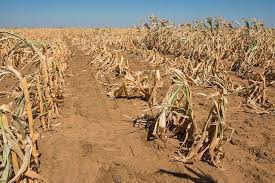
Uganda will experience drier and warmer-than-normal conditions across much of the country between June and August, with authorities warning farmers, livestock keepers and households to prepare for water shortages and crop stress, the Ministry of Water and Environment said.
The Directorate of Meteorological Services said most parts of the country are expected to receive below-average rainfall during the June-July-August (JJA) season, raising concerns over agricultural production, livestock health and water availability.
Permanent Secretary Dr Alfred Okot said the forecast points to a prolonged dry spell across large parts of Uganda.
“A bigger part of the country will get below, or is projected to get below-average rainfall,” Dr Okot said.
“This is going to cause stress, especially to crops, animals and human beings. We therefore need to take precautions, and those involved in livestock should ensure they conserve water,” he added.
The ministry advised farmers to plant drought-tolerant crops and reduce dependence on rain-fed agriculture by investing in irrigation and water storage systems.
“We need to embrace irrigation and ensure we have water storage within or near production areas as an appropriate solution,” Dr Okot said.
He attributed the changing weather patterns partly to climate change and urged Ugandans to adopt environmentally sustainable practices to mitigate its effects.
According to the seasonal outlook, rainfall patterns will be influenced by warmer-than-normal sea surface temperatures in the equatorial Pacific Ocean, associated with an El Niño tendency, which is expected to suppress rainfall across much of the country.
Meteorologists also noted that local factors such as mountains, large water bodies and vegetation cover would continue to influence rainfall distribution in specific regions.
In western Uganda, including the districts of Kabale, Kisoro, Rukungiri, Isingiro, Mbarara and Ibanda, dry conditions are expected to persist throughout the forecast period.
The Rwenzori region, covering Kasese, Bundibugyo, Ntoroko, Kabarole and Bunyangabu, as well as parts of Bunyoro including Hoima, Kikuube and Buliisa, will experience isolated light rains in early June before dry conditions dominate for the remainder of the season. Masindi and Kiryandongo are expected to receive occasional light rainfall.
In central Uganda, including Kampala, Wakiso, Mpigi, Mityana and Kalangala, isolated showers are forecast until mid-June before giving way to predominantly dry conditions through August. Similar conditions are expected in the cattle corridor districts of Sembabule, Lyantonde, Mubende, Kiboga and Nakasongola.
Eastern Uganda is forecast to fare slightly better. Areas around Lake Victoria and eastern Kyoga, including Jinja, Mayuge, Kamuli, Tororo, Pallisa, Budaka and Butaleja, are expected to receive intermittent rainfall beyond mid-June. The Mount Elgon region, including Mbale, Bududa, Sironko and Kapchorwa, is also likely to continue receiving periodic rains.
In northern Uganda, districts in West Nile and Karamoja are expected to transition from current dry conditions to isolated rains by mid-June, followed by intermittent showers through August. Northern districts such as Gulu, Kitgum, Amuru and Lamwo are expected to continue receiving on-and-off rainfall throughout the season.
Overall, the forecast indicates that northern and eastern Uganda will experience near-normal to below-normal rainfall, while central and western regions are expected to remain significantly drier than usual.
Meteorological officials urged local governments, farmers and water authorities to use the forecast for planning and preparedness to minimise the impact of the anticipated dry spell.