By Joseph Kiggundu
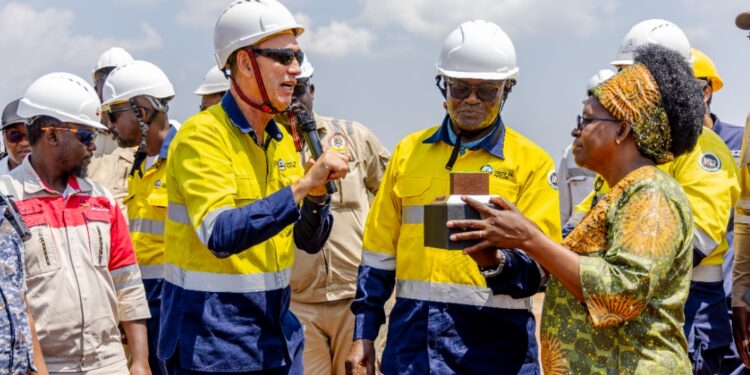
HOIMA — Uganda has intensified preparations for its first commercial oil production after the Minister of Energy and Mineral Development, Dr Monica Musenero, inspected the East African Crude Oil Pipeline (EACOP) Pump Station One in Kabaale, Hoima District.
The visit was aimed at assessing progress on the 1,443-kilometre heated pipeline, which will transport crude oil from Uganda’s Kingfisher and Tilenga oilfields to the Tanzanian coast for export.
According to EACOP officials, construction of the project is now 92 per cent complete, with the pipeline entering a critical stage involving commissioning, testing and completion of outstanding works.
Pump Station One, located in Kabaale, marks kilometre zero of the pipeline. Of the total route, approximately 296 kilometres will run through Uganda, while 1,147 kilometres will cross Tanzania.
Musenero said the oil and gas sector presents an opportunity for Uganda to accelerate economic transformation, create employment and stimulate investment in related industries.
She described EACOP and other petroleum projects as an important opportunity for the country to expand its industrial base and generate wider economic benefits.
“We believe that EACOP, together with the other oil-related projects, is a blessing to our country and will spur significant growth and innovation,” Musenero said.
Minister defends oil project
Musenero also defended Uganda’s decision to develop its petroleum resources despite growing international pressure to reduce dependence on fossil fuels.
She questioned the criticism directed at Uganda’s oil projects, arguing that petroleum products remain widely used globally, including in transportation, aviation and industry.
“There is no country that has stopped using petroleum products,” she said, noting that Uganda contributes a relatively small share of global emissions.
The minister said Uganda was pursuing measures to reduce the environmental impact of oil production while simultaneously investing in cleaner sources of energy.
She urged the petroleum sector to generate benefits beyond crude oil production by supporting local industries, skills development and formal employment for Ugandans.
EACOP enters testing phase
EACOP Deputy Managing Director John Bosco Habumugisha said the project had moved from predominantly construction activities to preparations for safe operation.
He said teams were increasingly concentrating on testing and commissioning critical systems required to receive and transport crude oil.
“Our focus is increasingly shifting towards ensuring that the critical systems are ready to safely receive and transport Uganda’s crude oil,” Habumugisha said.
He said some remaining works, including administrative facilities, drainage and restoration activities, would continue but would not prevent the pipeline from progressing towards receiving crude.
Testing is currently focusing on critical infrastructure, including Pump Station One, the fibre-optic communications network and the heating system.
The heating system is essential because the pipeline is designed to transport Uganda’s waxy crude, which requires heating to maintain flow over the long distance to the Tanzanian coast.
Pipeline faces opposition
EACOP has faced sustained opposition from environmental and human rights organisations, which have raised concerns about its potential contribution to climate change, environmental risks and the displacement of communities along the pipeline route.
The government and project developers have maintained that the project is being implemented with environmental safeguards and will provide significant economic benefits to Uganda and the region.
Once commercial production begins, crude from the Kingfisher and Tilenga fields will be gathered in Hoima and fed into EACOP for transportation to the Chongoleani Marine Storage Terminal near Tanga Port in Tanzania.
At the terminal, the crude will be stored before being loaded onto tankers for international export.
The latest inspection comes as government and oil companies coordinate the development of the oilfields, pipeline and export infrastructure in preparation for Uganda’s entry into commercial oil production.