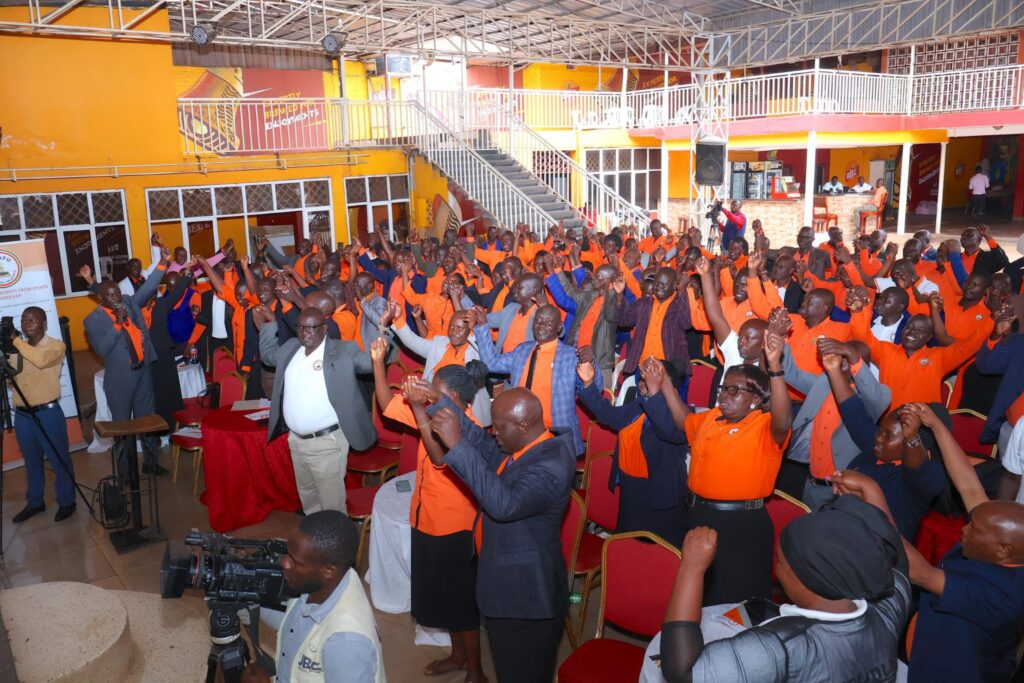
PARLIAMENT. Educationalists are sharply divided on the National Teachers’ bill of 2024 which was passed by Parliament last Thursday.
While most educationalists agree on the need for regulation and higher standards, they are split over degree requirements, licensing, and a few other clauses that MPs kept in the Bill.
At the center of the debate on the bill is the requirement for a higher qualification standard for teachers.
While the Bill establishes a National Teachers’ Council that sets out to regulate, standardize, and develop the profession, Parliament removed a blanket requirement that all teachers must have attained at least a bachelor’s degree in order to be registered, a move that has exposed fault lines among educationists.
MPs agreed that the minister of Education and Sports, in consultation with the National Teachers’ Council and the National Council for Higher Education, will set eligibility standards for registration through statutory instruments. The amendment was carried after concerns that a fixed degree rule would lock out thousands of experienced teachers, who joined the profession with certificate and diploma qualifications.
Filbert Baguma, Secretary General of the Uganda National Teachers’ Union (Unatu), disagreed with the MPs’ move to eliminate the degree requirement, saying that the push for higher qualifications is about strengthening Uganda’s education base and thus the clause should be reconsidered.
“Now if you go to the world, all countries which have got the best education systems, you will find the minimum teacher having a master’s degree. Now, here we have a misconception that when you are going to teach nursery, the pre-primary [level of learning], you don’t need to have a degree, but this is the foundation of education,” Mr Baguma said in an interview with this publication .
BACKGROUND
The National Teachers’ Bill was passed by Parliament on 23 April 2026, was first introduced to parliament in 2024 and is now awaiting presidential assent.
The Bill gives legal effect to the National Teachers’ Policy approved by Cabinet in 2019, forming the National Teacher Council to regulate the profession.
The Bill’s roots go back to a 2013–2014 UNESCO-backed diagnostic study on challenges facing teachers in Sub-Saharan Africa.
Uganda was part of that study, and its findings shaped the 2019 National Teachers’ Policy.