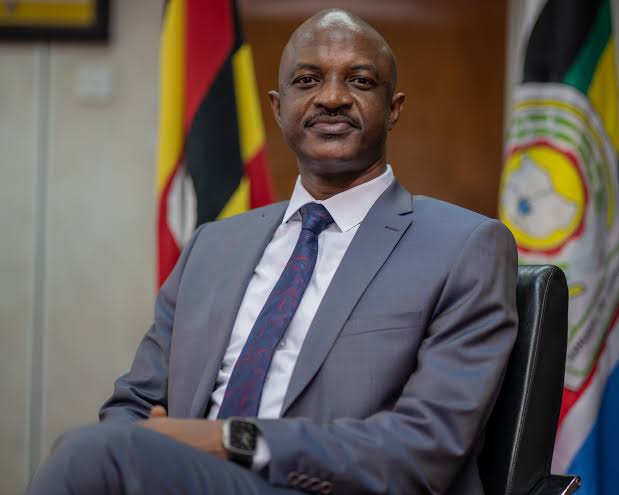
KAMPALA — The government has announced that it will no longer spend public funds on organising major national celebrations such as International Women’s Day, Labour Day, Heroes Day, Independence Day and other public commemorations starting in this coming financial year.
The decision, unveiled by Permanent Secretary and Secretary to the Treasury Mr Ramathan Ggoobi, is part of a broader government strategy to rationalize public expenditure and redirect resources to priority development programmes.
Speaking on the government’s expenditure reforms, Ggoobi said future commemorations of public holidays will not involve costly national events funded by the state. Instead, President Yoweri Museveni will address the nation through radio and television broadcasts from State House.
“We are not going to spend money organizing public functions for national celebrations. The President will communicate to Ugandans through radio and television from State House, and the resources saved will be redirected to priority government programmes,” Ggoobi said.
The Treasury chief explained that only a limited number of religious functions deemed essential by government will continue receiving public funding.
The move comes as the government intensifies efforts to contain recurrent expenditure and free up resources for strategic investments under the Fourth National Development Plan.
According to Ggoobi, the savings will be channeled toward the government’s priority areas, including the Agro-Industrialization, Tourism Development, Mineral-Based Industrialization and Science, Technology and Innovation (ATMS) agenda, as well as critical enablers such as infrastructure, security and human capital development.
For years, Uganda has spent billions of shillings annually on organizing national celebrations, often involving venue preparations, transport, accommodation, security deployments, entertainment and media coverage.
While government officials argue that the events foster patriotism and national unity, critics have frequently questioned their cost amid competing demands for healthcare, education and service delivery.
The latest announcement signals one of the most significant austerity measures undertaken by the government in recent years and underscores the Treasury’s determination to prioritize productive investments over ceremonial expenditure.
If fully implemented, the policy could save billions of shillings annually, providing additional fiscal space for government programmes aimed at wealth creation, job generation and economic transformation.