By: Joseph Mary Buwule.
KAMPALA, Uganda – Judicial Officers from Northern Region Cluster II, comprising Judges, Registrars, and Magistrates, are participating in a two-day training on Criminal Trial Procedure at the Supreme Court Conference Hall aimed at enhancing the effective management and determination of criminal cases.
The training, organized by the Judicial Training Institute (JTI), was officially opened by the Deputy Chief Justice Designate, Justice Moses Kawumi Kazibwe, who represented the Chief Justice.
Delivering the Chief Justice’s remarks, Justice Kazibwe said the training addresses a critical area at the heart of the justice system—the fair, efficient, and effective handling of criminal cases. He noted that his experience as an appellate judge had revealed a worrying trend of appeals arising from procedural errors, highlighting the need for continuous judicial education.
Justice Kazibwe observed that criminal trials have become increasingly complex due to the growing reliance on forensic science, digital technology, and specialized expert evidence. He cited examples such as DNA analysis, fingerprint identification, cyber investigations, electronic records, CCTV footage, and financial tracking systems, all of which require judicial officers to possess specialized knowledge to effectively evaluate evidence.
Referring to the Judiciary Annual Performance Report for the Financial Year 2024/25, he revealed that criminal cases remained the largest category of matters handled by the courts, with 125,686 cases registered and 118,883 concluded during the period. Despite the progress, criminal matters continue to account for the largest share of the Judiciary’s case backlog, with 14,675 cases still pending at the close of the financial year.
Justice Kazibwe commended the partnership between the Judiciary and the Uganda Police Force Directorate of Forensic Services, noting that judicial officers must be adequately equipped to assess scientific and electronic evidence while safeguarding constitutional rights and fair trial guarantees. He also praised the Judicial Training Institute for developing a programme that directly responds to emerging challenges in criminal adjudication.
Addressing participants, the Deputy Chief Justice emphasized the need for practical discretion when handling matters involving witnesses, particularly expert witnesses such as medical officers. He noted that inadequate witness facilitation remains a challenge in the administration of justice, often making it difficult for witnesses traveling long distances to attend court proceedings.
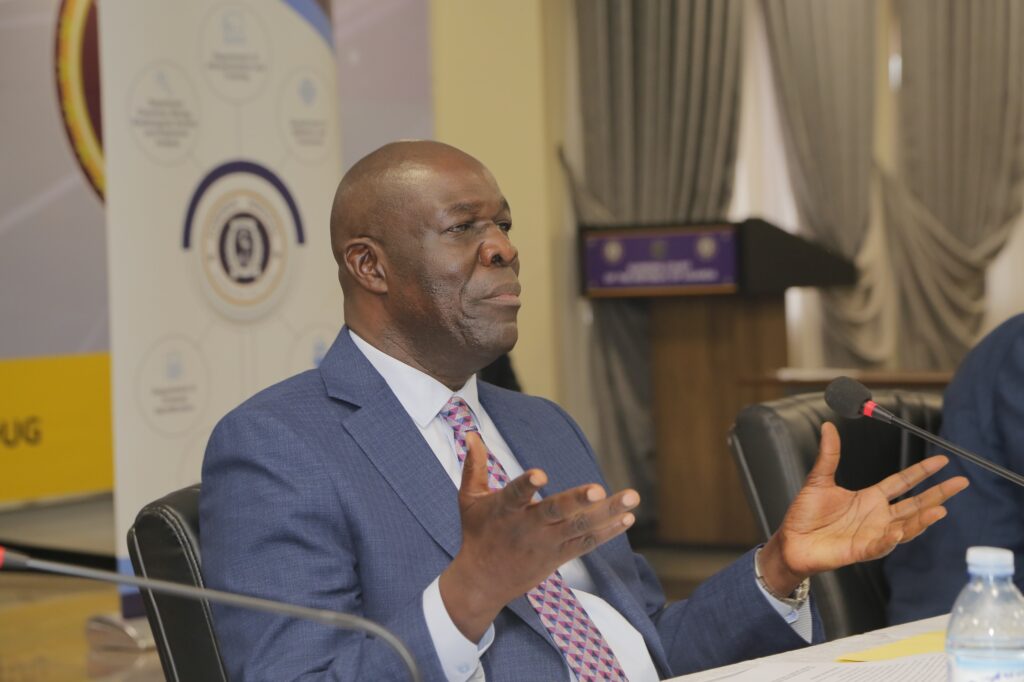
He urged judicial officers to ensure that witness facilitation is realistic and sufficient to cover transport and accommodation expenses, stressing that witnesses should not be expected to bear significant personal costs in order to participate in the justice process.
Justice Kazibwe further highlighted the importance of strengthening collegiality within the Judiciary. He observed that the institution has expanded significantly over the years, making it difficult for judicial officers across different regions and courts to know each other personally. He called for more opportunities that encourage interaction and networking among officers, emphasizing that all judicial officers, regardless of rank or station, are united by a common purpose of delivering justice.
He officially declared the training open and encouraged participants to continue building strong professional relationships.
The Chairperson of the JTI Governing Council and Justice of the Supreme Court, Justice Mike Chibita, underscored the importance of continuous judicial education in improving justice delivery. He explained that the training was informed by a comprehensive needs assessment which identified gaps in criminal trial procedure, particularly in the handling of forensic and digital evidence.
Justice Chibita noted that modern criminal adjudication increasingly depends on forensic science, which provides objective and scientific evidence to support judicial decision-making. He emphasized that courts must be capable of understanding and evaluating evidence such as DNA analysis, fingerprint identification, toxicology reports, and digital evidence.
He said forensic science plays a vital role in establishing guilt or innocence, exonerating wrongly accused persons, reconstructing crime scenes, informing sentencing decisions, and supporting courts through expert testimony. However, he cautioned judicial officers on the importance of maintaining proper chain-of-custody procedures and high ethical standards in handling forensic evidence.
Justice Chibita encouraged participants to embrace emerging technologies and deepen their understanding of electronic evidence, including metadata, digital chain of custody, and admissibility requirements under Ugandan law. He stressed that the training is not merely an academic exercise but an accountability intervention intended to reduce procedural errors, minimize unnecessary adjournments, and improve courtroom performance.
He commended the Chief Justice, the Executive Director of JTI, and the organizing team for their commitment to professional judicial education and excellence.
Earlier, the Executive Director of the Judicial Training Institute, Justice Prof. Andrew Khaukha, highlighted the growing significance of forensic science in criminal adjudication. Drawing from the 2025 Uganda Police Annual Report, he revealed that 3,178 cases were referred to the Directorate of Forensic Services, of which 1,974 were processed and forensic reports generated. Approximately 70 percent of those reports were presented as evidence in courts, while 85 percent of cases supported by expert forensic evidence resulted in convictions.
Justice Prof. Khaukha said the statistics demonstrate the increasing appreciation of scientific evidence in criminal proceedings. He nevertheless acknowledged challenges arising from the limited number of forensic experts in the country and urged judicial officers to effectively manage proceedings involving expert witnesses to maximize the use of their expertise.
He also called for greater attention to the welfare and facilitation of expert witnesses, noting their critical contribution to the administration of justice. He expressed appreciation to the Directorate of Forensic Services of the Uganda Police Force for its continued collaboration with JTI in delivering practical, experience-based training.
Justice Prof. Khaukha further recognized Lady Justice Susan Okalany and Andrew Mubiru for their contribution to the training programme and efforts to strengthen the use of forensic evidence within Uganda’s justice system.

Participants were earlier taken through a session on “Navigating Common Hotspots in the Criminal Trial Process,” facilitated by Justice Richard Buteera. The session focused on common challenges encountered during criminal trials and practical approaches to ensuring the fair, efficient, and expeditious disposal of criminal cases.
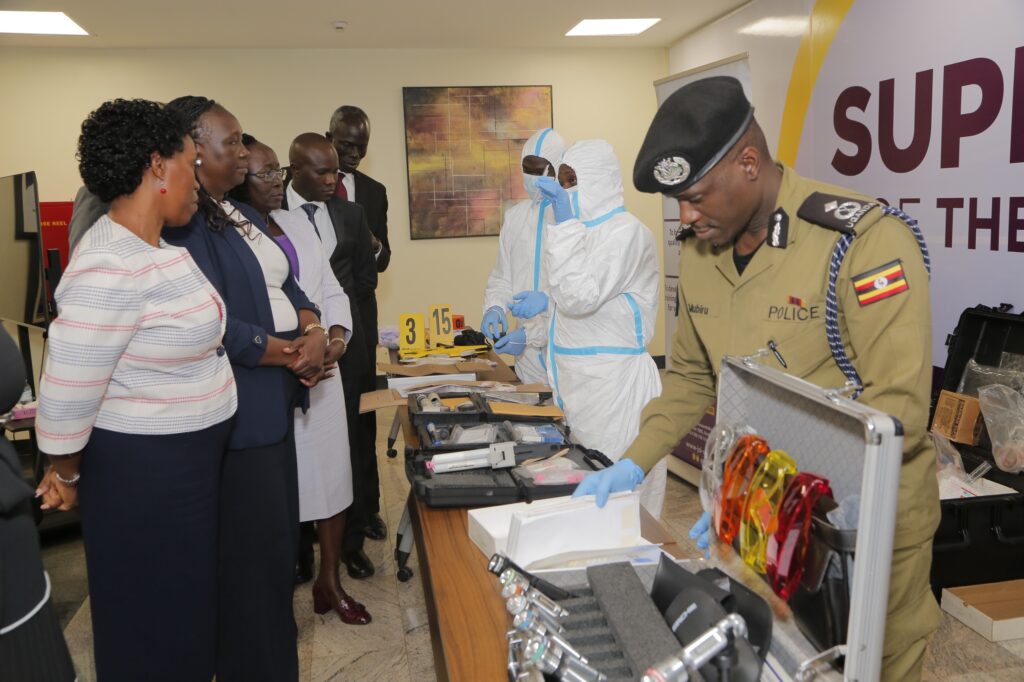
The programme also featured presentations by officers from the Uganda Police Force Directorate of Forensic Services on the role of forensic evidence in criminal proceedings, including the recovery of forensic evidence from crime scenes, fingerprint identification, and firearms and tool marks identification.
The training will conclude with sessions on DNA evidence, identification of unknown chemical substances, examination of forgery and counterfeiting, as well as computer forensics and electronic evidence.
The programme is being moderated by Hon. Lillian Bucyana, Registrar in Charge of the Judicial Training Institute