By Jazeerah Mirembe
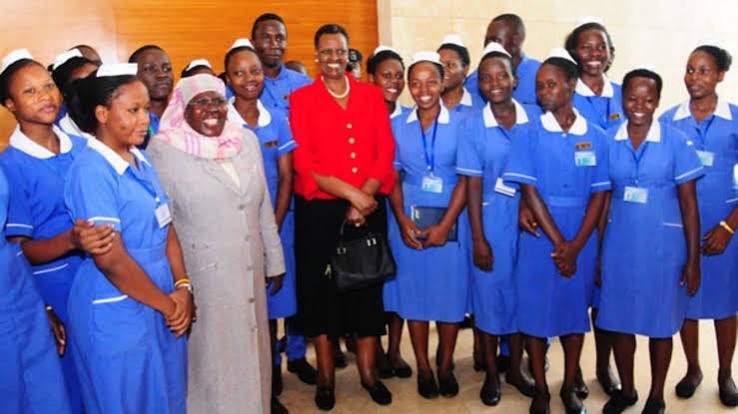
KAMPALA . The Ministry of Education has directed health training institutions to allow female Muslim trainees to wear plain white head veils during classroom instruction and clinical practice, following a petition by the Uganda Muslim Supreme Council (UMSC) over reports that Muslim nursing students and female nurses were being forced to uncover their heads.
The directive comes nearly four months after UMSC National Chairman Prof. Dr Lubega Muhamadi wrote to the Ministry, asking for intervention over what the Council described as the forced unveiling of Muslim women as a condition for accessing professional training and clinical practice.
In his April 18, 2026 letter to the Commissioner for Health Education and Training, Prof. Lubega said the Council had received complaints from several Muslim nursing students and female Muslim nurses who were “reportedly being barred from attending hospital practice unless they remove their head coverings and leave their heads uncovered.” The UMSC chairman argued that the requirement violated Muslim women’s religious rights and asked the Ministry to intervene.
“Muslim women should be allowed to observe their prescribed dress code, especially since it is a divine obligation and does not inconvenience others,” Prof. Lubega wrote. In a letter dated August 6, 2026, addressed to principals of all public and private health training institutions, Dr Safinah Kisu Museene, the Ministry’s Permanent Secretary, said the Ministry had received “several complaints raised by various stakeholders” concerning the veiling of female Muslim trainees in classrooms and clinical practice sites.
Museene’s directive allows female Muslim trainees to cover their heads with a plain white veil as part of the approved institutional uniform. “The approved veil should cover the head, ears, and neck, and neatly tucked inside the uniform collar,” she said.
The Ministry, however, set conditions for the use of the veil, requiring it to be made of plain white fabric and “entirely free from stones, colourful decorations, or any forms of embellishment.” Trainees wearing the approved veil must also comply with infection prevention and control standards applicable to their respective clinical units, hospital departments and skills laboratories.
During assessments, Museene said the trainees must comply with security and identification requirements established by the assessment board while maintaining the approved dress code. The Ministry directed all principals to implement the position “with immediate effect” and ensure that the information is communicated to all stakeholders involved in the training of health professionals.
UMSC Petition
In his April letter, Prof. Lubega said the Council was concerned that Muslim women were being required to remove their head coverings despite the religious significance of the practice.
He said the Council had received complaints from Muslim nursing students and female Muslim nurses and described the reported requirement to uncover their heads as a violation of their rights.
“Requiring Muslim women to unveil as a condition for accessing education and professional training not only constitutes discrimination but also amounts to a violation of their constitutional right to freedom of religion,” Prof. Lubega said.
The UMSC also argued that the requirement was inconsistent with Uganda’s constitutional protection of freedom of worship. The Council asked the Ministry for “prompt and amicable intervention” to resolve the matter. The letter was copied to the Mufti of Uganda, the Secretary General of the Uganda Muslim Supreme Council, the Imam of the Uganda Muslim Parliamentary Association and principals of Muslim faith-based health institutions.
The Ministry’s new directive provides a framework under which Muslim female trainees can maintain the religious practice while also meeting the uniform, infection-control, security and identification requirements applicable to health training and clinical practice.
The directive was copied to the Director General of the Ministry of Health, the Executive Secretary of the Uganda Health Professions Assessment Board, the Executive Director of the Technical and Vocational Education and Training Council, the Registrar of the Uganda Nurses and Midwives Council and the Registrar of the Uganda Allied Health Professionals Council.