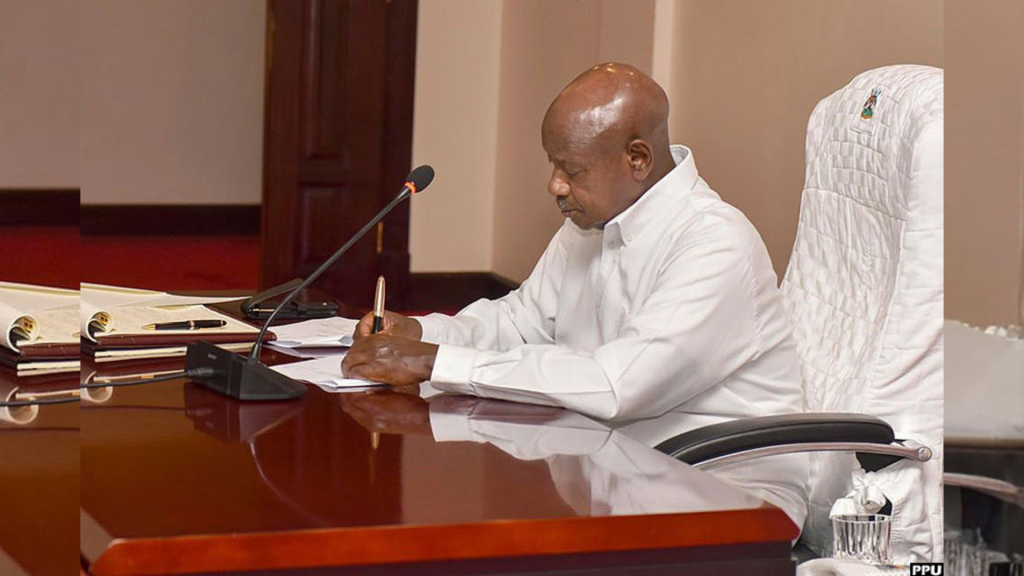
KAMPALA. President Museveni has officially assented to the controversial Protection of Sovereignty Act, 2026.
The signing, which was announced on Sunday evening, transforms the legislative Bill into a binding law designed to safeguard Uganda’s internal decision-making processes from external interference.
According to a statement released by the Presidential Press Unit (PPU) on May 17, 2026, the new law is primarily intended to protect the sovereignty of the Ugandan people.
Central to the Act is a new regulatory framework that mandates the registration and oversight of all agents of foreign entities operating within the country.
The Act establishes a clear hierarchy for enforcement, designating the Department responsible for peace and security within the Ministry of Internal Affairs as the primary implementing authority.
The department will now be tasked with regulating funding and other forms of assistance provided to agents of foreign entities, ensuring that governance and development priorities remain firmly anchored in the national interest and improving institutional coordination to support orderly governance and public accountability. There was speculation that Museveni send back the Bill t6 parliament for scrutiny which hasn’t been the case.
Mr Museveni’s assent is viewed as a strategic step toward enhancing Uganda’s capacity to maintain its independence on the global stage.
The State House noted that the law will provide much-needed clarity in the management of state authority while ensuring that the country’s policy space remains protected as it engages with regional and international partners
“The Sovereignty Act is expected to strengthen Uganda’s capacity to safeguard its independence in national decision-making processes,” the PPU stated, adding that the law complements the broader national development agenda by promoting public sector efficiency and economic transformation.
With the law now in effect, relevant state institutions are expected to begin implementation immediately, aligning their operations with the new legal and policy frameworks. The government anticipates that these measures will further entrench the constitutional principles of stability and national self-determination.