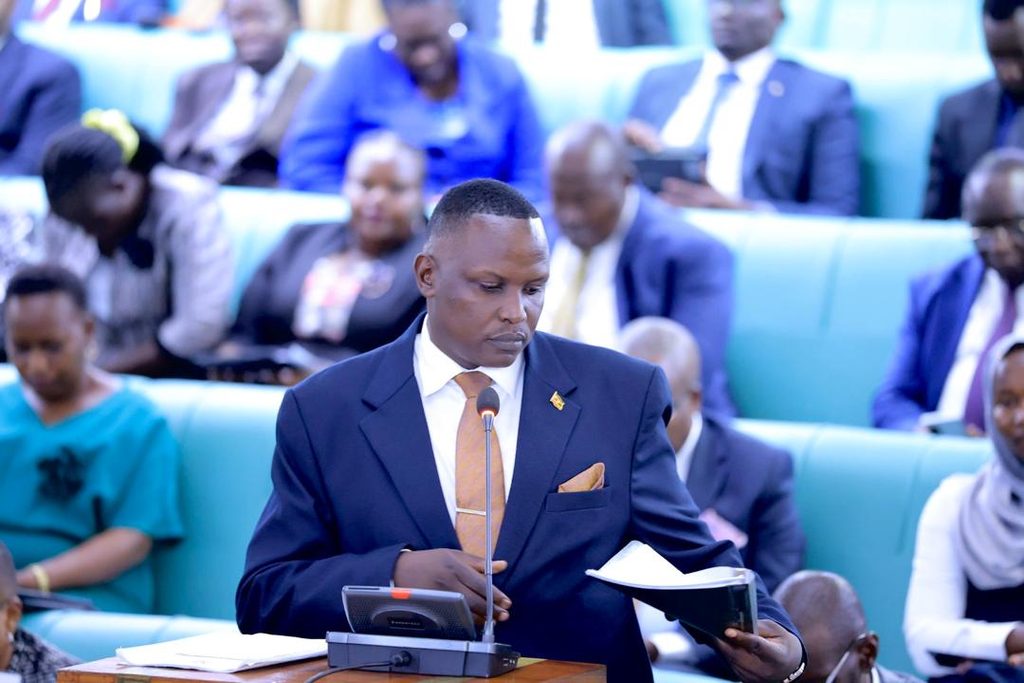
KAMPALA — Parliament’s Committee on Tourism, Trade and Industry has called for an independent investigation into allegations of extrajudicial killings and disappearances involving Uganda Wildlife Authority (UWA) rangers operating around national parks.
The committee wants the Uganda Human Rights Commission and Uganda Police Force to investigate reported incidents in Nwoya, Buliisa and Kasese districts and submit their findings within six months.
Presenting the committee’s report on human-wildlife conflict in Parliament on Tuesday, October 13, 2026, Deputy Chairperson Patrick Aeku said allegations of abuse by rangers had raised serious concerns among communities living near protected areas.
The report alleges that some rangers have used excessive force against people found or suspected to have entered national parks illegally, with claims that the bodies of some victims were never handed over to their families.
Aeku cited testimony from a community member who claimed that 11 members of the Koyo Clan in Purongo Sub-county, Nwoya District, had died in park-related incidents over three years, with their bodies allegedly never recovered.
UWA, however, attributed deaths inside national parks mainly to confrontations between armed poachers and rangers. The committee said it had not independently verified the allegations but considered them serious enough to warrant further investigation.
“The committee is mindful that rangers operate in dangerous conditions. It is nonetheless concerned that the allegations are persistent, specific and widely held,” Aeku said.
He warned that failure to resolve the claims could damage relations between wildlife authorities and surrounding communities, undermining cooperation in reporting and managing human-wildlife conflicts.
MPs demand stronger protection for communities
The committee made 65 recommendations aimed at reducing wildlife attacks and improving relations between conservation authorities and communities.
Among its proposals is government funding to fence Lake Mburo, Murchison Falls, Queen Elizabeth and Kidepo Valley national parks to prevent dangerous animals from straying into neighbouring settlements.
Other recommended measures include expanding beehive fences, maintaining protective trenches, constructing additional crocodile-exclusion enclosures and using animal-tracking information to warn residents when wildlife approaches populated areas.
Vice President Jessica Alupo pledged government support for addressing the concerns raised by lawmakers, noting that wildlife conservation and tourism generate benefits for the country as a whole.
Alupo said authorities could pursue immediate interventions to protect communities, while compensation arrangements could be examined separately at a later stage.
She also called for increased public awareness campaigns to help residents understand preventive measures and take precautions when living near protected areas.
Lawmakers expressed concern over deaths, injuries and destruction of crops and property, saying repeated wildlife incursions had worsened food insecurity in affected communities.
Kyenjojo District Woman MP Spellanza Baguma recounted incidents in which lions had attacked residents inside their homes, leaving some people permanently disabled.
She said elephants had also destroyed gardens and called for Kyenjojo to be considered for electric fencing to protect residents and their crops.
Buhweju West MP John Bosco Kariisa accused UWA of failing to adequately support victims when animals escaped from protected areas.
He cited a forest corridor stretching from Mitooma to Rubirizi districts, which he said animals leaving Queen Elizabeth National Park used to access surrounding communities.
Kariisa alleged that UWA officials concentrated on recovering escaped animals without adequately addressing the harm suffered by people attacked during such incidents, arguing that victims were often told the matter fell outside the authority’s responsibility.
Government cites progress in fencing parks
State Minister for Tourism, Wildlife and Antiquities Susan Nakawuki told Parliament that the government had so far fenced approximately 5,000 kilometres and urged MPs to support efforts to mobilise additional resources for wildlife-control infrastructure.
Nakawuki acknowledged criticism directed at UWA but cautioned that conservation work also exposed rangers to serious risks from armed poachers.
She said more than 1,000 rangers had been killed, while others had suffered permanent injuries or psychological trauma in the line of duty.
The committee’s proposed inquiry is expected to establish the facts surrounding the allegations against rangers, while its wider recommendations seek to reduce wildlife attacks and improve the safety of communities living alongside Uganda’s national parks.