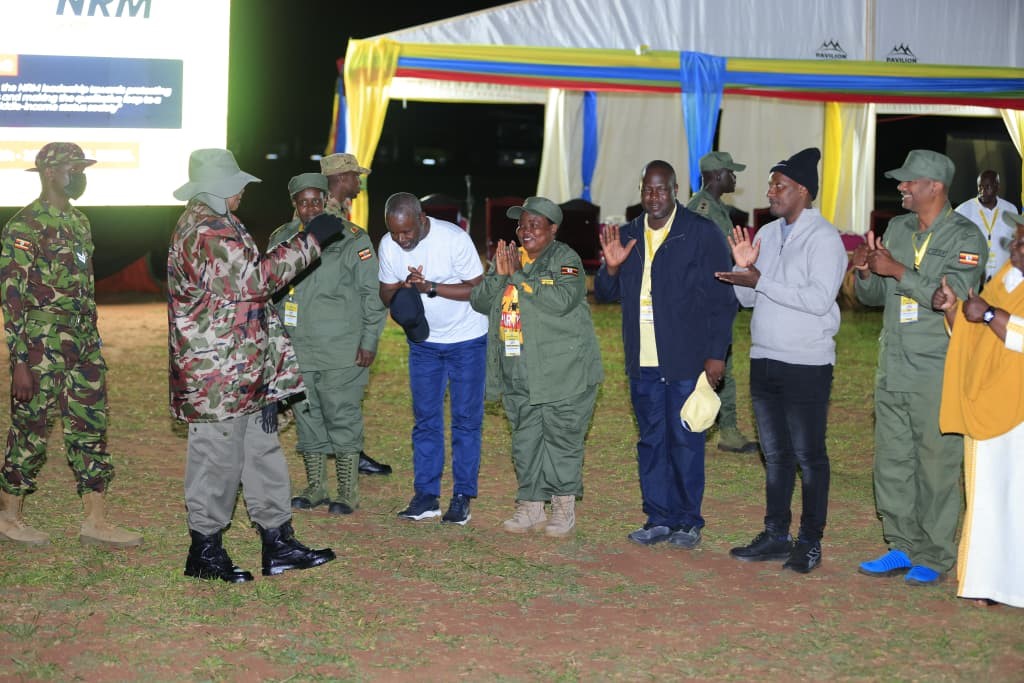
KYANKWANZI.
President Museveni has been criticized for giving Shs100 million to each of the more than 400 ruling National Resistance Movement(NRM) Members of Parliament (MPs) who attended the week-long party retreat in Kyankwanzi District.
Museveni , also the NRM national party chairperson said he was giving out Shs20 million in cash and promised that the balance would be paid at a later date.
The payout, amounting to more than Shs40 billion in total, is intended to support legislators as they prepare for swearing-in and other parliamentary responsibilities. However, the source of the funds was not immediately clear.
Mr Museveni made the announcement shortly after warning MPs against corruption, which he said continues to undermine the country’s development.
However ,economists, civil society actors and Opposition politicians have raised concerns about the implications of the cash handout, particularly if the funds were drawn from the Consolidated Fund.
Ms Carol Namagembe, the head of programmes at the Civil Society Budget Advocacy Group (CSBAG), said the legality of the funds would depend on their source.
“The problem will arise if this money is coming from the Consolidated Fund to benefit a few MPs, yet it is meant to serve the wider population. But if it is from the NRM Secretariat, then there is no issue,” she said.
Mr Marlon Agaba, the Executive Director of the Anti-Corruption Coalition Uganda (ACCU), linked the development to the high cost of politics.
“Most of these MPs spent between Shs900 million and Shs1 billion to get elected. Many are now indebted and vulnerable. While this may appear as a kind gesture, it is not sustainable and raises questions if public funds are involved,” he said.
Earlier, Mr Museveni cautioned MPs against corruption, urging them to uphold integrity in their oversight role.
“If there is corruption in Parliament, how do you control others? If the overseers are also sick, who will oversee you? This is suicide and must not be tolerated,” he said.
He also warned legislators against taking loans from moneylenders and commercial banks, saying such practices expose them to undue influence.
Elected MPs are expected to be sworn in between May 13 and 15 to usher in the 12th Parliament, after which the Speaker and Deputy Speaker will be elected.
The Leader of the Opposition in Parliament, Mr Joel Ssenyonyi, criticised the cash handout, questioning its impact on legislative independence.
“It is not the first time the President has given MPs money. How do you expect them to objectively scrutinise laws after receiving such funds?” he asked.
The NRM Secretary General, Mr Richard Todwong, clarified the arrangement to the legislators, saying the initial Shs20 million would be paid immediately, with the balance to come later.
Questions have since emerged over the capacity in which the President made the donation, given his multiple roles, including Head of State and chairperson of the ruling National Resistance Movement (NRM).
The Presidency also operates a donation budget estimated at Shs163 billion. The deputy Presidential Press Secretary, Mr Faruk Kirunda referred this newspaper to the NRM Secretariat. Efforts to reach out to Mr Todwong last evening were futile.
However, the spokesperson of NRM, Mr Emmanuel Dombo said: “We were visitors of the President and he is the one who spoke to the MPs. For now, I can’t say exactly where the money is coming from.
The President may choose to give them from his own pocket or at the Secretariat, we normally receive quarterly releases so when he directs us to use that, we shall do that. Between the time he said and now (yesterday night), I have not met him to seek his clarification on the same.”
However, Parliament’s Director of Communication and Corporate Affairs Chris Obore dismissed the criticism, arguing that financial facilitation does not compromise debate.
“If money influenced debate, then all MPs, including those in Opposition, would not participate after receiving facilitation such as vehicle funds and other emoluments,” he said.
Mr Obore added that NRM MPs are mandated by voters to advance the party’s agenda, and should not be judged by Opposition standards. Cash handouts to MPs are not new and date back more than two decades, raising persistent concerns about integrity in Parliament.
In 2005, legislators each received Shs5 million during the controversial vote to remove presidential term limits—an episode many analysts cite as the start of declining institutional integrity.
In November 2017, MPs were given Shs29 million each for “consultations” during the heated debate on the removal of the presidential age limit under Article 102billion.
The payments were widely criticised as inducements, with some Opposition MPs rejecting the money.