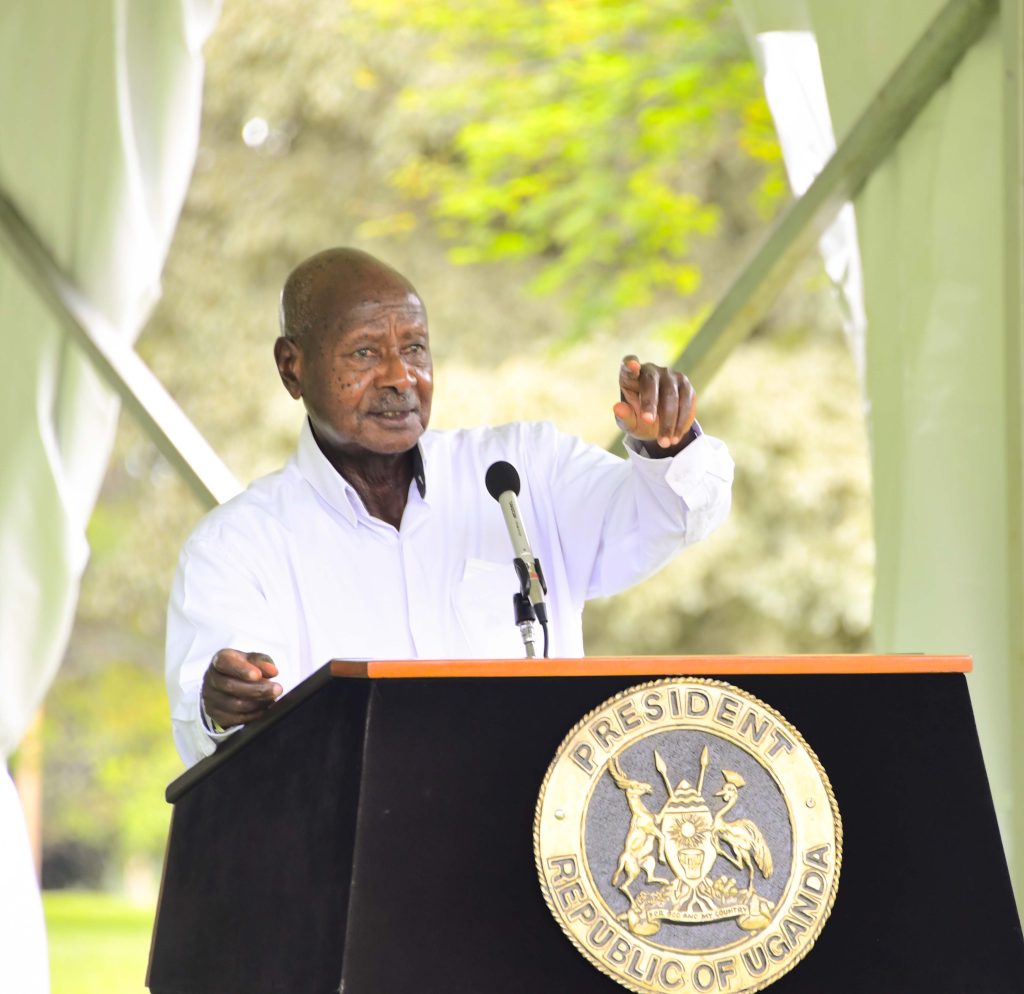
President Yoweri Museveni
By Joseph Kiggundu
President Yoweri Museveni has urged Members of Parliament investigating Uganda’s digital number plates project to exercise caution and ensure their findings accurately reflect the technology’s purpose and performance, insisting that the initiative was introduced primarily to enhance national security.
The warning was communicated by the Permanent Secretary in the Office of the President, Yunus Kakande, following a meeting at State House on Thursday, where legislators questioned the rising cost of the project, the effectiveness of its technology and the terms of the contract awarded to Russian firm Joint Stock Company Global Security (JSCGS).
The parliamentary concerns come amid reports of an increase in the project’s estimated contract value, prompting questions about the additional financial commitments required from government and whether the system is delivering the expected benefits.
Addressing journalists after the meeting, Kakande said Museveni acknowledged Parliament’s constitutional responsibility to scrutinise government programmes but urged MPs to consult the technical officials responsible for implementing the system before making conclusions about its performance.
He explained that the President challenged legislators to establish the facts through discussions with the relevant government teams rather than relying on what he described as potentially inaccurate assessments.
The investigation is being conducted by Parliament’s Physical Infrastructure Committee, chaired by Mbarara City South MP Mwine Mpaka. The committee has been examining concerns surrounding the vehicle tracking technology and its capacity to identify and monitor vehicles across the country.
The project has attracted differing opinions among senior government officials. Former Works and Transport Minister Gen Katumba Wamala defended the system as an important security intervention, while former Internal Affairs Minister Gen Kahinda Otafiire raised questions about its effectiveness.
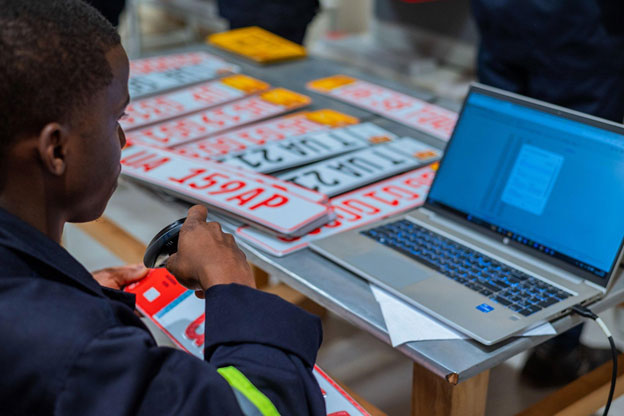
Kakande also dismissed claims that Museveni had been misled into supporting the Russian technology, explaining that the project followed an approach by the Russian contractor, who presented software capable of helping security agencies trace vehicles and apprehend criminals.
According to Kakande, the original concept was designed as a security intervention to address vehicle-related crimes, rather than simply an initiative to replace conventional number plates.
The programme traces its origins to a 2018 presidential directive aimed at improving vehicle identification and tracking following a series of high-profile killings, including the murder of Arua Municipality MP Ibrahim Abiriga.
Government subsequently signed an agreement with JSCGS in 2021 to implement the Intelligent Transport Monitoring System (ITMS), which introduced digitally enabled number plates and vehicle monitoring infrastructure.
Under the current pricing structure, motorists pay Shs714,300 for a digital number plate kit for newly registered vehicles and motorcycles, while replacing conventional plates costs Shs150,000 for motor vehicles and Shs50,000 for motorcycles.
Kakande maintained that the system was operational, although he acknowledged the need for further improvements to some of its software components.
He said the technology could retrieve information about vehicles across Uganda, adding that government was also reviewing the project’s financial arrangements to establish how revenue generated from the programme would be distributed between the contractor and the state.
The review, he explained, is intended to clarify the respective financial interests of the Russian service provider and the Ugandan government as the programme moves into its next implementation phase.
Kakande further revealed that Museveni had proposed the establishment of three working teams involving representatives of the Russian company, government technical officials and Members of Parliament to address outstanding concerns.
The proposed engagements are expected to focus on technical improvements, software upgrades and the financial framework governing the project.
He confirmed that another meeting would be convened to bring together the Russian contractors, implementing government officials and legislators involved in the oversight process, with the aim of resolving the outstanding issues.