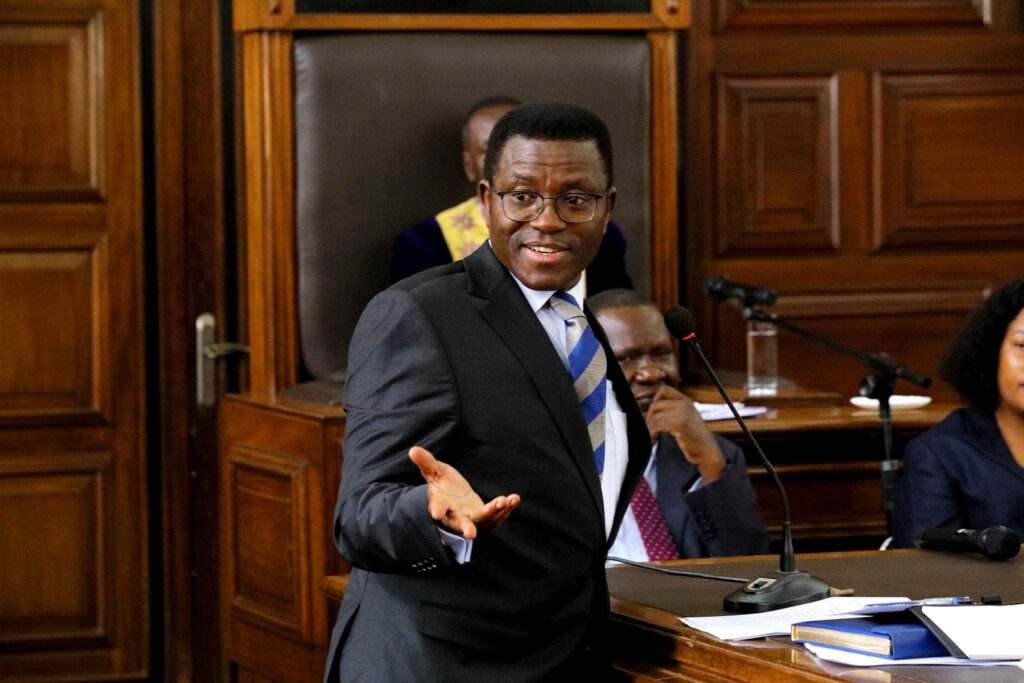
KAMPALA.Buganda Kingdom has called for a renewed national focus on fighting graft, safeguarding peace and improving livelihoods, as the country enters a new political term.
Addressing the Buganda Lukiiko 2026 at Bulange- Mengo, the Premier of the Buganda Kingdom (Katikkiro), Charles Peter Mayiga, said leadership in the coming years must prioritise integrity, justice and inclusive development, warning that corruption continues to undermine public trust and service delivery.
“The fight against corruption must be serious and equal for all. We should not continue to hear of powerful individuals implicated, and they walk free while ordinary citizens suffer,” he said.
According to him, accountability should cut across all levels of leadership, insisting that no one should be shielded from the law.
On peace and stability, Katikkiro Mayiga urged authorities to uphold human rights and ensure that justice systems function transparently, particularly in politically sensitive periods.
“Every Ugandan deserves justice. Those arrested during elections and campaigns must be produced before courts of law or released. Keeping people in detention without trial is a violation of their rights,” he said.
He also condemned alleged abductions, saying that such actions create fear and erode confidence in state institutions.
“Abductions should not be part of our society. We have laws and institutions that can handle offenders in a lawful manner,” he said.
Turning to economic matters, Mr Mayiga pointed to weak infrastructure and unreliable utilities as major barriers to growth. He singled out poor road networks in busy areas as a key concern.
“It is worrying that roads in highly populated and productive areas are in poor condition, yet some less busy places have better infrastructure. This imbalance affects trade and slows economic progress….We have roads leading to densely populated areas with significant economic activity, yet they are in poor condition,” he said.
“At the same time, some roads have been built in areas with very small populations and little economic activity. The priority should be on roads that support the majority and drive economic growth.”
He also highlighted frequent power outages and inconsistent water supply as critical challenges affecting households and businesses.
“Electricity and water are essential for development, but their supply remains unreliable. This must be addressed urgently,” he added.
Six strategy on rising production
Beyond governance, the katikkiro outlined Mengo’s development strategy of Situla Omutindo focused on increasing productivity in sectors such as agriculture, trade, education, and health and youth empowerment.
“We are encouraging our people to adopt modern and mixed farming methods to maximise output and income,” he said.
He added that initiatives like the Buganda Chamber of Commerce are helping local entrepreneurs expand into regional and international markets.
On education, Mayiga expressed concern over Uganda’s performance in early childhood learning, calling for more attention to foundational education systems.
The Katikkiro also emphasised the importance of cultural preservation, noting that the kingdom is strengthening clan structures and heritage through training programmes.
Reflecting on recent events, he applauded the strong turnout at the 2026 Kabaka Birthday Run, which drew a record number of participants 130,000 people, and reassured the public about the wellbeing of the Kabaka following several public appearances.
“The Kabaka continues to engage with his people, and his presence is a source of unity and strength for the kingdom,” he said.
Urban order
On urban order, Mayiga called for a balanced approach that recognises the role of informal traders in the economy while maintaining city standards.
“We all want organised cities, but vendors should be given proper spaces to operate from. Their work supports families and contributes to the economy,” he said.
He underscored the importance of protecting livelihoods, particularly for small-scale traders, urging authorities to designate proper working spaces for them.
“Small income earners need designated places where they can operate from and sustain their families,” he said. “If well organised, these vendors can be licensed, monitored and supported.”
Mayiga added that structured and hygienic markets could even become tourist attractions if properly managed.
“If fruit vendors, for example along Entebbe Road, are well organised with standardised stalls and clean surroundings, they can attract tourists,” he said. “Uganda has fresh produce that many visitors would love to experience.”
He noted that orderly trade would not only improve sanitation and urban planning but also enhance revenue collection and promote Uganda’s local products.
“With proper organisation, hygiene can be ensured, vendors can earn better incomes, and government can also benefit through licensing,” he added.
He further urged government to ensure that taxes collected from citizens, especially fuel taxes, are used to address key national challenges.
“When taxes are increased, people expect better services. The revenue must be directed towards solving real problems in society,” he said.
The Katikkiro also raised concerns about policy and legislative proposals that could affect Buganda’s development programmes, particularly those supported by contributions from its people.