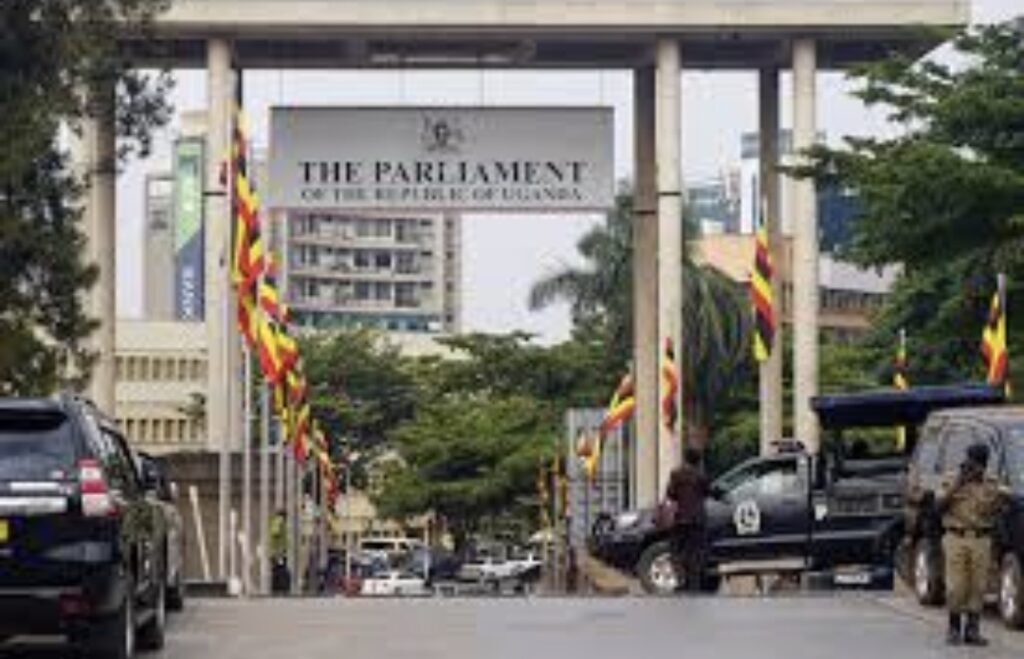
Government on Wednesday tabled the Protection of Sovereignty Bill, 2026 before Parliament, proposing sweeping restrictions on foreign influence, including heavy fines, long prison terms, and tighter control over foreign funding.
The Bill was presented by State Minister for Internal Affairs David Muhoozi during a session presided over by Speaker Anita Annet Among.
However, the tabling was immediately met with resistance from Members of Parliament, who protested the lack of physical copies of the draft legislation.
The Speaker dismissed the concerns, directing MPs to access the document via their iPads.
The proposed law seeks to strictly regulate individuals and organisations linked to foreign entities.
It requires anyone acting on behalf of a foreigner to formally register, while also imposing strict controls on foreign financial inflows.
Under the bill, any individual or entity receiving more than Shs400 million annually from a foreign source must obtain written approval from the minister.
The restrictions extend to international lending, with all foreign loans to Ugandan borrowers requiring ministerial clearance.
Failure to comply could result in individuals or organisations being classified as “foreign agents,” a designation that carries severe penalties, including up to 20 years in prison.
The Bill also outlines stringent punishments for what it describes as promoting foreign interests against the state.
Individuals could face fines of up to Shs2 billion or lengthy jail terms, while organisations—including NGOs and corporations—risk fines of up to Shs4 billion.
Additionally, the legislation criminalises the “peddling of foreign interests” in electoral processes, citing constitutional provisions that vest political power solely in Ugandan citizens.
It further introduces penalties for actions deemed harmful to the national economy or disruptive to government operations, each attracting potential 20-year custodial sentences.
The proposal comes amid heightened tensions between the state and civil society organisations, following recent actions by the Financial Intelligence Authority, including the freezing of accounts and closure of several NGOs.
Beyond fines and imprisonment, the Bill grants authorities powers to seize assets or funds linked to violations, significantly expanding enforcement mechanisms.
The draft legislation has now been referred to the Committee on Defence and Internal Affairs and the Legal Committee for further scrutiny and public consultation.
Its progression is expected to spark intense debate, particularly around its implications for civil society, foreign investment, and Uganda’s broader democratic and economic environment.