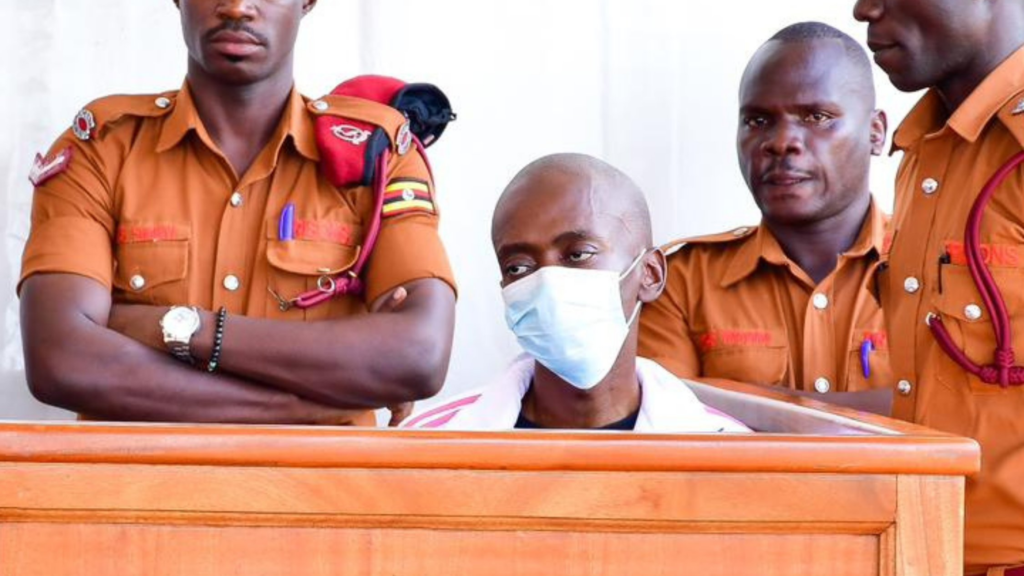
KAMPALA. The defence in the ongoing murder trial of Christopher Onyum Okello has formally closed its case after failing to present two additional witnesses, marking a significant turn as the proceedings enter their final stage.
At the start of Monday’s session at Ggaba mobile court, defence lawyer Richard Kumbuga informed the court that efforts to secure the remaining witnesses had been unsuccessful.
“My Lord, the defence asks to close its case. The court informed us this morning that the other witnesses cannot be reached,” Kumbuga told court.
The announcement brought a sense of finality to the defence phase, which had earlier sought more time to strengthen its case.
On Friday, the prosecution had opposed an adjournment request by the defence, arguing that it reflected poor preparation and would waste the court’s time.
Despite those objections, the court granted the adjournment to allow the defence to produce additional witnesses. However, the extension did not yield results.
Presiding judge Alice Komuhangi Khaukha noted that the defence had only provided phone contacts for the witnesses without physical addresses, making it difficult for court officials to trace them.
“Though Okello had provided four phone numbers, he did not provide physical addresses; therefore, it was difficult to reach the remaining witnesses,” the judge observed.
With only three witnesses presented, the defence opted to proceed to the next stage and requested a three-hour adjournment to prepare its final submissions.
Okello is facing multiple counts of murder stemming from the April 2 incident in which four toddlers at Ggaba Nursery and Daycare Centre were stabbed to death in circumstances that shocked the country and drew widespread public attention.
Prosecutors allege that he was directly responsible for the killings, presenting the case as a deliberate act that led to the deaths of the children in what the prosecution says was motivated by desire to acquire wealth through blood-letting.
The case has since become one of the most closely followed criminal trials in recent memory, largely because of the victims’ ages and the disturbing nature of the allegations.
The trial will now move into closing arguments, after which the three court assessors are expected to deliver their opinions.
Under Uganda’s trial procedure, assessors provide advisory views reflecting the perspective of ordinary citizens, although their opinions are not binding on the court.
It remains unclear whether judgment will be delivered immediately after submissions or scheduled for a later date. However, the case is now approaching its conclusion.
The trial has drawn significant public attention following the events of April 2, when four toddlers were killed in an incident that shocked the nation.
The court’s final decision is expected to bring a measure of closure to a case that has gripped public interest and raised broader concerns about justice and accountability.