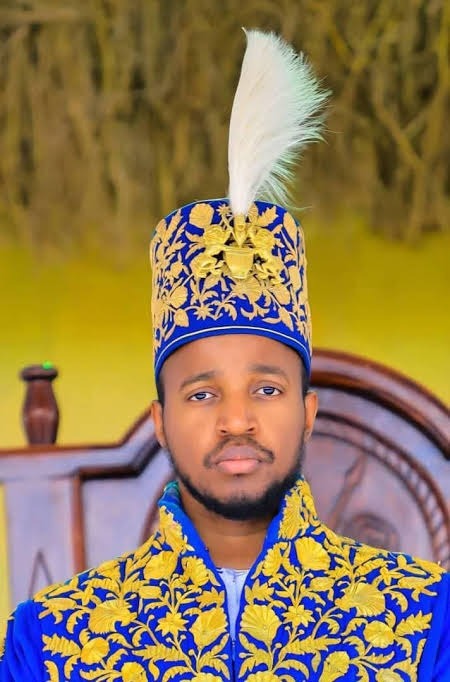
By Joseph Mary Buwule
FORT PORTAL, September 12, 2026 — The people of Tooro Kingdom, the royal family, government leaders, religious leaders and mourners from across Uganda have gathered at St. John’s Cathedral, Kabarole, in Fort Portal City, to pay their final respects to the late King Oyo Nyimba Kabamba Iguru Rukidi IV.
The final funeral service and requiem for the 34-year-old monarch, who died on August 27, 2026, is being led by the Archbishop of the Church of Uganda, the Most Rev. Stephen Kaziimba Mugalu, ahead of the King’s burial at the Karambi Royal Tombs.
In a solemn message centred on faith, unity, repentance and responsible leadership, Archbishop Kaziimba urged the people of Tooro to turn their grief into an opportunity to reconcile, forgive one another and protect the unity of the kingdom.
The Archbishop reminded mourners that death does not discriminate on the basis of age, wealth, status or position, saying the passing of King Oyo should serve as a reminder to everyone to put their lives right with God and with one another.
He called on Christians and all Ugandans to embrace repentance and abandon practices and actions that undermine faith, humanity and peaceful coexistence.
“Death doesn’t fear any person, any status, any age,” the Archbishop told mourners, urging them to examine their lives and reconcile with God and other people.
A CALL FOR UNITY IN TOORO
With the kingdom mourning its young monarch at a time of uncertainty surrounding the future of the institution, Archbishop Kaziimba placed unity at the centre of his message.
He called upon members of the royal family, cultural leaders and the people of Tooro to remain united and ensure that the process following King Oyo’s death is handled peacefully and with dignity.
He urged the people to reject hatred, conflict, resentment and division, stressing that the late King’s legacy should not become a source of further disagreement.
The Archbishop said honouring King Oyo should involve preserving the unity of the people and respecting established institutions and processes.
“Let us be like Josiah and King Oyo. Unite the people. Love one another. Be honest. Keep the integrity,” he said.
He further appealed for unity within the royal family, saying harmony among members of the royal institution would contribute to stability across the wider Tooro community.
“Let me conclude by calling you for unity in Christ. And unity to each other. Unity in the royal family. And this brings unity in the entire community,” Archbishop Kaziimba said.
He warned that no institution can grow where there is persistent division, urging those involved in the affairs of the kingdom to put aside personal differences for the sake of the people.
KING OYO REMEMBERED AS A NATIONAL LOSS
The Archbishop described King Oyo’s death as a profound loss to the royal family, Tooro Kingdom, the Church and the country.
He extended condolences to the Queen Mother, Best Kemigisa, the King’s sister Princess Ruth Nsemere Komuntale, members of the Babiito royal clan and the people of Tooro.
King Oyo ascended to the Tooro throne as a child and grew into one of Uganda’s most prominent cultural leaders. His death at the age of 34 has left Tooro and the country mourning a monarch whose reign spanned more than three decades.
Archbishop Kaziimba said the King had completed his earthly journey and that mourners should therefore place their hope in God.
He drew a distinction between earthly kingship and the eternal kingship of Jesus Christ, describing Christ as the “King of Kings.”
The Archbishop told mourners that while earthly kingdoms, wealth and positions eventually come to an end, the Christian faith offers hope beyond death through Jesus Christ.
“King number one is King Oyo, whose body lies in the casket. He has finished his race. He has gone back to the Lord,” he said.
He then directed mourners to the Christian understanding of Jesus as the eternal King, who died and rose again.
“King two is Jesus,” he said, urging the congregation to unite in Christ and live with the hope of eternal life.
WARNING AGAINST LAND GRABBING
The Archbishop also used the occasion to condemn land grabbing, fraud and other forms of dishonesty, warning that material wealth cannot be carried beyond the grave.
He challenged those involved in grabbing other people’s land to reconsider their actions, arguing that no amount of property acquired dishonestly can benefit a person after death.
“Land grabbing. You steal the land, but you don’t take it, even a quarter of an acre when you die,” he said.
He urged Ugandans to acquire wealth honestly and warned that wealth obtained through fraud cannot bring lasting fulfilment.
“Wealth is good. But when it is received out of fraud, it’s bad,” he said.
The Archbishop also condemned violence and the targeting of friends and other people for personal gain, asking mourners to consider the consequences of their actions.
He warned against witchcraft and other practices that undermine human dignity and Christian values.
A LEGACY OF ENVIRONMENTAL CONSERVATION
The funeral also provided an opportunity to remember King Oyo’s contribution to environmental conservation.
As part of the send-off activities, the Church of Uganda linked the King’s environmental legacy to its 15 Million Trees Campaign.
More than 20,000 fruit and indigenous tree seedlings were distributed to mourners as a practical symbol of remembrance and a call for environmental stewardship.
Archbishop Kaziimba encouraged the people to plant and protect trees as a way of transforming grief into a positive legacy for future generations.
The initiative brought together the Church, young environmental activists and other partners in an effort to ensure that King Oyo’s concern for the environment continues beyond his lifetime.
The distribution of the seedlings was also intended to encourage communities to protect forests, restore degraded land and promote sustainable environmental practices.
A MESSAGE OF REPENTANCE
The Archbishop’s message repeatedly returned to the importance of spiritual renewal.
He urged mourners not to allow the funeral to become merely a ceremony of farewell, but to use the moment to reflect on their own lives and relationship with God.
He called for spiritual rebirth and encouraged people to abandon hatred, dishonesty, resentment and practices contrary to Christian teaching.
“Spiritual rebirth is very important,” he said.
He urged people to forgive one another and embrace love, reminding them that every person, regardless of position or wealth, will eventually face death.
“As we lay down King Oyo, let us lay down all our hatreds, conflict, disunity, resentment and endless forgiveness and love,” he told mourners.
HONOURING KING OYO’S MEMORY
The Archbishop said one of the most meaningful ways to honour King Oyo would be to continue the values of unity, honesty, integrity and service.
He urged the people of Tooro to avoid allowing grief to deepen existing divisions and instead use the King’s passing as an opportunity to bring communities together.
The service at St. John’s Cathedral is expected to be followed by the King’s final journey to the Karambi Royal Tombs, where he will be laid to rest among Tooro’s former monarchs.
As mourners gathered to bid farewell to the young King, the Archbishop’s message offered both a tribute to King Oyo and a broader challenge to the people of Tooro and Uganda: to live responsibly, reconcile with one another, protect the environment and place their ultimate hope in God.
The final farewell to King Oyo therefore carries significance beyond the burial of a monarch. It is also a moment of reflection on leadership, cultural identity, faith, unity and the responsibility of a people to preserve the institutions and values they inherit for generations to come.