By Maria Mariam Namala
Government has expressed commitment to invest up to Shs 70 billion in tourism infrastructure in the Rwenzori Mountains .
The financial support is intended to improve climbers’ safety, accessibility and accommodation as visitor numbers to the national park continue to rise.
The Ministry of Tourism, Wildlife and Antiquities is also seeking to diversify the region’s tourism offerings beyond mountain climbing and wildlife safaris, with plans to promote coffee tourism in Kasese to encourage longer visitor stays and boost local spending.
The investment is expected to improve the mountain-climbing experience while creating additional economic opportunities for communities around the region’s major tourist attractions.
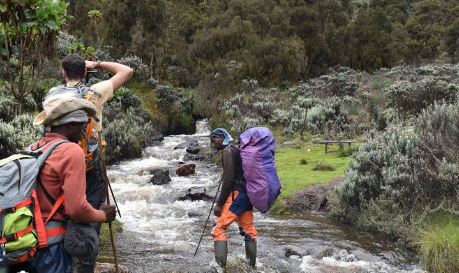
Reaching the peaks of the Rwenzori Mountains has long been a challenging expedition, with climbers navigating steep terrain and difficult routes, often with limited resting facilities and inadequate shelter from freezing temperatures at higher altitudes.
Doreen Katusiime, the Permanent Secretary in the Ministry of Tourism, Wildlife and Antiquities, said the government was investing in infrastructure to address some of these challenges and make the mountain more accessible to visitors.
“The government is investing in tourism infrastructure in the Rwenzori Mountains to improve accessibility, safety and the comfort of climbers. The works include climbing ladders, boardwalks, resting shelters and tourist camps along routes leading to the mountain peaks,” Katusiime said.
The improvements are intended to ease movement across difficult sections of the mountain and provide climbers with better facilities for resting and sheltering from harsh weather conditions.
Tourism officials believe the investments could also strengthen the destination’s appeal as visitor numbers continue to increase.
George Businge, the senior warden of Rwenzori Mountains National Park, said the growing number of visitors demonstrated the park’s tourism potential and the importance of improving facilities to accommodate them.
“The number of visitors to Rwenzori Mountains National Park increased from 7,703 in the 2023/2024 financial year to 10,483 in 2024/2025. This growth demonstrates the park’s tourism potential and the need to continue improving infrastructure and facilities for visitors,” Businge said.
The figures represent an increase of approximately 36 per cent in visitor numbers between the two financial years.
Beyond mountain climbing and wildlife safaris, the ministry is exploring coffee tourism as an additional attraction, leveraging Kasese’s coffee-growing potential to diversify the experiences available to visitors.
The initiative is expected to connect tourists with coffee-growing communities and provide opportunities to learn about coffee production while complementing established attractions such as the Rwenzori Mountains and Queen Elizabeth National Park.
Katusiime said the ministry wanted to broaden the region’s tourism products to encourage visitors to explore more destinations and activities during their stays.
“We also want to diversify the tourism products in the Rwenzori region beyond mountain climbing and wildlife safaris. Coffee tourism in Kasese presents an opportunity to give visitors more experiences, encourage them to stay longer and increase spending within local communities,” she said.
The ministry hopes that combining mountain climbing, wildlife viewing and coffee tourism will encourage longer stays and increase spending on accommodation, transport, food, guiding services and locally produced goods.
“Our aim is to position coffee tourism alongside the Rwenzori Mountains and Queen Elizabeth National Park so that visitors have more activities to explore. By diversifying the tourism products, we hope to encourage longer stays and create more economic opportunities for communities in the region,” Katusiime said.
The strategy forms part of broader efforts to increase the economic benefits of tourism by expanding the range of attractions available in the Rwenzori region.
With visitor numbers rising, the government hopes that improved infrastructure and new tourism experiences will strengthen the region’s position as a tourism destination while creating additional opportunities for local businesses and communities.