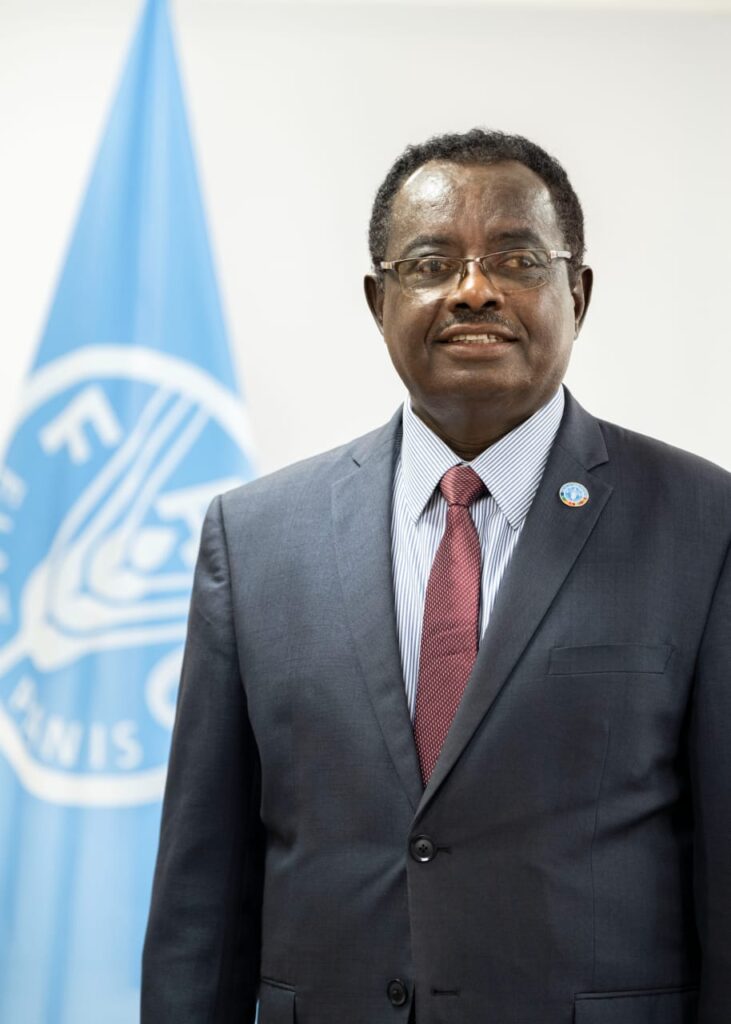
Ahead of the 34th Session of the FAO Regional Conference for Africa (ARC34), a call for practical, collective leadership on food security and nutrition
By Abebe Haile-Gabriel, Assistant Director-General and Regional Representative for Africa, Food and Agriculture Organization of the United Nations (FAO)
31 March 2026, Accra – Global shocks continue to tighten their grip on Africa’s agrifood systems, placing increasing strain on food production, distribution, and access across the continent. Trade disruptions are driving up the cost of critical inputs such as fertilizer, fuel, and freight. At the same time, climate variability is destroying harvests through prolonged droughts, floods, and unpredictable weather patterns, while conflict continues to displace farming communities from their land and disrupt agricultural livelihoods. These challenges are real, interconnected, and intensifying.
Yet, despite these external pressures, the most consequential decisions shaping Africa’s agrifood future are still made within the continent itself—through national budgets, regulatory frameworks, and strategic investment plans under the control of African governments.
The 34th Session of the Food and Agriculture Organization’s Regional Conference for Africa (ARC34), to be hosted by the Government of the Islamic Republic of Mauritania in Nouakchott from 13 to 17 April 2026, will convene ministers responsible for agriculture and related sectors from across Africa. The conference serves as a critical platform where high-level political commitments must be translated into clear, actionable, and coordinated operational priorities. The central question remains whether this translation will occur with the urgency, scale, and alignment required to address the continent’s growing food security challenges.
The data underscores the urgency. According to the 2025 State of Food Security and Nutrition in the World Report, an estimated 307 million people in Africa were undernourished in 2024—representing more than one in five people on the continent. Since 2010, the prevalence of undernourishment has increased by nearly five percentage points, effectively reversing a decade of progress. At the same time, the cost of a healthy diet has risen to an average of USD 4.41 per person per day (in purchasing-power-parity terms), placing adequate nutrition beyond the reach of a majority of African households.
These are not temporary disruptions but indicators of deeper, structural challenges. Persistent underinvestment in rural infrastructure, fragmented and inefficient markets, limited access to extension services, and agrifood systems that remain highly vulnerable to external shocks all contribute to the current situation. Conflict, climate variability, and economic slowdowns continue to reinforce one another, disproportionately affecting smallholder farmers, pastoralists, women, and young people—groups that are central to Africa’s food production systems.
Importantly, Africa is not lacking in potential or resources. The continent possesses approximately 60 percent of the world’s uncultivated arable land, offering immense opportunities for agricultural expansion. It also has the youngest population globally, providing a dynamic labour force capable of driving transformation in the agrifood sector. Furthermore, Africa’s rich agricultural heritage and indigenous knowledge systems—refined over centuries—are often better adapted to local conditions than externally imported models.
The issue, therefore, is not whether Africa has the capacity to feed itself, but whether its institutions, policies, and investment priorities are effectively organized to unlock this potential.
Financing remains a critical starting point. Government expenditure on agriculture across Africa reached approximately USD 16 billion in 2022, reflecting a positive trend. However, this level of investment still falls far short of what is required to transform the sector. Access to credit remains particularly constrained, with agriculture accounting for only about 2 percent of total bank lending—a figure that has remained largely stagnant over the past decade, despite the sector employing nearly half of the continent’s labour force.
Closing this financing gap requires more than setting ambitious targets. It calls for stronger and more innovative policy frameworks that support risk-sharing, expand the use of blended finance, and strategically deploy public investment to attract and leverage private capital. Special attention must be given to small and medium-sized agrifood enterprises, which play a vital role in strengthening local food systems and generating employment.
Innovation also has a crucial role to play—but only when it is accessible and relevant to those who need it most. Advances such as digital advisory services, improved seed varieties, climate-smart farming practices, and enhanced market information systems have the potential to significantly boost productivity and reduce post-harvest losses. However, these innovations often remain confined to pilot initiatives or are accessible primarily to large-scale commercial operations.
For meaningful impact, the next phase of agricultural innovation in Africa must be designed with smallholder farmers at its core—particularly women and young people, who contribute significantly to food production yet remain underserved in terms of access to extension services, financing, and technology.
Resilience must be treated as a fundamental pillar rather than an afterthought. Climate variability and economic volatility are no longer occasional disruptions but enduring features of the operating environment. Every investment in Africa’s agrifood systems—whether in irrigation, storage infrastructure, market systems, or value chains—must be designed with long-term sustainability and resilience in mind. This includes prioritizing diversified production systems, sustainable land management practices, and strengthening rural institutions capable of withstanding shocks.
The Regional Conference provides an important opportunity for FAO Member States in Africa to define shared priorities and articulate the support required to achieve them. For ministers and policymakers, the agenda is clear and actionable. National agricultural investment plans must be more closely aligned with broader agrifood system outcomes. Financing mechanisms need to be inclusive and responsive, ensuring they reach the smallholders and agribusinesses often excluded by existing systems. Additionally, partnerships between governments, the private sector, and development partners must evolve from statements of intent into tangible, measurable results.
In this context, credibility is determined not by declarations but by outcomes. As fiscal space tightens and competition for development financing intensifies, countries that demonstrate clear returns on agricultural investment—through improved productivity, expanded market access, and better nutritional outcomes—will be better positioned to attract further support. Those that fail to do so risk falling further behind.
There are, however, reasons for cautious optimism. Across Africa, several countries are already strengthening agricultural value chains, expanding digital services for farmers, and mobilizing innovative financing mechanisms. These examples demonstrate that progress is not only possible but already underway. The key challenge now is scaling these successes by applying their underlying principles—rather than replicating models wholesale—across different national contexts.
Africa’s agrifood systems will continue to face external pressures, including fluctuating input costs, shifting trade dynamics, and intensifying climate impacts. However, the response must be firmly rooted in African leadership, supported by science and innovation, and driven by sustained political commitment.
Hunger and malnutrition are not inevitable. They are the result of policy choices, investment decisions, and development priorities. With the right decisions, they can be reversed.
ENDS