By Boubaker Ben-Belhassen
The tea in your cup began its journey in someone else’s hands — hands whose work most people rarely stop to consider.
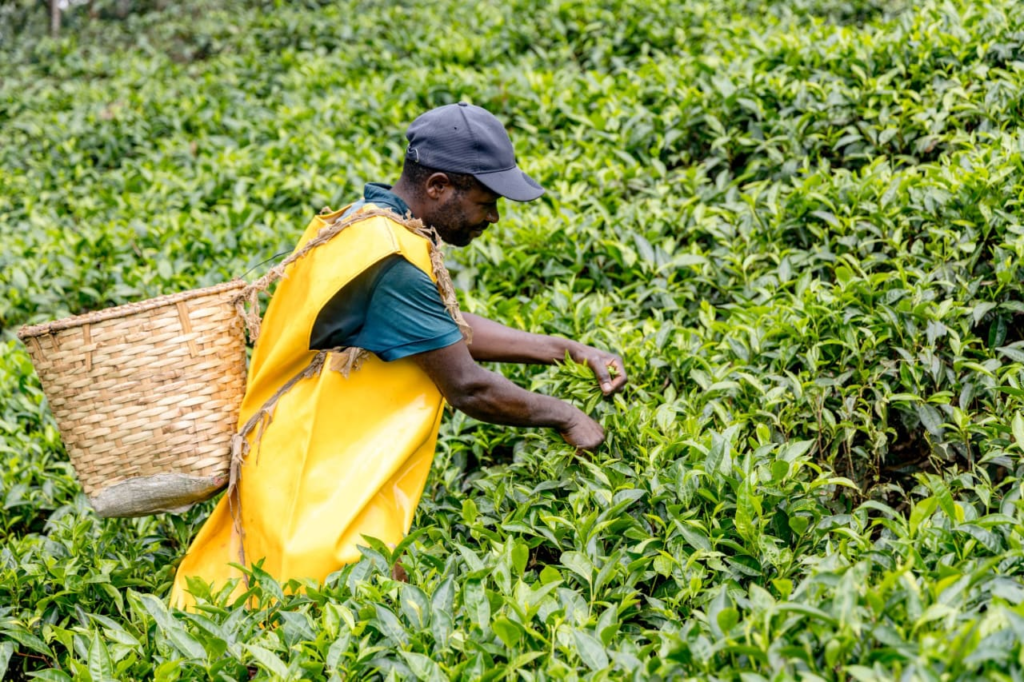
Those hands almost certainly belong to a smallholder farmer carefully tending a modest plot of land, plucking tea leaves by hand beneath long mornings of mist and rain. “Two leaves and a bud” is the rhythm repeated thousands of times across tea-growing regions around the world. Smallholder farmers account for nearly 60 percent of global tea production, sustaining an industry valued at approximately US$19.5 billion annually and supporting the economies of some of the world’s poorest countries.
Yet despite tea’s global popularity, the farmers who sustain the industry face mounting challenges that threaten the future of the sector.
Tea remains the world’s most consumed beverage after water, with global production reaching 7.3 million tonnes last year. Demand continues to rise steadily, creating the impression of a thriving and resilient industry. However, millions of smallholder farmers in countries such as China, India, Kenya, Sri Lanka, Uganda, Malawi and Rwanda require stronger support if the sector’s growth is to remain sustainable.
Tea production is deeply tied to rural livelihoods and economic survival. Kenya is currently the world’s leading tea exporter, while Sri Lanka, Uganda, Malawi and Rwanda all rank among the top global producers. For many of these economies, tea exports generate critical foreign exchange earnings, finance food imports and provide employment for millions of rural households.
However, the income earned by tea farmers is becoming increasingly fragile. While the nominal value of the tea industry has grown over time, international tea prices adjusted for inflation have steadily declined over the past four decades. According to the Food and Agriculture Organization of the United Nations, falling farmgate prices force many farming families to reduce spending on essentials such as food, education and healthcare.
Smallholder producers also continue to face multiple structural barriers, including limited access to markets, inadequate agricultural extension services, poor access to affordable credit and technology, and unequal distribution of profits along the tea value chain. Rising production costs and uneven price transmission across markets make it difficult for many families to reinvest in their farms, adopt climate adaptation measures or improve productivity.
Women remain central to tea production and processing across East Africa and South Asia. Their contribution not only sustains household economies but also preserves the farming knowledge and labour systems upon which tea cultivation depends. Experts argue that programmes providing women with training, financial support and improved market access consistently produce stronger outcomes for households and communities alike.
Climate change is adding another layer of pressure to the industry. Tea cultivation depends on highly specific environmental conditions including altitude, rainfall patterns and stable temperatures developed over centuries in traditional tea-growing areas. Today, those conditions are becoming less predictable.
Erratic rainfall, rising temperatures and more frequent extreme weather events are already affecting both tea yields and quality. For smallholder farmers without insurance or savings, a failed harvest is not simply a seasonal setback — it directly affects their ability to afford food, medicine and school fees.
Larger commercial operations often possess greater financial capacity to adapt through irrigation systems, diversification and technological upgrades. Smaller producers, however, are increasingly trapped between rising climate risks and limited investment capacity. Analysts say future investment strategies must reflect the realities faced by smallholder farmers rather than focusing solely on large-scale commercial operations.
Beyond economics, tea cultivation also represents an important cultural and environmental heritage. Several tea-growing regions have been recognized by the Food and Agriculture Organization of the United Nations as Globally Important Agricultural Heritage Systems, reflecting generations of farming knowledge and close relationships between communities, crops and landscapes.
These tea-growing ecosystems rely on delicate balances involving shade, slopes, soil health and rainfall patterns. Climate-related stress threatens not only production levels but also the long-term survival of these agricultural landscapes and traditions.
Experts emphasize that building more efficient, inclusive and sustainable tea value chains will be essential for the future of the sector. Greater local value addition, stronger producer participation in markets and improved support systems for smallholder farmers are seen as critical steps toward ensuring that the benefits of the growing tea economy reach both farming communities and the environments they depend on.
Although tea consumption remains relatively low in many producing countries, the sector still holds significant growth potential. However, sustaining that growth will require targeted investments that improve access to finance, technology, markets and climate adaptation support for smallholder farmers.
Transparent and balanced value chains, direct investment in women producers and stronger incentives for reinvestment at farm level will play a decisive role in determining whether the global tea industry remains economically and socially sustainable.
As the world marks International Tea Day, attention is turning not only to the beverage enjoyed daily by billions, but also to the farmers who make it possible.
Before sunrise tomorrow morning, millions of tea farmers will once again return to their fields. The future of tea, experts warn, depends on ensuring that farming tea remains a viable and dignified livelihood for generations to come.