By Joseph Mary Buwule
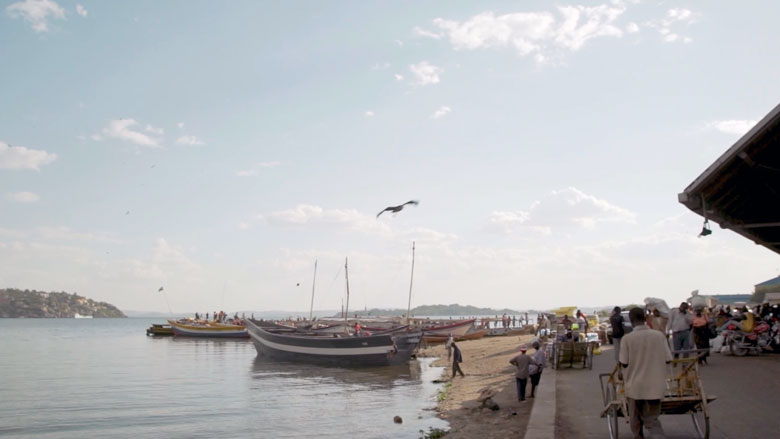
The urgency of collective regional action to protect and restore Lake Victoria dominated discussions at the ongoing Lake Victoria Stakeholders Forum in Mwanza, Tanzania, as leaders and environmental experts warned of growing threats facing the lake and its basin.
Speaking during the forum, Makerere University Vice Chancellor Barnabas Nawangwe said the keynote address had underscored the need for all Lake Victoria Basin countries to work together to safeguard the lake, which supports the livelihoods of more than 50 million people across East Africa.
“For Uganda, the lake is also a major source of energy,” Prof. Nawangwe noted, emphasizing the strategic importance of the water body to the region’s economic and social wellbeing.
While in Mwanza, Prof. Nawangwe said he took time to walk through the city and observed the remarkable ingenuity of local communities who have built homes on steep rocky slopes along the shores of Lake Victoria.
The forum comes as the Lake Victoria Basin Commission announced that preparations are complete for the inaugural Lake Victoria Day celebrations scheduled for May 18–21 in Mwanza City.
The four-day celebrations, taking place at the Nane Nane Grounds, have brought together ministers, policymakers, researchers, civil society organizations, development partners, youth groups, and local communities from across the East African Community Partner States.
Held under the theme, “Shared Waters, Shared Future: Uniting for a Sustainable Lake Victoria Basin,” the event marks a major milestone in regional efforts to protect East Africa’s largest freshwater lake.
LVBC Executive Secretary Dr. Masinde Bwire described the initiative as a historic regional platform intended to strengthen cooperation among Partner States in addressing shared environmental challenges affecting the basin.
Dr. Bwire warned that the basin is increasingly under pressure from climate change, pollution, unsustainable exploitation of natural resources, and rapid urbanization.
He stressed that coordinated intervention is urgently needed to secure the future of Lake Victoria, noting that millions of people depend on the lake for fishing, transport, agriculture, trade, and household livelihoods.
According to the commission, the celebrations feature exhibitions and innovation fairs showcasing technologies and best practices in fisheries management, renewable energy, waste management, and pollution control.
Special attention has been given to innovations led by women and youth aimed at promoting sustainable environmental practices within communities living around the lake basin.
A two-day Stakeholders’ Forum running from May 18 to 19 has provided a platform for civil society organizations, youth groups, utilities, researchers, and non-governmental organizations to deliberate on challenges affecting the lake and propose practical solutions.
Dr. Bwire said the forum seeks to ensure that communities directly dependent on the lake play a central role in shaping environmental policies and interventions.
The climax of the celebrations on May 21 will be a High-Level Ministerial Segment bringing together ministers responsible for water, fisheries, environment, and East African Community affairs from Partner States.
The ministerial meeting is expected to conclude with the signing of a Joint Ministerial Communiqué reaffirming the region’s commitment to sustainable management of Lake Victoria and its basin.
During the celebrations, the commission is also expected to launch two major regional initiatives — the Lake Victoria Basin Water Information System (LVB-WIS) and the State of the Basin Report (SoBR).
According to Dr. Bwire, the initiatives will improve data sharing, strengthen environmental monitoring, and support evidence-based planning and decision-making across the basin.
The decision to establish Lake Victoria Day was adopted during the 23rd Ordinary Meeting of the Sectoral Council on the Lake Victoria Basin as part of broader efforts to deepen regional cooperation in environmental conservation and sustainable development.