By Joseph Kiggundu
KAMPALA – Health authorities and international partners are intensifying efforts to contain a growing outbreak of the Bundibugyo strain of Ebola, as researchers race to develop the first vaccine specifically designed to protect against the virus.
The outbreak, centered in the Democratic Republic of the Congo (DRC), has resulted in more than 1,100 reported infections and over 300 deaths. Uganda has also recorded cases linked to the cross-border spread of the disease, raising concerns about regional transmission.
The emergence of cases involving medical evacuations to Europe and the United States has further highlighted the global implications of infectious disease outbreaks in an increasingly interconnected world.
In response, the World Health Organization (WHO) has declared the situation a Public Health Emergency of International Concern (PHEIC), a designation intended to strengthen international coordination, surveillance, and resource mobilization.
Ebola is a severe viral disease transmitted through direct contact with the bodily fluids of infected individuals or contaminated materials. Symptoms often include fever, weakness, vomiting, diarrhea, and, in severe cases, internal and external bleeding.
Although the Bundibugyo strain has historically recorded lower fatality rates than some other forms of Ebola, health experts caution that it remains a serious threat, particularly because there is currently no licensed vaccine or approved treatment specifically targeting this strain.
Unlike airborne diseases, Ebola generally spreads through close physical contact with infected individuals or contaminated fluids. As a result, rapid case identification, isolation, contact tracing, and safe burial practices remain critical tools for controlling transmission.
The current outbreak has largely affected eastern regions of the DRC, particularly Ituri Province, while additional infections have been reported in North Kivu and South Kivu. Uganda has also confirmed cases associated with cross-border movement.
Scientists note that the outbreak presents unique challenges because it is caused by the Bundibugyo virus rather than the more common Zaire strain, which has been the focus of most previous Ebola vaccine development efforts.
Existing vaccines that have been used successfully during past Ebola outbreaks were designed to protect against the Zaire strain and are not specifically approved for Bundibugyo virus infections.
As a result, international research organizations have accelerated efforts to develop new vaccine candidates. Several experimental vaccines using different technologies, including mRNA and viral-vector platforms, are currently under development and evaluation.
Researchers say the rapid response reflects lessons learned from the COVID-19 pandemic, which demonstrated the value of global collaboration, scientific innovation, and early investment in vaccine research.
The outbreak has also renewed discussions about the world’s preparedness for emerging infectious diseases. Public health experts argue that diseases often receive limited international attention until they begin spreading beyond their original locations.
While Ebola and COVID-19 differ significantly in how they spread, health officials emphasize that modern travel and cross-border movement mean disease outbreaks can quickly attract international concern.
Authorities stress that the overall risk to the public outside affected regions remains low. The cases reported outside Africa have involved carefully managed medical evacuations and strict infection-control measures rather than community transmission.
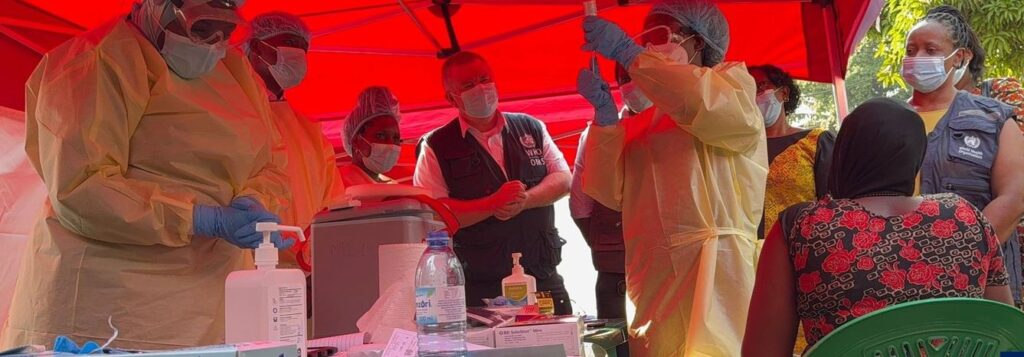
For now, response efforts continue to focus on surveillance, contact tracing, infection prevention, community awareness, and support for healthcare workers. At the same time, scientists are working urgently to determine whether one of the experimental vaccines can be deployed before the outbreak expands further.
Health experts say the Bundibugyo Ebola outbreak represents an important test of global outbreak preparedness and could influence future responses to emerging infectious diseases around the world.