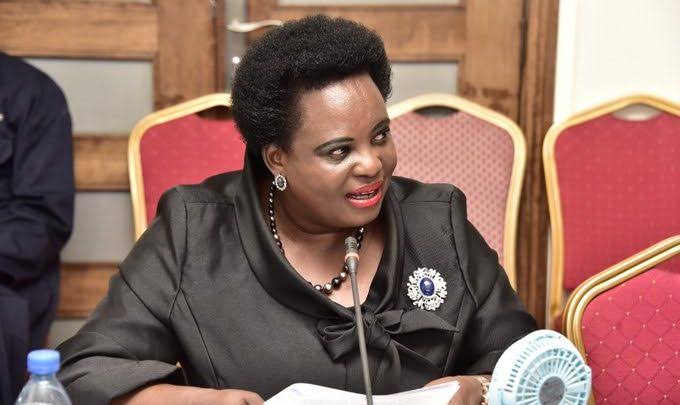
The Minister of Gender, Labour and Social Development Betty Amongi , has sharply criticised her political rival and health minister Jane Ruth Aceng over remarks suggesting that the former relied on witchcraft in the Lira City Woman Member of Parliament election on January 15.
In a strongly worded statement, Amongi described Aceng’s comments as “reckless” and accused her of trivialising national discourse by introducing superstition into political debate.
The remarks attributed to Aceng were reportedly made during a birthday dinner for Chief of Defence Forces, General Muhoozi Kainerugaba, where she framed her victory as divinely ordained while casting aspersions on her opponent.
“My opponent chose to walk with witch-doctors, and when I saw that, I said, ‘God, I’m waiting for my victory.’ I told God, ‘This is a battle between Satan and You.’ Every morning, we sent a choir, like King Jehoshaphat did, to praise, worship, and fill the air with praises—because praises move God,” she said.
“I did not win that election on my own; it was God who did it—He handed me the victory. On my own, I couldn’t fight someone who has been a politician for a long time, who has money, and who tells lies with wide-open eyes.”
Amongi dismissed the claims outright, stating that she is a “devoted Catholic Christian” who does not believe in witchcraft. She criticised Aceng for, in her words, turning a formal platform into one of “superstition” and “propaganda,” rather than focusing on national priorities.
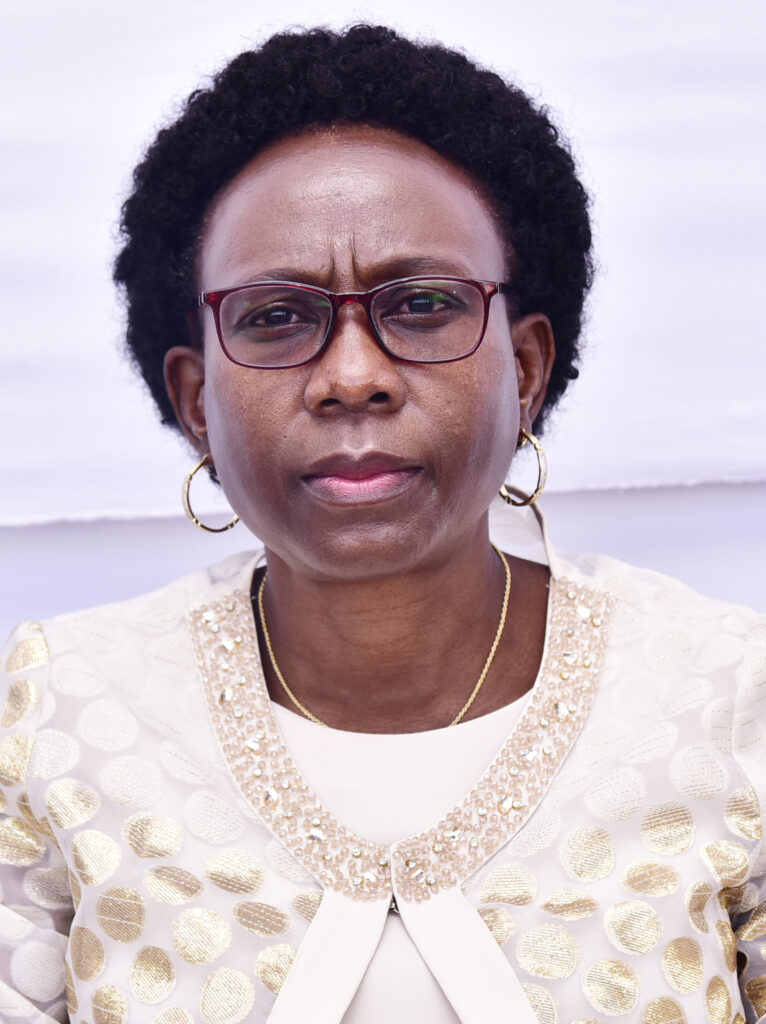
“The statement of Dr Aceng is not only laughable, but also a tragic reflection of the kind of leadership that continues to hold Uganda back,” Amongi said, arguing that such rhetoric distracts from pressing issues including challenges in the health sector and broader development goals.
The dispute follows a highly contested Lira City WMP election in which Aceng secured 38,000 votes, defeating Amongi, who garnered 26,199 votes.
Amongi has maintained that the election was neither free nor fair. She further alleged that Aceng publicly acknowledged the role of security agencies in securing her victory during an April 18, 2026 celebration for President useveni in Lira.
According to Amongi, Aceng credited the Uganda People’s Defence Forces (UPDF), police, and prisons services, as well as senior military figures including 5th Division Commander Keith Katungi, for delivering the election outcome—an assertion Amongi says amounts to an admission of electoral manipulation.
Amongi also accused Speaker of Parliament Anita Among of playing a coordinating role in the alleged rigging, claiming the Speaker travelled to Lira and was actively involved on election day.
These allegations have not been independently verified, and the accused parties had not publicly responded at the time of publication.
Amongi explained that she deliberately remained silent immediately after the election to avoid escalating tensions in Lira and the wider Lango sub-region.
“I have remained silent since the election, not because I accepted defeat, but because I understood that at that moment, reckless actions would plunge our community into chaos,” she said, adding that her restraint was aimed at preserving unity and social cohesion.
However, Amongi cautioned that her silence should not be interpreted as acceptance of the results or as weakness.
She further framed the election as part of a coordinated effort to undermine her political influence, suggesting she faced a wider alliance rather than an individual opponent.
“The truth is that Dr Aceng is merely a beneficiary of a much bigger scheme against my candidacy,” she said.
Amongi further argued that Aceng lacks an independent political base in Lango, describing her influence as “artificial” and sustained by external forces rather than popular support.
“Her position may be sustained by external forces, but it does not rest on the trust, confidence, or free choice of the people of Lango,” she said.’
Despite the election outcome, Amongi asserted that her leadership legitimacy in Lira City remains intact and pledged continued engagement with the community on key development challenges.
The escalating exchange highlights growing political friction within northern Uganda, particularly in Lango, where shifting alliances and national-level interests are increasingly shaping local contests.
The controversy now places both ministers at the centre of a politically charged narrative blending personal rivalry, institutional credibility, and broader questions about democratic governance in Uganda.