By Joseph Kiggundu
Uganda is losing approximately $ 800 million(about Shs2.9 trillion) annually to traffic congestion, Tororo South MP Fredrick Angura has told Parliament.
Angura cited World Bank computations on the economic cost of delays facing cargo trucks moving in and out of the country
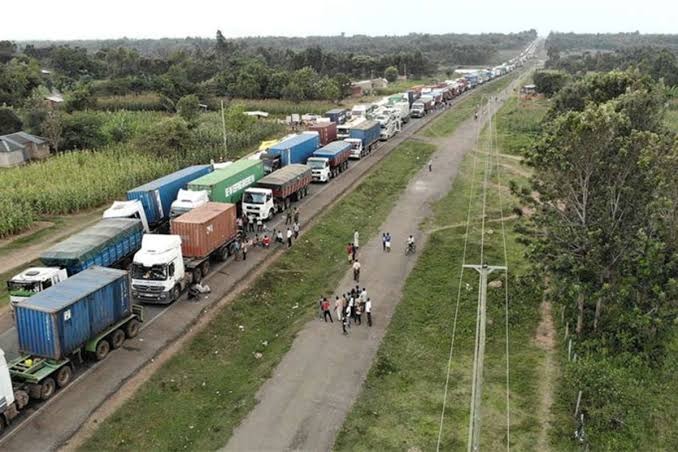
Addressing the House on Wednesday, Angura described the scale of the hold-ups facing motorists and freight operators along the Tororo-Malaba stretch, one of Uganda’s busiest trade corridors linking the country to the port of Mombasa through Kenya.
“You can wait from Tororo to Malaba for over two hours because of congestion and inability of faster movement of trucks. So that is considered as waiting in motion. The World Bank has gone ahead to compute how much we lose in terms of holding in traffic jams. It is to a tune of about 800 million dollars. It is what we lose in terms of waiting in motion,” Angura said.
Malaba is Uganda’s single largest one-stop border post by cargo volume, handling the bulk of imports destined for Kampala and onward transit trade to landlocked neighbours including South Sudan, the Democratic Republic of Congo and Rwanda. Congestion at the crossing has for years been blamed on limited parking and clearance capacity, overlapping cargo and local traffic on the same road network, and slow verification processes on both the Ugandan and Kenyan sides.
Angura told legislators that the losses extend beyond the border itself, spanning delays recorded both at the crossing point and along the wider domestic route.
“That is jam within the borders, but also within the country. So we must fast track that, but also separate the movement of cargo from the border,” he said.
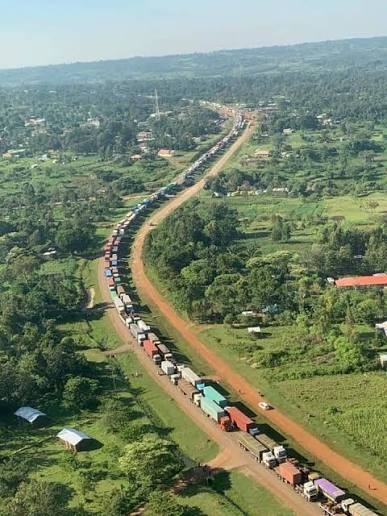
The MP proposed accelerating construction of a northern bypass corridor to divert transit traffic away from the congested town centre, arguing that separating regional cargo from local traffic would ease pressure on the existing road.
“Fast track the northern bypass corridor through Malaba, Apokor, Kwapa to Magodes, so that the northern corridor traffic can exit through the other side and the southern corridor traffic can come towards the old road,” Angura said.
His proposal reflects a long-standing push by transport planners and regional trade bodies, including the East African Community’s Northern Corridor Integration Projects framework, to decongest one-stop border posts through bypass infrastructure and one-stop clearance systems.
Delays at Malaba have previously been flagged by logistics operators as a factor driving up the cost of doing business in the region, with idle trucks incurring fuel, demurrage and driver-allowance costs that are ultimately passed on to consumers through higher prices of imported goods.
Angura’s remarks add to renewed attention on the pace of infrastructure delivery along Uganda’s key trade routes, as government continues to face pressure to fast-track projects aimed at improving the country’s competitiveness in regional trade.