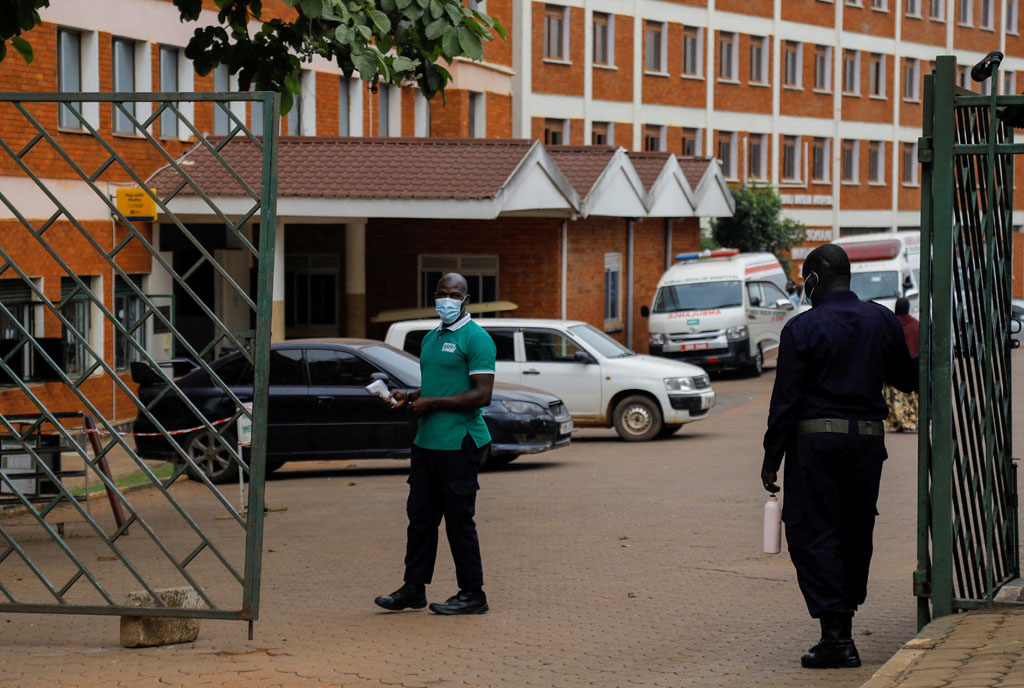
KAMPALA. Government has intensified efforts to contain the Ebola outbreak, with 127 health workers and other contacts of Ebola patients traced and isolated.
Information from the Ministry of Health indicates that there were two imported cases of Ebola Sudan Virus Disease in Kampala, with one of the patients currently undergoing treatment at the Ebola isolation and treatment unit in Mulago. Both patients are from the Democratic Republic of Congo (DRC).
The index patient, a Congolese national, died at Kampala-based Kibuli Muslim Hospital on May 14, where he had sought treatment. The body was reportedly taken back to DR Congo the same day.
Mr Alan Kasujja, the Executive Director of Uganda Media Centre and head of communications in the Ebola response, said in an exclusive interview with the Daily Monitor on Tuesday that no person residing in Uganda has tested positive for Ebola.
“The number of people who have been traced and isolated is 127, that is the latest count. No one has tested positive. We are very good at tracing and tracking those people,” he said.
“The contacts are mostly health workers who treated him and the driver who transported them to hospital. They have all been traced, identified and placed under quarantine. None of them has tested positive,” he added.
Mr Kasujja said the country has instituted preventive measures, including postponing the Uganda Martyrs’ Day celebrations and strengthening screening at points of entry to contain the disease.
“Nobody living in Uganda has been infected. The Ministry of Health is very experienced in dealing with these outbreaks. Uganda does better than many more advanced countries around the world as far as managing epidemics is concerned,” he said.
“So we are confident that we will have the right help, the right guidelines and the right expertise in place to ensure the disease does not spread,” he added.
He said the international community should focus more attention on DR Congo, where the outbreak originated, rather than Uganda.
“I think if the world really cares about Ebola, it should focus on where the problem is. We should all be making sure that the focus is on the eastern part of DR Congo,” he said while responding to concerns over travel and health alerts issued by some foreign governments following the outbreak.
Dr Tonny Musoke Sekikongo, a consultant physician at the Mulago Ebola Treatment Unit, said it takes between two and 21 days for a person infected with the Ebola Sudan strain to begin showing symptoms.
Initial symptoms include fever, severe headache and muscle pain.
“You will find the patient extremely tired with severe fatigue. There may also be reddening of the eyes. Occasionally, you may have mild diarrhoea and vomiting,” he said.
“But as the days progress, usually beyond four days, more severe symptoms begin to appear. You can have severe sore throat, chest pain, abdominal pain, diarrhoea and vomiting,” he added.
The Ministry of Health has appealed to the public to report suspected Ebola cases through the toll-free line 0800-100-066 or by sending a free SMS to 6767.
Prevention
• Avoid physical contact with anyone showing Ebola symptoms
• Practice regular hand washing and maintain proper hygiene
• Avoid contact with body fluids such as urine, blood, sweat, saliva, vomit and stool
• Seek immediate medical attention if you develop Ebola-like symptoms
• Burial of suspected Ebola victims should be supervised by health officials
• Public places should install hand-washing facilities