By Buwule Joseph Mary
KAMPALA — The 2026 edition of the Kampala Geopolitics Conference has officially opened at Makerere University, bringing together a vibrant mix of scholars, policymakers, civil society actors, and global thinkers for two days of critical reflection on Africa’s place in an increasingly complex world.
Now in its eighth year, the conference has steadily grown into one of the region’s most influential platforms for open dialogue and intellectual exchange on contemporary regional and international issues. Since its inception in 2018, the annual gathering has fostered meaningful conversations that bridge academia, policy, and practice.
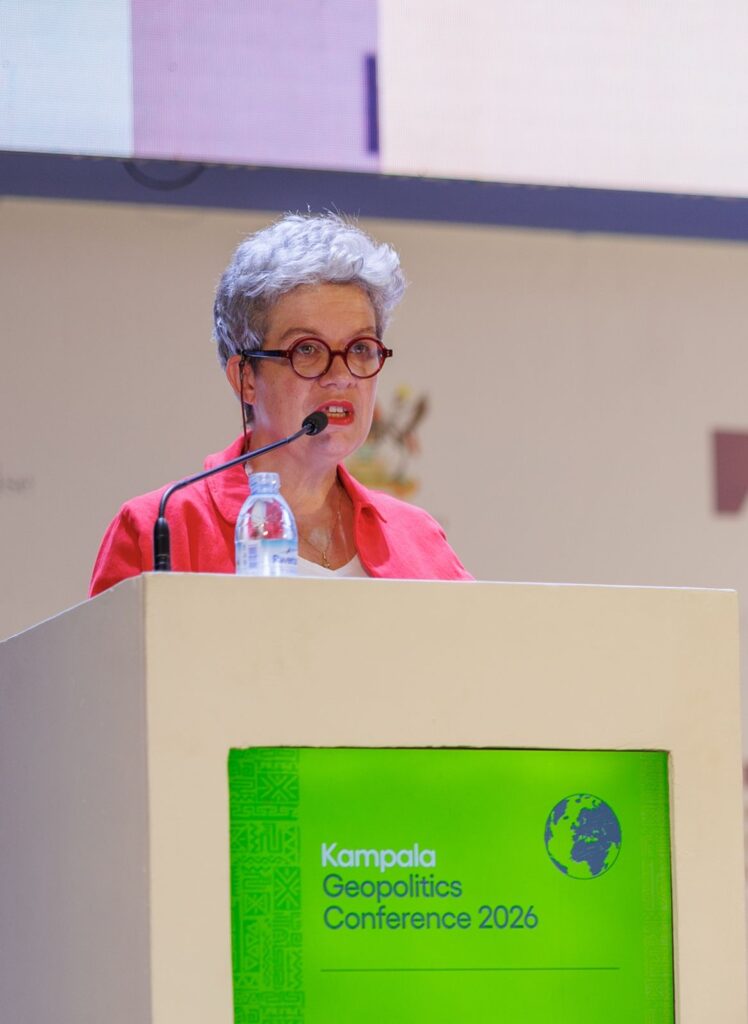
Opening the conference, H.E. Virginie Leroy, French Ambassador to Uganda., expressed optimism about the continued relevance of the forum, noting its unique role in convening diverse voices.
“For the past eight years, the Kampala Geopolitics Conference has provided an interactive platform for dialogue and free exchange,” she said. “I am delighted to see such a dynamic gathering of researchers, policymakers, civil society actors, international organizations, artists, and entrepreneurs—all coming together to better understand Africa’s evolving geopolitical landscape and to reflect on solutions adapted to contemporary realities.”
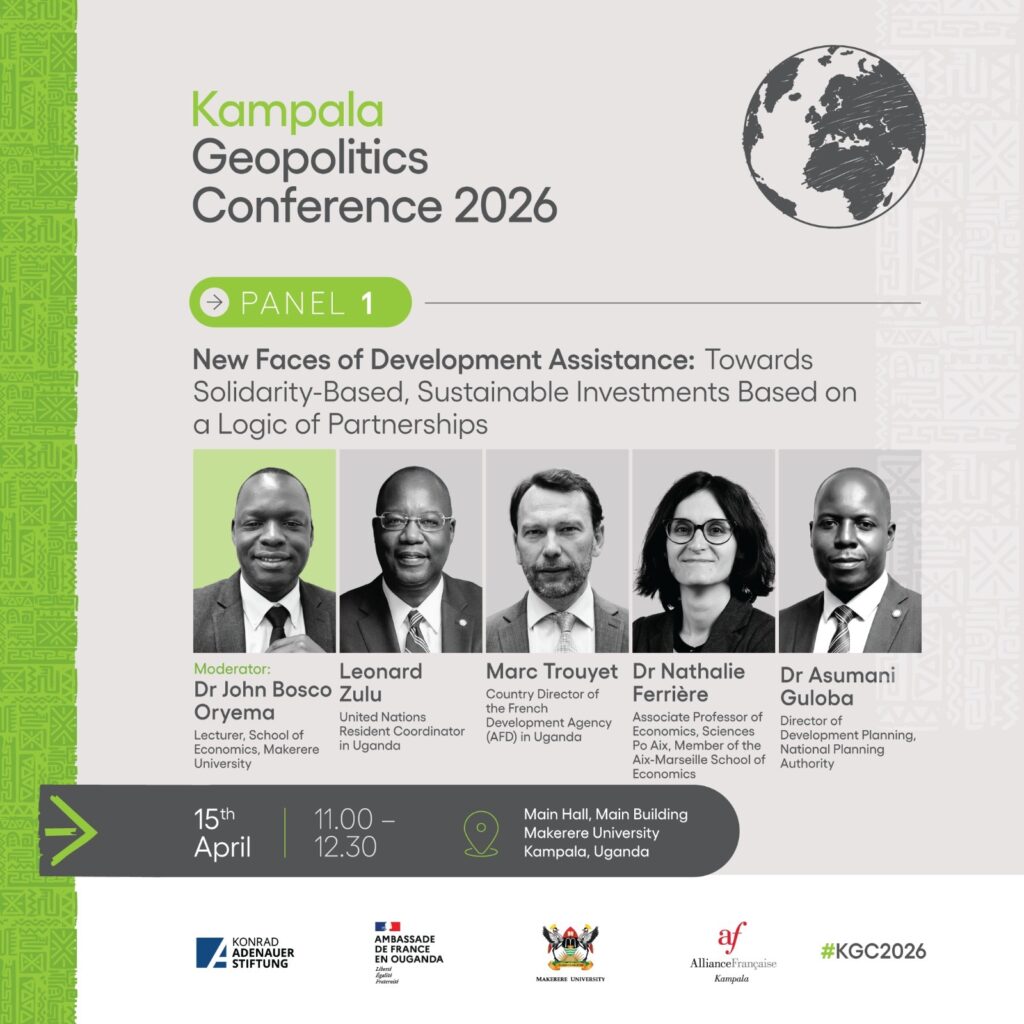
The 2026 conference, scheduled for April 15th to 16th, features a rich lineup of panel discussions tackling some of the most pressing global and regional challenges. Day one opened with a thought-provoking session titled “New Faces of Development Assistance: Towards Solidarity-Based, Sustainable Investments Based on a Logic of Partnerships,” curated by the French Embassy in Uganda.
The discussion explored the shifting terrain of global development financing, with experts calling for a rethinking of traditional aid models. John Bosco Oryema highlighted the sharp decline in development resources following the COVID-19 pandemic, noting a cooling trend in 2025. He urged stakeholders to embrace a more candid transition from conventional multilateral aid to a dual partnership model that emphasizes mutual benefit and shared responsibility.
Adding to the debate, Nathalie Ferrier pointed out that while Official Development Assistance (ODA) reached a record high in 2023, much of the increase was driven by Ukraine-related aid and refugee expenditures. When these factors are excluded, she observed, support to Africa has actually declined—raising important questions about global aid priorities and equity.
From a development finance perspective, Marc Trouyet underscored the growing convergence between aid and trade. He noted that the traditional divide between the two is gradually narrowing, particularly in Africa where regional integration efforts—such as tariff harmonization within the African Union—are fostering economic growth and investment opportunities.
Meanwhile, Fred Matovu challenged conventional approaches to debt sustainability analysis. He argued for the adoption of alternative indicators, such as the debt-to-tax ratio, suggesting that widely used metrics may not accurately reflect the fiscal realities of developing economies.
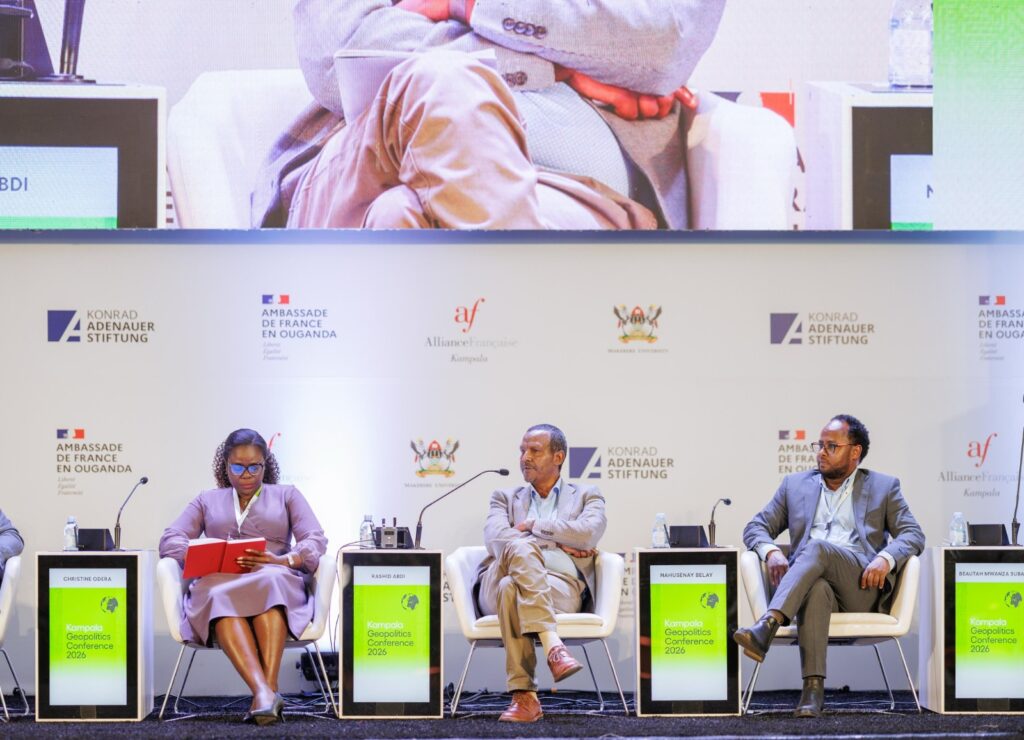
The conference also turned its attention to geopolitical tensions in the Horn of Africa. Rashid Abdi provided historical context to Ethiopia’s renewed push for sea access, linking it to a broader ambition to reclaim its identity as a maritime power following the loss of Eritrea in 1991.
Other contributors highlighted the broader regional implications of such ambitions. Governance and policy strategist Christine Odera criticized the Intergovernmental Authority on Development (IGAD) for what she described as institutional shortcomings in policy coordination, arguing that earlier dialogue could have mitigated some of the region’s current challenges.
Similarly, Nahusenay Belay pointed to Ethiopia’s strategic maneuvers, including the establishment of a naval force despite lacking a coastline and the controversial 2024 Memorandum of Understanding with Somaliland. He described the Horn of Africa as increasingly resembling a geopolitical chessboard shaped by both regional ambitions and global interests.
As discussions continue into day two, the Kampala Geopolitics Conference is once again affirming its role as a critical space for unpacking complex global dynamics while centering African perspectives. In a world marked by shifting alliances, economic uncertainties, and emerging conflicts, the conversations unfolding in Kampala reflect a continent actively engaging with its future—on its own terms.